.webp)
Tree Trimming in Clermont FL: When to Trim, What It Costs & Storm Prep Tips
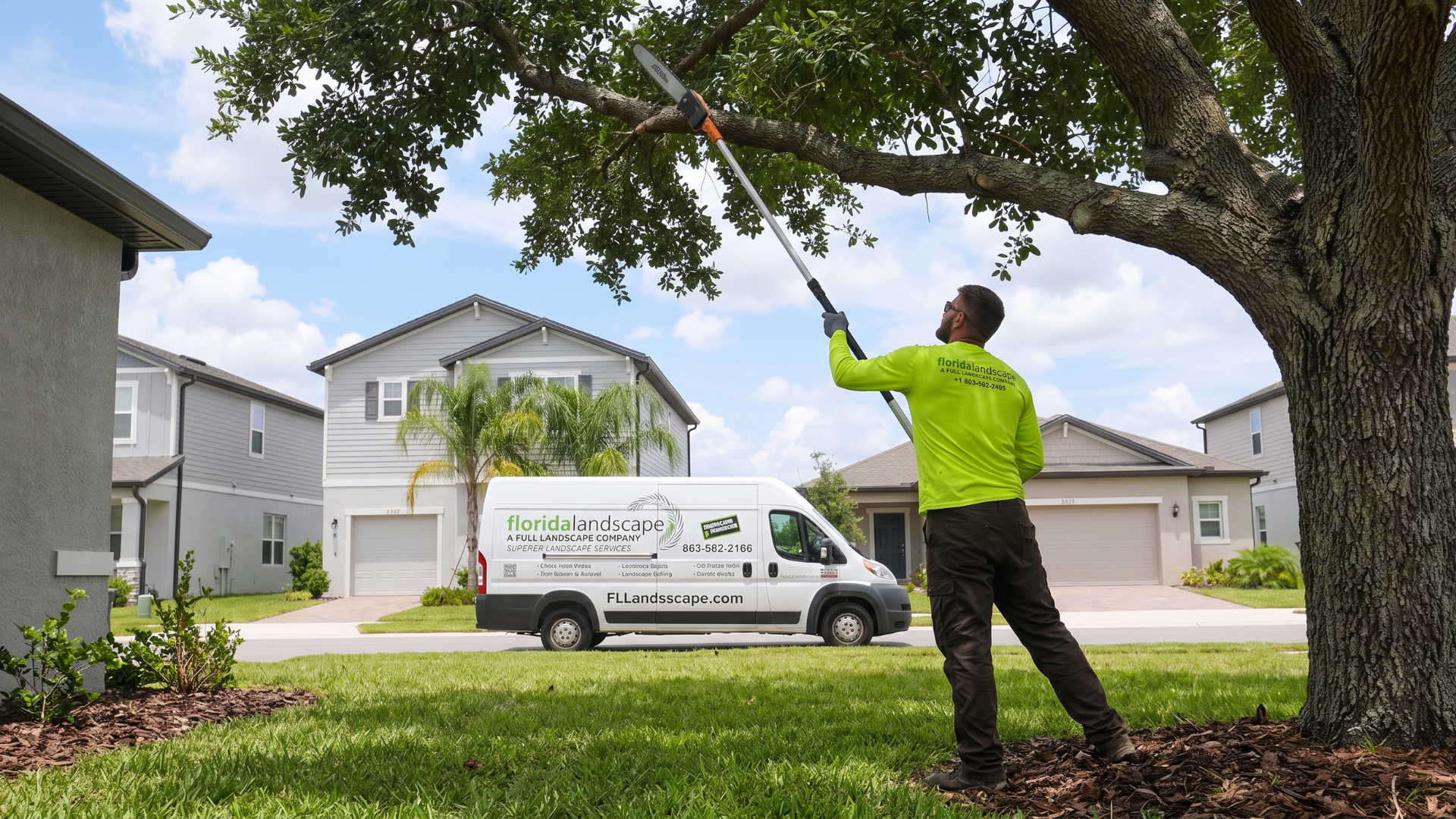
Tree trimming in Clermont FL is not a once-in-a-while task — it's a regular part of keeping a property safe, healthy, and storm-ready in a city where trees grow fast and weather events hit hard. Clermont's rolling hills, sandy Lake County soil, and proximity to Lake Minneola and other area lakes create conditions that push trees to grow quickly but with less structural stability than many homeowners expect. That combination makes proper trimming timing, technique, and frequency matter more here than in many other parts of Central Florida.
This guide covers everything Clermont homeowners need to know: when to trim, what it costs in 2026, how to prepare your trees before hurricane season, and how to hire a licensed tree service that won't cut corners — or your canopy down to nothing.
Why Clermont Trees Demand More Attention Than You'd Think
Clermont sits on a ridge of rolling hills that's unusual for Central Florida. That terrain changes how water moves through the soil and how tree roots develop. On sloped lots, roots on the downhill side often spread shallower and wider as they follow moisture, which reduces the structural anchoring that keeps large trees upright during high winds.
Lake County's sandy soil compounds the problem. Sandy soil drains fast — which is good for turf but means trees are in a constant push to grow bigger root systems and taller canopies to capture resources. That rapid growth produces more deadwood, more crossed limbs, and more structurally weak branch unions than you'd see on the same species growing in heavier clay soils further north.
Clermont's lakefront exposure also matters. Properties near Lake Minneola, Lake Louisa, and the dozens of other lakes in the area are in the path of open-water wind fetch during storms. Wind speeds over open water pick up momentum, and trees on the western and southern edges of properties in these areas take the brunt of it. A poorly trimmed oak or laurel in that position isn't just a liability during a named storm — it can cause damage from a standard afternoon thunderstorm.
Clermont's neighborhoods also tend to be more established than newer HOA communities further south in Davenport or ChampionsGate. That means larger, older trees with more years of unchecked growth — and more potential for structural problems that a professional arborist needs to evaluate.
Best Trimming Windows for Tree Trimming in Clermont FL
Timing a tree trim correctly matters as much as the trim itself. Central Florida has two primary windows when trimming produces the best results and the least stress on the tree.
Late winter through early spring (February–April) is the preferred window for structural pruning. Trees are just coming out of their dormant or semi-dormant phase, and new growth hasn't fully flushed yet. Cuts made during this window close faster, and you can clearly see the branch structure without dense foliage blocking your view of problem limbs. This is the right time to address crossed branches, weak crotch angles, and any limbs that have grown too close to rooflines or power lines.
Early June is the second window — specifically for pre-hurricane-season prep. The Atlantic hurricane season peaks August through October, but June 1 is the official start. Getting a trim done in early June gives trees time to begin healing before the worst storms arrive, and lets you remove deadwood and compromised limbs before they become projectiles.
There are also three things you should never do, regardless of the time of year:
1. Never trim oaks during peak summer. Oak wilt and other fungal diseases spread more aggressively when fresh pruning cuts are exposed to the high heat and humidity of July and August. Beetles that carry fungal spores are most active during this period.
2. Never top a palm. Removing the growing tip — the terminal bud — of a palm tree kills it. Period. Palms only have one growing point. Any trimming should be limited to removing dead or browning fronds, and even that should be done carefully (more on that in the hurricane prep section below).
3. Never remove more than 25% of a tree's canopy in a single session. Over-pruning stresses the tree, triggers weak epicormic growth (the thin shoots that sprout from the trunk), and actually makes the tree more susceptible to wind damage — not less. A good tree service will never over-prune on a single visit regardless of how much a homeowner requests.
For more on how Florida's seasonal calendar affects tree and lawn care decisions, the Florida lawn care calendar on this site covers the full year of maintenance timing for Central Florida properties.
Tree Trimming Cost in Clermont FL — 2026 Ranges
Pricing for tree trimming in Clermont varies based on tree size, species, accessibility, and proximity to structures or utilities. The table below reflects typical ranges for the Clermont market in 2026. These are estimates — always get a site-specific quote before committing to a project.
• Small tree trimming (under 25 ft) — Typical Range: $150 – $400 — Key Factors: Species, access, limb count
• Medium tree trimming (25–50 ft) — Typical Range: $400 – $1,000 — Key Factors: Canopy spread, proximity to structure
• Large tree / mature oak (over 50 ft) — Typical Range: $1,000 – $3,000+ — Key Factors: Crane needed, aerial access, limb weight
• Stump grinding — Typical Range: $150 – $400 per stump — Key Factors: Diameter, root system, access
• Emergency storm removal — Typical Range: Premium pricing — call immediately — Key Factors: Hazard level, debris volume, urgency
• Palm frond trimming — Typical Range: $75 – $250 per palm — Key Factors: Height, number of palms, frond volume
Several factors push prices toward the higher end of each range. Trees close to a home, fence, pool cage, or power line require more careful rigging and slower work. Properties in Clermont's hilly areas sometimes require equipment repositioning that adds time. Multiple trees quoted together will typically come in at a lower per-tree rate than a single-tree job.
Emergency storm removal after a hurricane or severe thunderstorm carries premium pricing because of the hazard involved and the surge in demand. If you have a tree that's already compromised — showing soft spots in the trunk, a visible V-crotch split, or major leaning after a storm — don't wait. Call a licensed tree service before the next rain event makes the situation worse.
Florida Landscape Co. provides tree trimming, removal, pruning, and stump grinding throughout Clermont and the surrounding Lake County area. Getting a professional estimate before hurricane season is always the lower-cost option compared to emergency removal after the fact.
Hurricane Prep Tree Trimming for Clermont Properties
Clermont's location in Lake County puts it squarely in the zone that receives significant wind from both Gulf-side and Atlantic-side storms. Preparing trees before hurricane season is one of the highest-value maintenance tasks a Clermont homeowner can do — and it doesn't require removing healthy trees or gutting a canopy.
For palms, remove dead and fully brown fronds — but leave green fronds alone, even if they're slightly drooping. Over-trimming palms into a tight "hurricane cut" (leaving only the top cluster of fronds) actually weakens the tree and removes the natural flexibility that helps it survive high winds. The UF IFAS Extension hurricane landscape preparation guide specifically recommends against aggressive palm trimming before storms.
For shade trees and oaks, focus on three things: clearing limbs that hang within 6 feet of your roofline or pool enclosure, removing any dead or visibly compromised branches, and identifying V-crotch unions — spots where two major limbs split at a narrow angle and are prone to splitting under load. A tree service can cable or brace a V-crotch to reduce risk without full removal.
Check the base of large trees for soft spots in the bark, fungal growth at the root flare, or any visible heaving of the ground near the root zone. These are signs of internal decay or root failure that won't be visible from the street but dramatically increase the risk of a full tree failure during a storm.
For a deeper look at storm prep steps specific to Central Florida, the hurricane season tree prep guide covers the full process in detail, including what to do after a storm passes.
How to Hire a Licensed Tree Service in Florida
Florida does not license individual tree trimmers the same way it licenses contractors, but there are clear standards you should require before hiring anyone to work on your trees. The first is insurance — any tree service working on your property should carry general liability and workers' compensation insurance. Ask for certificates before work begins. If a worker is injured on your property and the company isn't insured, you may be liable.
The second is certification. Look for a company that employs or is supervised by an ISA Certified Arborist — a credential issued by the International Society of Arboriculture. ISA certification requires passing a rigorous exam and ongoing continuing education. It's the industry standard for professional tree care and a reliable signal that the person making pruning decisions actually understands tree biology.
Third, be aware of protected species. Lake County and the City of Clermont have regulations around the removal of certain trees — particularly large oaks — that may require a permit before removal. A reputable tree service will flag this during an estimate and help you navigate the permitting process. Never let a company remove a large oak or other potentially protected tree without first confirming whether a permit is required.
Red flags to avoid: door-to-door solicitation after a storm, requests for full payment upfront, pressure to approve removal of healthy trees, and no written estimate. Tree work done incorrectly is expensive to fix — and in some cases, can't be undone.
Keeping your trees properly maintained is also part of broader property health. Florida Landscape Co. offers ongoing lawn and landscape maintenance that pairs well with a regular tree trimming schedule — one provider managing the full picture means nothing gets overlooked between visits.
If you're not sure where your trees stand heading into storm season, a site visit from a qualified Clermont tree service is the right first step. The Clermont service area page has more information on what Florida Landscape Co. covers in the area.
Ready to Schedule Tree Trimming in Clermont?
Clermont trees grow fast, and the combination of sandy soil, lake exposure, and storm risk means letting them go too long between trims is a gamble most homeowners don't want to take. Whether you need a pre-hurricane-season cleanup, a large oak assessed, or a stump ground down after a removal, getting a professional out to the property before the problem gets worse is always the right call.
Florida Landscape Co. has been serving Clermont and Lake County since 2011 — licensed, insured, and familiar with the specific conditions that affect trees in this part of Central Florida. Call (863) 582-2168 to schedule a tree trimming estimate, or visit our contact page to request a quote online. We're available 24/7 for storm emergencies.
Frequently Asked Questions
When is the best time to trim trees in Clermont FL?
The two best windows are late winter through early spring (February–April) for structural pruning, and early June for pre-hurricane-season prep. Avoid trimming oaks during peak summer heat due to disease risk, and never remove more than 25% of a tree's canopy in a single session.
How much does tree trimming cost in Clermont FL?
Costs range from $150–$400 for small trees under 25 feet, $400–$1,000 for medium trees, and $1,000–$3,000 or more for large oaks or trees over 50 feet. Stump grinding typically runs $150–$400 per stump. Emergency storm removal carries premium pricing. Always get a written estimate before work begins.
Do I need a permit to remove a tree in Clermont FL?
Potentially, yes. Lake County and the City of Clermont have protections around certain tree species — particularly large oaks. Before removing any significant tree, confirm with the city or your tree service whether a removal permit is required. A reputable company will check this for you during the estimate process.
Should I trim my palms before a hurricane in Clermont?
Remove dead and brown fronds, but leave green ones in place — even drooping ones. The aggressive "hurricane cut" that leaves only the top cluster of fronds actually weakens the palm. A properly maintained palm with its full green canopy is more flexible and storm-resistant than an over-trimmed one.
How do I find a licensed tree service in Clermont FL?
Look for a company that employs an ISA Certified Arborist, carries both general liability and workers' compensation insurance, and provides written estimates. Avoid door-to-door solicitors after storms and any company that requests full payment before work begins. Ask for insurance certificates before any crew starts on your property.
Why do Clermont trees need more trimming than other areas of Central Florida?
Clermont's hilly terrain, sandy Lake County soil, and proximity to open water all contribute to faster tree growth with less structural stability. Sandy soil pushes root systems to spread wide rather than deep, and lakefront wind exposure increases storm risk. Older, established neighborhoods also mean larger trees that have had more years to develop structural problems.

Get your free quote and expert advice today.
Ready to transform your garden? Get in touch with our expert team today for a free consultation and personalized plan.




Tree Trimming in Clermont FL: Frequently Asked Questions
When is the best time to trim trees in Clermont FL?

The two best windows are late winter through early spring (February–April) for structural pruning, and early June for pre-hurricane-season prep. Avoid trimming oaks during peak summer heat due to disease risk, and never remove more than 25% of a tree's canopy in a single session.
How much does tree trimming cost in Clermont FL?
Costs range from $150–$400 for small trees under 25 feet, $400–$1,000 for medium trees, and $1,000–$3,000 or more for large oaks or trees over 50 feet. Stump grinding typically runs $150–$400 per stump. Emergency storm removal carries premium pricing. Always get a written estimate before work begins.
Do I need a permit to remove a tree in Clermont FL?
Potentially, yes. Lake County and the City of Clermont have protections around certain tree species — particularly large oaks. Before removing any significant tree, confirm with the city or your tree service whether a removal permit is required. A reputable company will check this for you during the estimate process.
Should I trim my palms before a hurricane in Clermont?
Remove dead and brown fronds, but leave green ones in place — even drooping ones. The aggressive "hurricane cut" that leaves only the top cluster of fronds actually weakens the palm. A properly maintained palm with its full green canopy is more flexible and storm-resistant than an over-trimmed one.
How do I find a licensed tree service in Clermont FL?
Look for a company that employs an ISA Certified Arborist, carries both general liability and workers' compensation insurance, and provides written estimates. Avoid door-to-door solicitors after storms and any company that requests full payment before work begins. Ask for insurance certificates before any crew starts on your property.

