.webp)
Florida Lawn Care Calendar: Month-by-Month Maintenance Schedule for 2026
A Florida lawn care calendar only works if it accounts for the state's fertilizer blackout ordinances, its two-season rainfall swing, and the specific soil conditions found across Polk, Lake, and Orange Counties. This 2026 update refreshes the fertilizer blackout windows, adds county-level notes for Central Florida's fastest-growing corridors, expands the September section to cover aeration timing and hurricane prep, and builds in grub treatment timing that homeowners frequently miss.
St. Augustine, Bahia, and Zoysia lawns in Central Florida don't follow the same clock as turf up north. Growth ramps up in March, peaks through the humid summer, and slows sharply by December. Getting fertilization, mowing height, and irrigation timing wrong in any single month can undo months of healthy turf — which is why a month-by-month lawn care schedule built specifically for this region matters more here than almost anywhere else in the country.
Why a Central Florida Lawn Calendar Is Different
Central Florida runs on two seasons, not four: a wet season from roughly May through October and a dry season from November through April. According to the University of Florida's IFAS Extension, the wet season delivers 60 to 70 percent of the region's annual rainfall, concentrated in short, intense afternoon storms rather than steady soaking rain. That pattern drives most of the timing decisions in this calendar — especially around fertilization, which is now restricted by ordinance during the heaviest rain months.
Sandy, fast-draining soil across Polk, Lake, and Orange Counties compounds the problem. Nutrients and water move through sandy soil quickly, which means over-fertilizing before a summer storm doesn't feed the lawn — it runs straight into storm drains and local waterways. That's the reasoning behind the statewide and county-level fertilizer blackout periods covered below.
2026 Fertilizer Blackout Dates: What Changed
Important: Polk, Lake, and Orange Counties all enforce a summer fertilizer blackout period, typically running June 1 through September 30. During this window, applying fertilizer containing nitrogen or phosphorus to residential or commercial turf is restricted by local ordinance, regardless of grass type or lawn condition.
The rule exists because heavy summer rain washes unabsorbed fertilizer into storm drains, lakes, and eventually the state's already-stressed waterways. If your lawn looks pale or thin in July, resist the urge to feed it — a slow-release application timed for late September or early October, once the blackout lifts, will do more good with less runoff risk.
Note: Enforcement and exact start/end dates can shift slightly year to year at the county level. Confirm current dates with your county's public works or environmental resources department before scheduling a summer application.
County-Level Notes: Polk, Lake, and Orange
Polk County (Davenport, Haines City, Four Corners, Winter Haven): Inland, sandier soil and less lake-buffered humidity mean lawns here dry out faster in the dry season and need closer irrigation monitoring in April and October, the two transition months.
Lake County (Clermont, Groveland): Higher lake density moderates soil moisture somewhat, but it also means fertilizer and pesticide runoff reaches surface water faster. Lake County residents should treat the June–September blackout as a hard rule, not a suggestion.
Orange County (Horizon West, Winter Garden, Celebration): Rapid new-construction growth in this corridor often means newer sod on compacted or amended soil. Watering restrictions tied to the St. Johns River Water Management District's assigned watering days apply here — check your address-specific day before setting an irrigation schedule.
Monthly Florida Lawn Care Schedule
The table below reflects updated mowing height, fertilization windows, irrigation adjustments, and the seasonal tasks that matter most for Central Florida turf. Grub and pest windows and the September aeration/storm-prep window are covered in more detail further down.
• January — Mowing: Every 2–3 weeks — Fertilization: None — Irrigation: 1–2x weekly — Key Task: Dormancy; service equipment
• February — Mowing: Every 2–3 weeks — Fertilization: Light feed, late month — Irrigation: 1–2x weekly — Key Task: Apply pre-emergent herbicide
• March — Mowing: Weekly — Fertilization: First major feed of the year — Irrigation: 2–3x weekly — Key Task: Overseed thin areas
• April — Mowing: Weekly — Fertilization: Continue spring feeding — Irrigation: 2–3x weekly — Key Task: Irrigation system tune-up
• May — Mowing: Weekly to bi-weekly — Fertilization: Slow-release feed — Irrigation: Less frequent, longer runs — Key Task: Refresh mulch beds
• June — Mowing: Weekly — Fertilization: Blackout begins June 1 — Irrigation: Reduce as rainfall increases — Key Task: Watch for fungal disease
• July — Mowing: Weekly — Fertilization: Blackout — no fertilizer — Irrigation: Minimal; rely on rainfall — Key Task: Grub and chinch bug monitoring
• August — Mowing: Weekly — Fertilization: Blackout — no fertilizer — Irrigation: Supplement only in dry spells — Key Task: Heat stress management
• September — Mowing: Weekly to bi-weekly — Fertilization: Blackout through Sept 30 — Irrigation: Reduce gradually — Key Task: Aeration prep; hurricane prep
• October — Mowing: Bi-weekly — Fertilization: Fall feed once blackout lifts — Irrigation: Reduce as rain tapers — Key Task: Core aeration; overseed if needed
• November — Mowing: Bi-weekly — Fertilization: Light dry-season feed — Irrigation: Adjust for dry season — Key Task: Tree trimming before winter
• December — Mowing: Every 2–3 weeks — Fertilization: None — Irrigation: 1–2x weekly — Key Task: Cold protection for sensitive turf
September: Aeration and Hurricane Prep Window
September deserves more attention than most Florida lawn calendars give it. Rainfall starts tapering by mid-to-late month while soil temperatures stay warm enough for root recovery, which makes late September through mid-October the single best aeration window of the year for St. Augustine and Zoysia lawns compacted by a full summer of storms and foot traffic.
Core aeration pulls small plugs of soil out of the lawn, relieving compaction and letting water, oxygen, and nutrients reach the root zone before the fall fertilizer application goes down. Pair aeration with overseeding on thin patches for the fastest recovery.
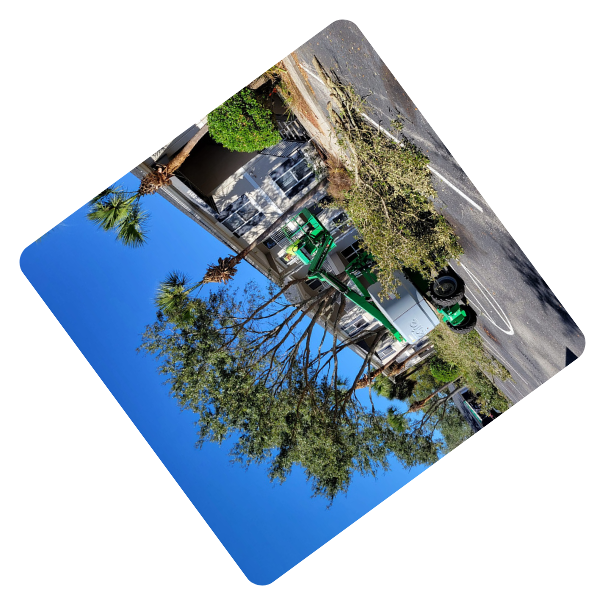
September also sits inside the peak of Atlantic hurricane season, which runs through November according to the National Hurricane Center. Before storm season peaks, walk the property and flag any dead limbs, split branches, or trees leaning toward the house or power lines. Clear gutters and drains so heavy rain doesn't pool against the foundation, and hold off on major pruning until after storm risk passes if a storm system is already tracking toward Central Florida — fresh cuts can stress a tree right before high wind exposure. Our tree services team handles pre-storm canopy thinning and deadwood removal for homeowners and HOAs across the Polk/Lake/Orange corridor.
Grub Treatment Timing
Grubs and chinch bugs cause more unexplained brown patches in Central Florida lawns than almost any other pest. Adult beetles lay eggs in Florida turf from late May through July, and the resulting grubs feed on grass roots just below the surface through late summer, right when the fertilizer blackout limits your ability to feed stressed turf back to health.
Preventive grub control applied in June, before eggs hatch, is far more effective and far less expensive than curative treatment applied to an already-damaged lawn in August. If you're seeing spongy turf that pulls up easily, irregular brown patches that don't respond to watering, or increased bird and armadillo activity digging in the yard, grubs are the likely cause and treatment should happen immediately rather than waiting for the next scheduled visit.
Common Mistakes That Undo a Good Lawn Calendar
1. Fertilizing during the blackout window: Applying nitrogen or phosphorus fertilizer between June 1 and September 30 in Polk, Lake, or Orange County violates local ordinance and mostly ends up in storm drains anyway.
2. Mowing too short in summer heat: Cutting St. Augustine below 3.5 inches during peak heat stresses the root system right when the lawn needs it most.
3. Ignoring irrigation permit days: Watering on the wrong assigned day in Orange County risks fines and wastes water the lawn didn't need in the first place.
4. Skipping pre-emergent in February: Missing the late-February pre-emergent window lets spring weeds establish before the lawn has a chance to out-compete them.
5. Waiting until August to treat grubs: By the time grub damage is visible, the preventive window from June has already closed.
6. Pruning trees mid-storm-warning: Fresh pruning cuts right before a tropical system can leave a tree more vulnerable, not less.
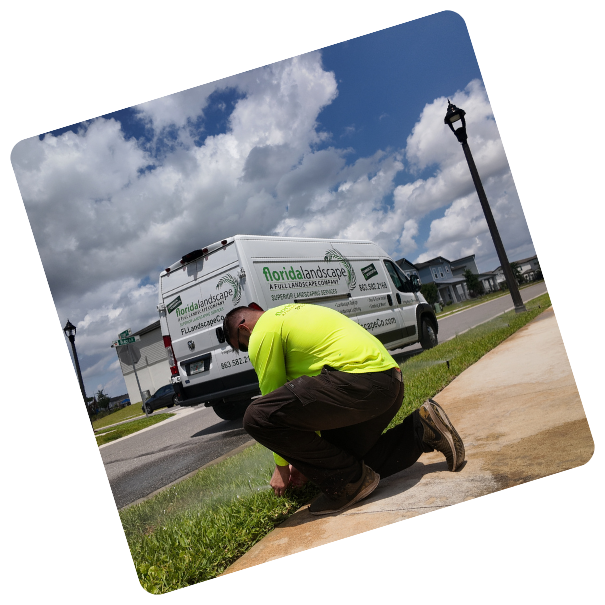
Most Central Florida homeowners don't have time to track blackout dates, aeration windows, and grub cycles on top of regular mowing and edging. That's the gap a recurring lawn maintenance plan is built to close — scheduled visits that already account for county ordinances and seasonal timing instead of guessing month to month. For irrigation issues specifically, an irrigation system audit catches dry spots, misaligned heads, and pressure problems before the dry season makes them worse.
HOA and Commercial Property Timing
HOAs and property managers across Horizon West, Winter Garden, and Davenport face an added layer: community-wide consistency. A single homeowner fertilizing off-schedule inside a blackout window is a minor issue; an entire common area or entry corridor doing it is a compliance problem and a curb-appeal problem at the same time. Boards typically do better with a documented, calendar-based service plan rather than reactive requests — our HOA landscaping program is built around exactly that kind of scheduled, reportable approach.
For a deeper look at storm-season tree risk specifically, see our guide on tree trimming timing and storm prep in Clermont, and for turf establishment tied to this calendar, see our breakdown of Central Florida sod types and timing on the sod installation page.
The Florida-Friendly Landscaping Program through UF/IFAS offers additional detail on regional watering and fertilization best practices if you want to go deeper on the science behind these blackout dates and irrigation reductions.

Get your free quote and expert advice today.
Ready to transform your garden? Get in touch with our expert team today for a free consultation and personalized plan.




Frequently Asked Questions
When can I fertilize my lawn in Florida in 2026?

Outside of Polk, Lake, and Orange County's June 1 through September 30 blackout period, the best fertilization windows are March for the first major spring feed and late September through October for the fall application, once the blackout lifts.
Why can't I fertilize my lawn in the summer in Central Florida?
County ordinances in Polk, Lake, and Orange restrict nitrogen and phosphorus fertilizer application during the wettest months because heavy rain washes unabsorbed nutrients into storm drains and local waterways rather than letting them feed the turf.
What month should I aerate my Florida lawn?
Late September through mid-October is the strongest aeration window in Central Florida — rainfall is tapering, soil temperatures are still warm enough for fast root recovery, and it sets the lawn up well before the fall fertilizer application.
How often should I mow my lawn in Florida during summer?
Most St. Augustine and Zoysia lawns need weekly mowing from March through October during active growth, dropping back to every two to three weeks once growth slows in November.
When should I treat my lawn for grubs in Florida?
Apply preventive grub control in June, before eggs laid by adult beetles hatch. Waiting until brown patches appear in July or August means treating damage that's already done rather than preventing it.

