
.webp)
St. Augustine Grass Care Guide for Central Florida Lawns
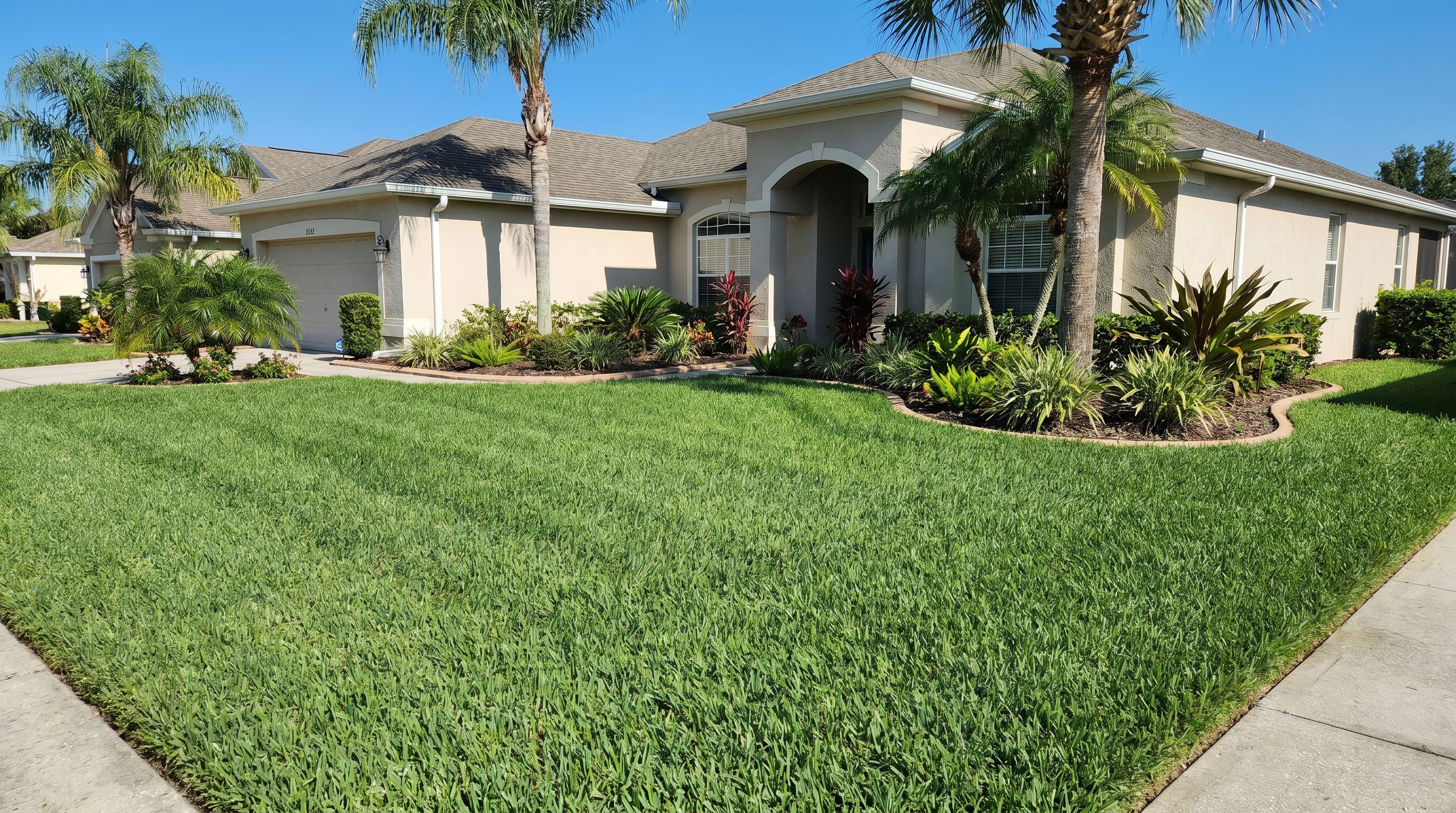
St. Augustine grass Florida homeowners choose more than any other turf variety for their lawns. This warm-season grass thrives in Central Florida's sandy soils and humid climate, making it the dominant choice for residential properties from Clermont to Celebration. With proper care, St. Augustine creates the thick, lush lawn that defines quality landscaping in our region.
Central Florida's unique growing conditions—intense summer heat, heavy rainy seasons, and sandy soil drainage—require specific care strategies for St. Augustine grass. Understanding these requirements helps homeowners maintain healthy turf year-round while avoiding common problems like chinch bug infestations and fungal diseases.
Popular St. Augustine Varieties in Central Florida
Four St. Augustine varieties dominate Central Florida lawns, each selected for specific growing conditions and homeowner preferences. Choosing the right variety for your property's sun exposure, foot traffic, and maintenance goals ensures better long-term success.
Floratam remains the most common variety across Polk, Lake, and Orange counties. This coarse-textured grass handles full sun exposure exceptionally well and shows strong resistance to St. Augustine decline virus. Floratam requires regular watering during dry periods but tolerates Central Florida's heat better than most alternatives.
Palmetto works best for properties with significant shade from oak trees or home structures. This fine-textured variety maintains better color and density under shade conditions that would stress Floratam. Many HOA communities choose Palmetto for common areas with mixed sun and shade exposure.
Seville offers the finest blade texture among popular varieties, creating a carpet-like appearance when properly maintained. This variety handles moderate shade well and requires less water than Floratam, making it suitable for efficient irrigation systems in established neighborhoods.
Bitterblue provides better cool-weather tolerance for Central Florida's occasional winter temperature drops. This variety maintains color longer into the dormant season and greens up earlier in spring, though it requires more summer watering than other options.
Mowing St. Augustine Grass for Optimal Health
Proper mowing height directly impacts St. Augustine grass health, root development, and pest resistance. Central Florida's intense summer sun requires specific height management to prevent stress and maintain thick turf density.
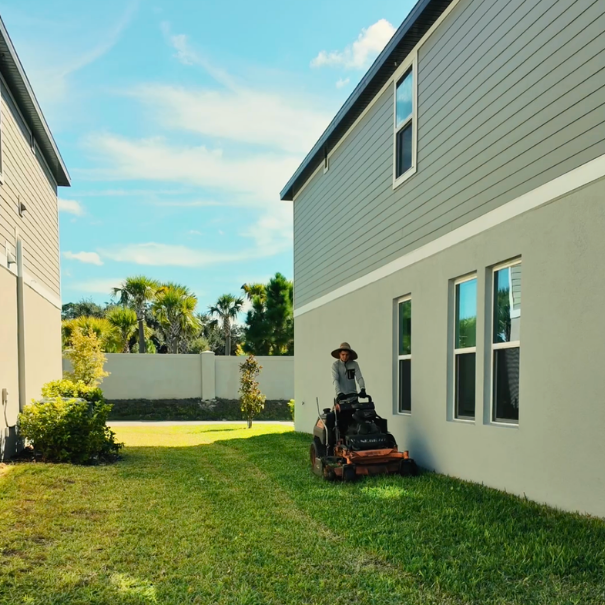
Floratam and similar coarse varieties perform best when maintained at 3.5 to 4 inches. This height provides shade for the root system while allowing enough leaf surface for photosynthesis during peak summer heat. Never remove more than one-third of the blade length in a single mowing session.
Fine-textured varieties like Palmetto and Seville can be maintained slightly shorter, between 3 and 3.5 inches. These varieties naturally grow more densely, requiring careful blade sharpening to prevent tearing the finer leaf structure.
Important: Scalping St. Augustine grass during summer months creates entry points for chinch bugs and increases heat stress. Maintain consistent height year-round, only lowering slightly during the dormant season for spring preparation.
Fertilizing Schedule and County Restrictions
Central Florida counties enforce fertilizer blackout periods that directly impact St. Augustine care schedules. Understanding these restrictions and optimal feeding windows ensures compliance while maintaining healthy turf growth.
Polk, Lake, and Orange counties prohibit nitrogen fertilizer application from June 1 through September 30. This blackout period coincides with the rainy season when excess nutrients contribute to water quality problems in local lakes and waterways.
The ideal fertilizing windows occur from February through May and October through November. St. Augustine grass actively grows during these periods and can effectively utilize applied nutrients without environmental concerns. Apply fertilizer containing slow-release nitrogen sources for extended feeding periods.
Spring applications in February or March help St. Augustine emerge from dormancy with adequate nutrition for early growth. Fall applications in October provide nutrients for root development before winter dormancy, improving spring green-up timing.
Tip: Professional lawn maintenance services track county regulations and application timing to ensure compliance while maintaining optimal turf health throughout the year.
MonthFertilizer ApplicationWatering FocusMowing FrequencyFeb-MarSpring feeding (slow-release N)Moderate, deep wateringResume regular scheduleApr-MaySecond application if neededIncrease frequency graduallyWeekly as growth increasesJun-SepNO FERTILIZER (county blackout)Deep, infrequent wateringWeekly to bi-weeklyOct-NovFall feeding for root developmentReduce frequency graduallyBi-weekly as growth slowsDec-JanNo feeding during dormancyMinimal, only if extremely dryMonthly or as needed
Watering Requirements for Sandy Soil Conditions
Central Florida's sandy soils drain quickly, requiring specific watering strategies to maintain adequate moisture for St. Augustine grass roots. Proper irrigation timing and frequency prevent both drought stress and shallow root development.
St. Augustine grass needs approximately 1 to 2 inches of water per week, including rainfall. Sandy soils require more frequent applications than clay soils, typically every 2-3 days during peak growing season. Water early morning between 4 AM and 8 AM to minimize evaporation losses and reduce fungal disease pressure.
Deep, infrequent watering encourages deeper root growth compared to light daily applications. Run irrigation zones long enough to wet soil 6-8 inches deep, then allow the surface to dry slightly before the next application. This cycle promotes drought tolerance and healthier root systems.
Monitor rainfall amounts using rain gauges or National Weather Service data to adjust irrigation schedules accordingly. Turn off automatic systems during rainy periods to prevent overwatering and associated disease problems.
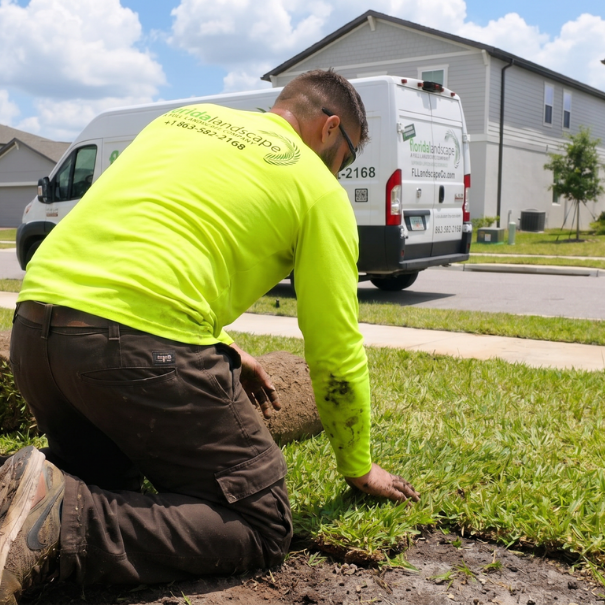
Note: Newly installed St. Augustine sod requires daily watering for the first two weeks, then transition to the deep, infrequent schedule as roots establish in the soil.
Common St. Augustine Grass Problems in Central Florida
Several pests and diseases specifically target St. Augustine grass in Central Florida's climate. Early identification and proper treatment prevent minor issues from becoming major lawn renovation projects.
Chinch Bugs cause the most widespread St. Augustine damage in Central Florida. These insects create irregular yellow patches that expand rapidly during hot, dry periods. Look for tiny black bugs with white wings at the edge of damaged areas. Chinch bugs prefer sunny locations and stressed turf, making proper watering essential for prevention.
Brown Patch Fungus appears as circular brown patches 6 inches to several feet in diameter. This disease thrives during humid conditions with temperatures between 70-85°F, common during spring and fall transition periods. Improve air circulation and avoid evening watering to reduce brown patch pressure.
Take-All Root Rot causes gradual turf decline starting with the root system. Affected areas thin out and turn yellow-brown despite adequate watering and nutrition. This soilborne disease often requires professional diagnosis and treatment with specialized fungicides.
Dollar Weed and Sedge invasion indicates excessive moisture or poor drainage conditions. These weeds thrive in wet areas where St. Augustine struggles, often appearing after irrigation system malfunctions or during extended rainy periods.
Professional pest and disease identification prevents incorrect treatment applications that can worsen problems. The University of Florida IFAS Extension provides detailed diagnostic guides for common St. Augustine problems in Florida landscapes.
When to DIY vs. Professional Care
Basic St. Augustine maintenance like mowing, watering, and simple fertilizing can be handled by motivated homeowners with proper equipment and knowledge. However, several situations require professional expertise to prevent costly mistakes or lawn damage.
Homeowners can successfully manage routine mowing with sharp blades, basic fertilizer applications following county restrictions, and irrigation system adjustments. These tasks require attention to detail but don't need specialized equipment or pesticide licensing.
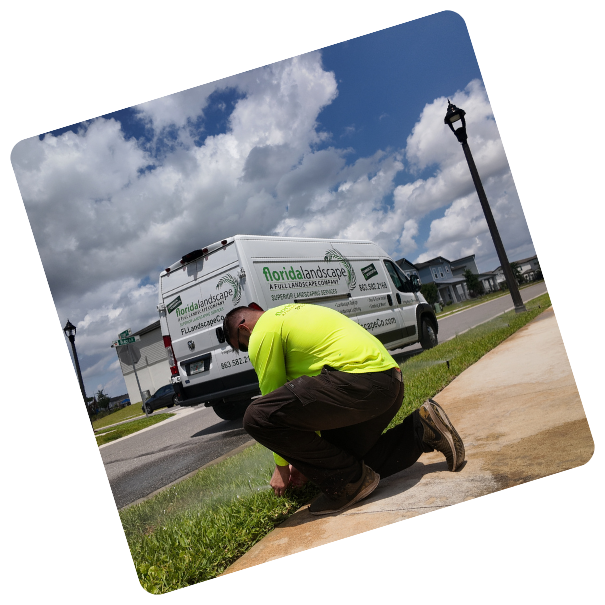
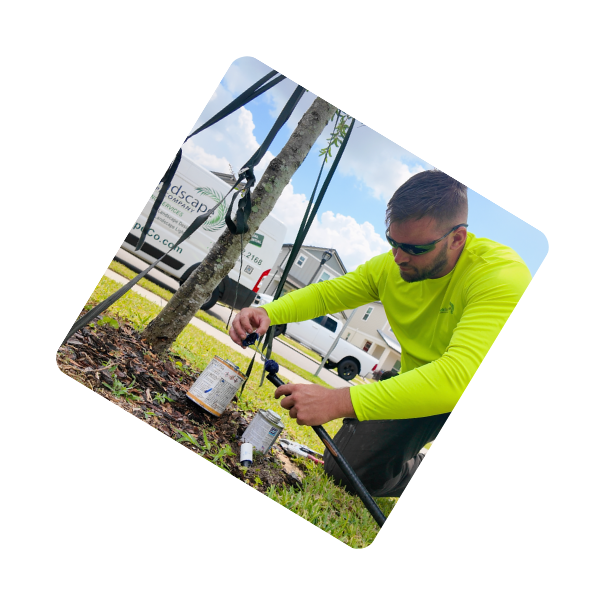
Professional intervention becomes necessary for pest identification and treatment, disease diagnosis, soil testing and amendment, irrigation system installation or major repairs, and large-area renovation projects. Licensed professionals have access to commercial-grade products and diagnostic tools not available to homeowners.
Complex problems like chinch bug infestations, fungal diseases, or take-all root rot require accurate identification and proper treatment timing. Misdiagnosis often leads to ineffective treatments and continued turf decline, making professional expertise cost-effective for serious problems.
Consider the time investment required for proper St. Augustine care when deciding between DIY and professional services. Consistent weekly maintenance throughout the growing season requires significant time commitment that many homeowners underestimate. For more information about comprehensive care options, review our complete guide to Florida grass types and their specific requirements.
Schedule Your St. Augustine Lawn Health Assessment
St. Augustine grass requires specific care strategies tailored to Central Florida's unique climate and soil conditions. Professional assessment identifies current lawn health, potential problem areas, and customized maintenance recommendations for your property's specific needs.
Our lawn health evaluation includes soil testing, pest and disease inspection, irrigation system review, and seasonal care planning. We provide written recommendations with timing specifics that comply with county fertilizer restrictions while maintaining optimal turf health.
Don't wait for visible problems to develop—schedule your comprehensive lawn assessment today by calling (863) 582-2168 or visiting our contact page to discuss your St. Augustine grass care needs.

Get your free quote and expert advice today.
Ready to transform your garden? Get in touch with our expert team today for a free consultation and personalized plan.




St. Augustine Grass in Central Florida: Frequently Asked Questions
How often should I water St. Augustine grass in Central Florida?

Water St. Augustine grass 2-3 times per week during growing season, providing 1-2 inches total including rainfall. Water early morning and deeply to encourage root development in sandy soils.
Why is my St. Augustine grass turning yellow in summer?
Yellow St. Augustine grass in summer typically indicates chinch bug damage, especially in sunny areas during dry periods. Check for tiny black insects at the edge of yellow patches and treat accordingly.
What height should I cut St. Augustine grass in Florida?
Maintain Floratam St. Augustine at 3.5-4 inches and fine-textured varieties at 3-3.5 inches. Never remove more than one-third of the blade length to prevent stress and pest problems.
Can I fertilize St. Augustine grass during Florida summer?
No, Polk, Lake, and Orange counties prohibit nitrogen fertilizer application from June 1 through September 30. Fertilize during February-May and October-November windows instead.
What causes brown patches in St. Augustine grass?
Brown patches usually result from fungal disease thriving in humid conditions between 70-85°F. Improve air circulation, avoid evening watering, and consider fungicide treatment for severe cases.

