.webp)
Sod Installation in Clermont FL: Grass Types, Cost & What to Expect
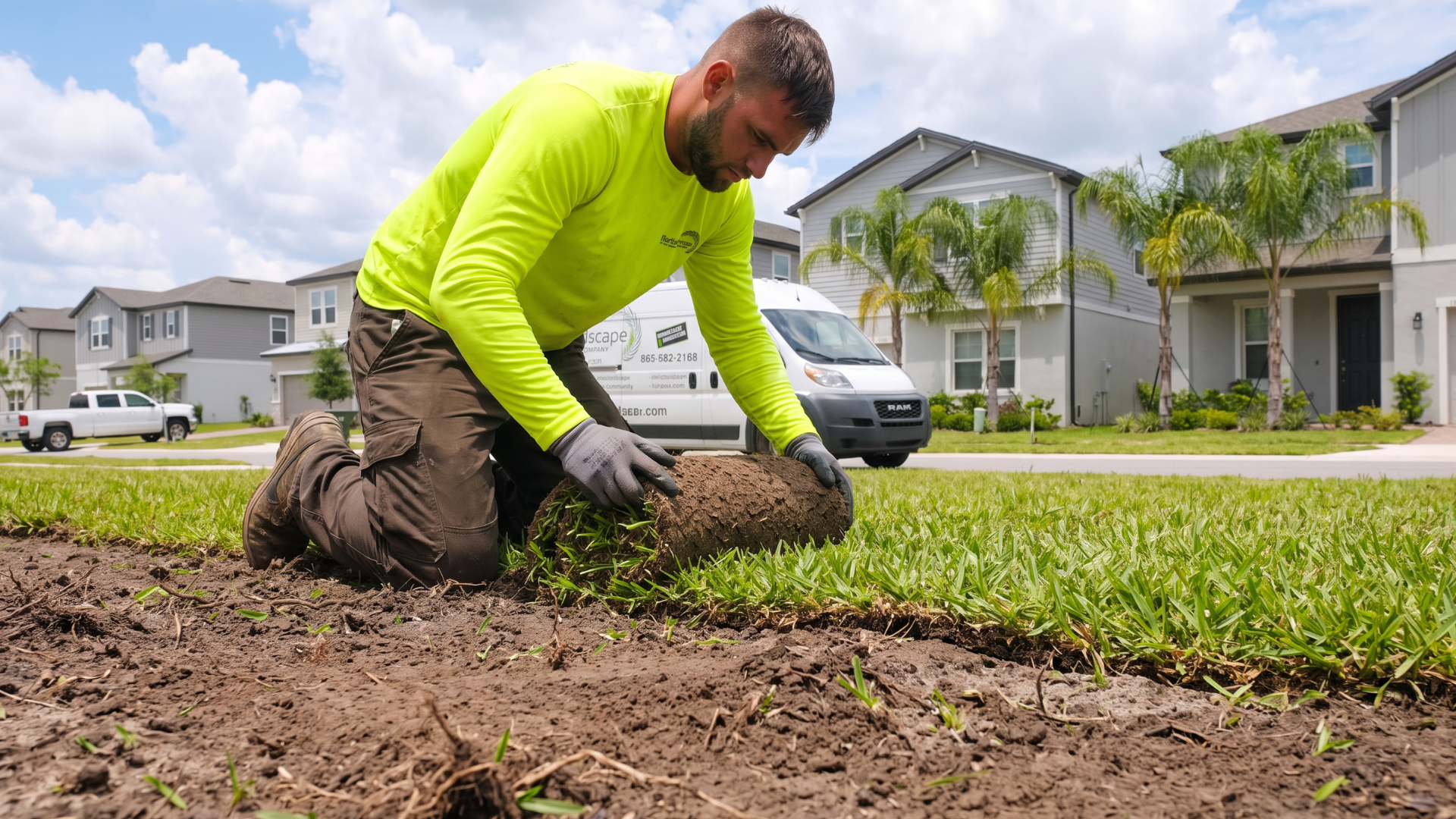
Sod installation in Clermont FL is one of the most reliable ways to get an established, weed-resistant lawn quickly — and in Central Florida's heat, it's almost always the smarter choice over seeding. Clermont's climate, with its intense summer sun, heavy afternoon rain, and sandy soil, creates conditions where seeding the main turfgrass species rarely produces consistent results. Sod skips that gamble entirely and gives your yard a functional turf surface from day one.
This guide covers everything Clermont homeowners need to know before committing to a sod project: which grass types perform best here, what installation realistically costs, how the process works start to finish, and what you need to do after the sod goes down to make sure it actually roots.
Why Sod Beats Seed in Clermont and Central Florida
The three turfgrass species that dominate Central Florida lawns — St. Augustine, Zoysia, and Bahia — have very different establishment characteristics, but all three share one thing in common: they perform far better when installed as sod than when seeded.
St. Augustine, the most common lawn grass in this region, is not available as a quality seed product at all — it must be installed as sod or plugs. Zoysia seed is available but takes months to fill in and remains wide open to weed invasion during that window. Florida's aggressive weed pressure, particularly from nutsedge, crabgrass, and dollarweed, makes a thin germinating lawn almost impossible to protect.
Sod also handles Clermont's summer rainy season better. A newly seeded lawn hit with heavy afternoon downpours in June or July can wash out, thin, or fail entirely. Sod establishes a root system within two to three weeks and becomes structurally stable enough to handle normal rainfall without displacement.
Note: Clermont's terrain adds another variable. The area's rolling hills and sandy, well-draining soil mean water moves through the profile quickly. Sod holds better on slopes during establishment than seed, which requires constant moisture at the soil surface to germinate properly.
Best Grass Types for Clermont Sod Installation
Not every grass type suits every yard in Clermont. Choosing the right species comes down to your yard's sun exposure, how much irrigation you have in place, your maintenance expectations, and your budget. Here are the three varieties Florida Landscape Co. installs most often in the Clermont area.
1. Floratam St. Augustine: Floratam is the most widely installed grass in Central Florida for good reason. It's dense, grows aggressively to crowd out weeds, and handles both full sun and partial shade better than most alternatives. It produces a lush, thick lawn that holds up well to moderate foot traffic and recovers quickly after mowing stress. For most Clermont homeowners with mixed sun and shade conditions, Floratam is the default recommendation.
2. Empire Zoysia: Empire Zoysia is the premium option for yards with heavy sun exposure and homeowners who want a fine-textured, golf-course-quality appearance. It's notably drought-tolerant once established, which makes it a strong performer in Clermont's dry season (typically November through May). It does require more precise mowing — Empire prefers being cut lower and with a sharp blade — and it establishes more slowly than St. Augustine. It also struggles in heavy shade, so yard layout matters.
3. Argentine Bahia: Argentine Bahia is the practical choice for large lots where irrigation infrastructure is limited or the irrigation budget is modest. It's exceptionally heat and drought tolerant, thrives in sandy soil, and requires less fertilizer than St. Augustine or Zoysia. The tradeoff is texture — Bahia is coarser and less visually refined than either of the other two. It's commonly used on rural parcels, acreage lots, and low-maintenance commercial properties throughout the Clermont and Groveland areas.
• Floratam St. Augustine — Sun Requirement: Full sun to part shade — Drought Tolerance: Moderate — Texture: Coarse-medium, dense — Best For: Most residential lots
• Empire Zoysia — Sun Requirement: Full sun — Drought Tolerance: High (once established) — Texture: Fine, manicured — Best For: Premium sun-heavy yards
• Argentine Bahia — Sun Requirement: Full sun — Drought Tolerance: Very high — Texture: Coarse — Best For: Large lots, low irrigation
For a deeper look at how these grass types compare across Florida's different regions and conditions, the UF IFAS Extension sod and turfgrass resources offer research-backed guidance on species selection and establishment. You can also read Florida Landscape Co.'s breakdown on our Florida grass types guide to compare options side by side.
Sod Installation Cost in Clermont FL
Sod installation in Clermont typically runs between $1.50 and $3.00 per square foot installed, which includes both materials and labor. Where your project lands in that range depends on several factors specific to your property.
A standard pallet of sod covers approximately 450 square feet. A typical quarter-acre residential lot — once you subtract the house footprint, driveway, beds, and hardscape — usually requires between 8 and 12 pallets of turf. That puts most residential sod projects in the range of $5,400 to $16,200 for the full installed scope, though smaller or simpler projects come in lower.
Cost factors that affect your final number:
1. Existing turf removal: If you have an old lawn that needs to be killed and stripped before new sod goes down, that adds labor and disposal costs. Skipping this step is a common mistake — old turf left in place creates an uneven surface and competes with the new sod's rooting.
2. Grading and soil prep: Clermont's sandy soil is generally good for drainage, but it can be uneven after old turf removal. Grading to establish proper slope and fill low spots adds cost but matters for both aesthetics and drainage performance.
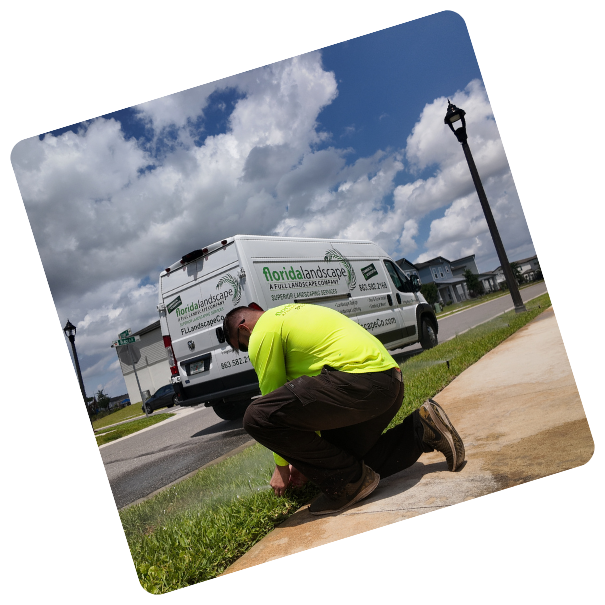
3. Irrigation modifications: New sod placed over an area with inadequate irrigation coverage will struggle during Clermont's dry season. If your existing system doesn't cover the full turf area, adjustments or additions should be budgeted before installation — not after. Our irrigation installation and repair service covers system audits and modifications that can be coordinated with your sod project.
4. Grass species: Zoysia sod costs more per pallet than St. Augustine or Bahia. If you're choosing Empire Zoysia for its premium look, factor in a higher material cost per square foot.
The Sod Installation Process: What to Expect
A professional sod installation follows a defined sequence. Rushing or skipping steps is what separates a lawn that roots successfully from one that dies within a month. Here's how Florida Landscape Co. handles sod installation projects in Clermont.
1. Site assessment: We walk the property to evaluate sun exposure, existing turf condition, irrigation coverage, soil grade, and any drainage concerns. This step determines which grass type to recommend and whether additional prep work is needed before sod delivery.
2. Measure and quote: We calculate the total turf area, confirm pallet quantities, and provide a written quote that accounts for prep, materials, and installation. No surprises on delivery day.
3. Old turf removal and grading: Existing grass and weeds are removed. The soil is graded to eliminate low spots and establish positive drainage away from the structure. In Clermont's sandy conditions, we may add a thin layer of topsoil or sand to smooth the surface before laying.
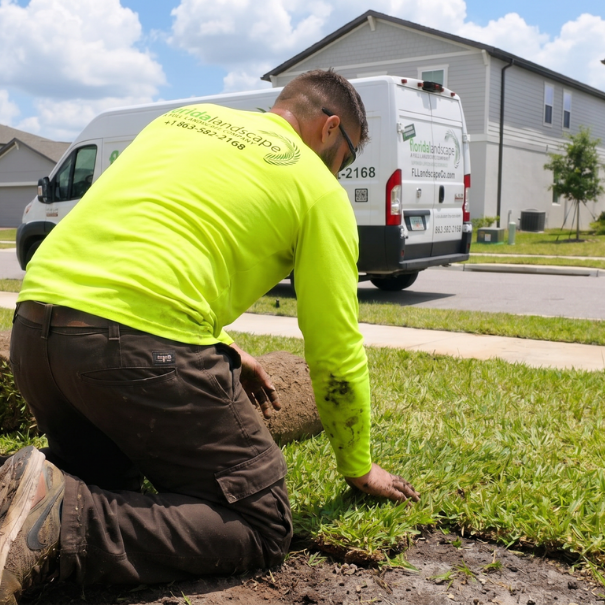
4. Sod installation: Sod is laid in a staggered, brick-like pattern to prevent seams from lining up. Staggered joints establish faster and create a more uniform appearance once the lawn fills in. Cuts are made tight around beds, hardscape edges, and structures.
5. Rolling: A sod roller is used to press the turf firmly against the soil. Good soil contact is critical — air pockets prevent rooting and dry out the sod from underneath.
6. Immediate watering: Sod is watered immediately after installation. In Clermont's heat, freshly laid sod can begin to dry out within hours if not irrigated right away. We confirm irrigation coverage before leaving the site.
To learn more about what's included in a full sod project, visit our sod installation service page for a breakdown of what Florida Landscape Co. offers across the Clermont area.
After-Install Care: Keeping Your New Sod Alive in Clermont
Installation is only half the job. What happens in the first two to three weeks after sod goes down determines whether it roots successfully or fails. Clermont's sandy soil drains faster than most people expect, which makes the watering schedule during establishment critical.
Watering schedule: For the first two weeks, new sod should be watered daily — typically two short cycles per day during the hottest months. The goal is to keep the soil moist 2 to 3 inches deep without waterlogging. After week two, taper watering to every other day, then to your normal irrigation schedule by week four.
The tug test: Before mowing, confirm the sod has rooted by gently tugging a corner of a piece. If it lifts easily, it's not ready. If it resists, the roots have knit into the soil and you can mow. Most St. Augustine sod in Clermont roots within 14 to 21 days under proper irrigation. Zoysia may take slightly longer.
First mow: Mow at the correct height for your grass type — 3.5 to 4 inches for Floratam, 2 to 2.5 inches for Empire Zoysia, 3 to 4 inches for Bahia. Never remove more than one-third of the blade height in a single mowing. Use a sharp blade to avoid tearing the not-yet-fully-established turf.
First fertilizer application: Apply a starter fertilizer after the first successful mow — not before. Fertilizing before rooting pushes leaf growth at the expense of root development. After the first mow, a balanced fertilizer with slow-release nitrogen supports healthy establishment without burning new turf.
Foot traffic: Keep foot traffic off newly installed sod for at least two weeks. Kids, dogs, and heavy equipment can dislodge sod pieces before they root, creating bare patches that require replacement.
Once your lawn is established, ongoing lawn and landscape maintenance keeps it healthy through Clermont's full weather cycle — mowing on schedule, fertilizing at the right times, and managing weeds before they get a foothold.
Tip: If your irrigation system doesn't provide full and even coverage across the new sod area, you'll see dry patches develop within the first week. Address irrigation gaps before installation day, not after. The UF IFAS lawn and garden resources include detailed guidance on irrigation scheduling for Florida turfgrass during establishment.
Get a Sod Installation Quote for Your Clermont Property
Florida Landscape Co. has been installing sod across Clermont and Central Florida since 2011. We know the soil conditions, the seasonal timing, and the irrigation requirements that give new lawns the best chance of rooting successfully in this area.
Whether you're replacing a failing lawn, starting fresh on a new build, or upgrading to a premium grass species, we can walk your property, give you an honest recommendation, and deliver a clean installation with the follow-up support to make it last.
Call us at (863) 582-2168 or visit our contact page to schedule a site visit and get a written quote for your Clermont sod project.
Frequently Asked Questions
What is the best grass for sod installation in Clermont FL?
Floratam St. Augustine is the best all-around choice for most Clermont yards — it handles the area's mix of sun and shade, establishes quickly, and produces a dense turf that crowds out weeds. Empire Zoysia is a strong alternative for full-sun yards where a finer texture and higher drought tolerance are priorities. Argentine Bahia works best on large lots with limited irrigation budgets.
How much does sod installation cost in Clermont FL?
Installed sod in Clermont typically runs $1.50 to $3.00 per square foot, covering materials and labor. A quarter-acre residential turf area generally requires 8 to 12 pallets, putting most projects between $5,400 and $16,200. Costs vary based on existing turf removal, grading needs, grass species, and irrigation modifications required before installation.
How long does it take for new sod to root in Clermont?
Most St. Augustine sod roots within 14 to 21 days under a proper daily watering schedule. Zoysia may take slightly longer, up to 3 to 4 weeks. Clermont's sandy soil drains quickly, so consistent irrigation during the establishment window is critical to rooting success. Use the tug test — if the sod resists when you pull a corner, it has rooted.
Can I install sod in Clermont during the summer rainy season?
Yes — summer is actually a good time to install sod in Central Florida because consistent afternoon rain reduces irrigation demand during establishment. The risk is in scheduling around storms, which can make delivery and installation logistics difficult. Spring (March through May) is the most popular installation window because temperatures are warm but not yet extreme and rainfall is more predictable.
Do I need to modify my irrigation system before new sod is installed?
If your current system doesn't provide even coverage across the full turf area, adjustments should be made before installation day. New sod needs daily watering for the first two weeks, and dry patches from poor irrigation coverage can kill sections of sod before they root. A system audit prior to installation helps identify gaps, broken heads, or pressure issues that need correction.
When should I fertilize new sod in Clermont?
Wait until after the first successful mow to apply fertilizer. Fertilizing before the sod has rooted pushes leaf growth rather than root development, which can stress the new turf. After the first mow — typically 3 to 4 weeks post-installation — apply a balanced slow-release fertilizer appropriate for your grass species to support continued establishment.

Get your free quote and expert advice today.
Ready to transform your garden? Get in touch with our expert team today for a free consultation and personalized plan.



Sod Installation in Clermont FL: Frequently Asked Questions
What is the best grass for sod installation in Clermont FL?

Floratam St. Augustine is the best all-around choice for most Clermont yards — it handles the area's mix of sun and shade, establishes quickly, and produces a dense turf that crowds out weeds. Empire Zoysia is a strong alternative for full-sun yards where a finer texture and higher drought tolerance are priorities. Argentine Bahia works best on large lots with limited irrigation budgets.
How much does sod installation cost in Clermont FL?
Installed sod in Clermont typically runs $1.50 to $3.00 per square foot, covering materials and labor. A quarter-acre residential turf area generally requires 8 to 12 pallets, putting most projects between $5,400 and $16,200. Costs vary based on existing turf removal, grading needs, grass species, and irrigation modifications required before installation.
How long does it take for new sod to root in Clermont?
Most St. Augustine sod roots within 14 to 21 days under a proper daily watering schedule. Zoysia may take slightly longer, up to 3 to 4 weeks. Clermont's sandy soil drains quickly, so consistent irrigation during the establishment window is critical to rooting success. Use the tug test — if the sod resists when you pull a corner, it has rooted.
Can I install sod in Clermont during the summer rainy season?
Yes — summer is actually a good time to install sod in Central Florida because consistent afternoon rain reduces irrigation demand during establishment. The risk is in scheduling around storms, which can make delivery and installation logistics difficult. Spring (March through May) is the most popular installation window because temperatures are warm but not yet extreme and rainfall is more predictable.
Do I need to modify my irrigation system before new sod is installed?
If your current system doesn't provide even coverage across the full turf area, adjustments should be made before installation day. New sod needs daily watering for the first two weeks, and dry patches from poor irrigation coverage can kill sections of sod before they root. A system audit prior to installation helps identify gaps, broken heads, or pressure issues that need correction.

