.webp)
HOA Landscaping Standards: A Central Florida Board and Property Manager Guide
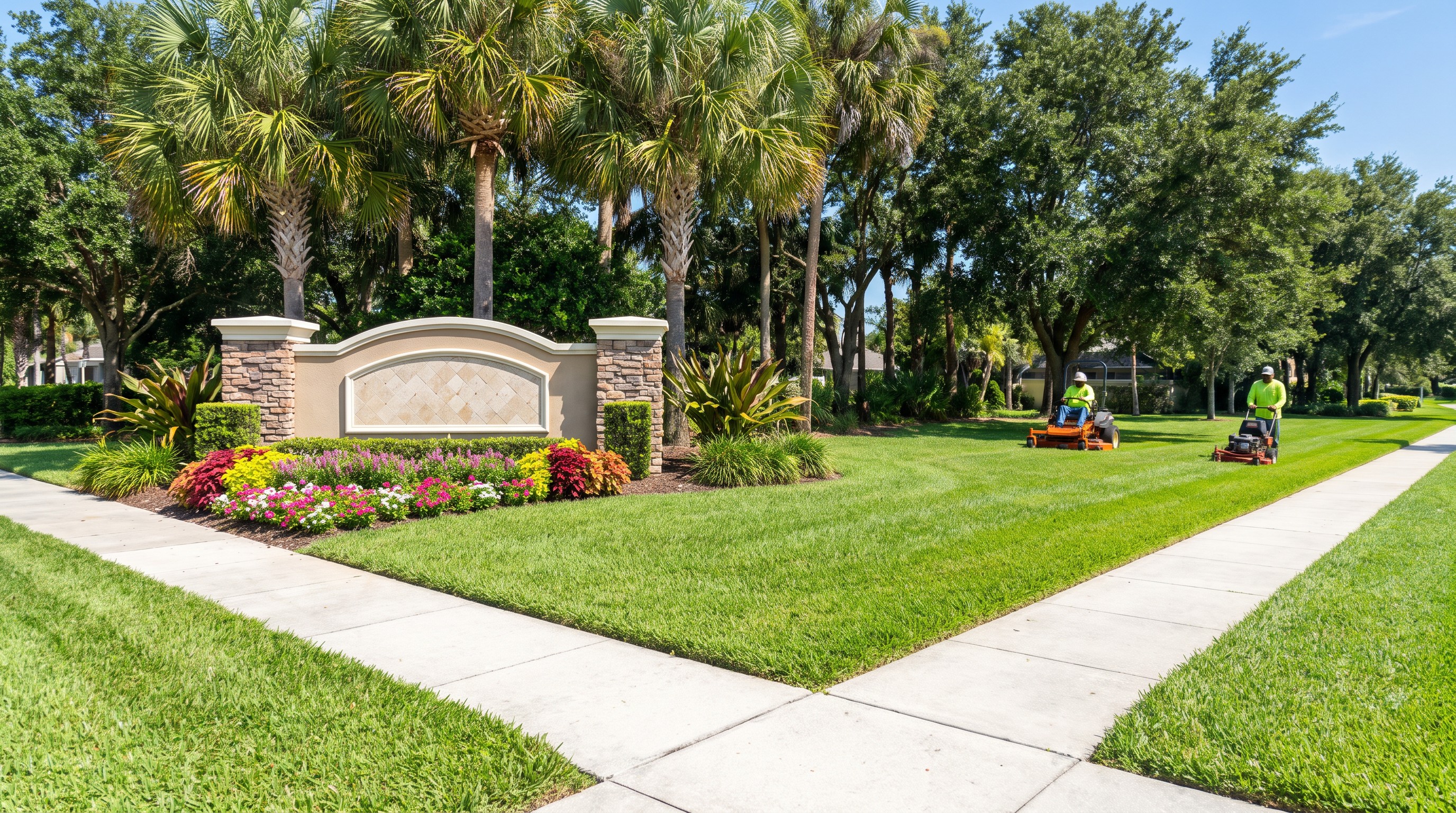
HOA landscaping standards are the written specifications a community uses to define acceptable turf condition, common-area appearance, irrigation performance, and seasonal upkeep — and they are the single biggest factor separating well-run communities from ones stuck in endless compliance disputes. Boards across Polk, Lake, and West Orange counties manage the same recurring headache: a landscape contract that reads fine on paper but leaves too much open to interpretation once a crew shows up (or doesn't). When standards are vague, homeowners complain, contractors cut corners to protect margin, and the board absorbs the liability.
This guide breaks down what belongs in a real set of HOA landscaping standards, how to translate those standards into enforceable contract language, and what's different about doing this in Central Florida's growth corridors — Horizon West, Davenport, ChampionsGate, and the communities around them. It's built to be the reference page boards and property managers come back to, with links out to deeper coverage on contracts, irrigation, and common-area maintenance.
Why Written Landscaping Standards Matter for HOA Boards
A landscape contract without measurable standards is a liability problem waiting to surface. Boards that rely on general language like "maintain landscaping in good condition" have no objective basis for enforcement when a contractor underperforms, and no defense when a homeowner challenges a special assessment tied to landscape spending.
Clear standards also protect the board from accusations of selective enforcement. If turf height, edging frequency, and mulch depth are documented and applied uniformly across every common area and every homeowner-facing space, the board is enforcing a policy — not making a judgment call that can be disputed at the next annual meeting.
Note: Under Florida law, HOA boards carry fiduciary duty for common-area maintenance decisions. Documented standards create a paper trail that supports that duty rather than undermining it.
Essential Elements of HOA Landscaping Standards
Effective standards address every visible component of the property with measurable, contractor-checkable specifications. Use this as a working checklist when drafting or revising your community's standards.
• Turf type and height: Specify the grass variety appropriate for the community — St. Augustine, Bahia, or Zoysia are the three most common in Central Florida — along with mowing height ranges by season.
• Mowing frequency: Weekly during the growing season (roughly April through October), bi-weekly during dormancy, with clear language on what counts as "growing season" for scheduling disputes.
• Edging: Define frequency and acceptable tolerance for grass encroachment onto sidewalks, curbs, and landscape bed borders. Clean edges are one of the fastest visual signals of a well-maintained community.
• Mulch depth: 2–3 inches in all beds, refreshed on a defined schedule (typically twice a year in Central Florida's climate) to prevent the thin, faded look that signals neglect.
• Irrigation performance: Coverage standards, dry-spot response time, and compliance with local watering restrictions — not just "the system runs."
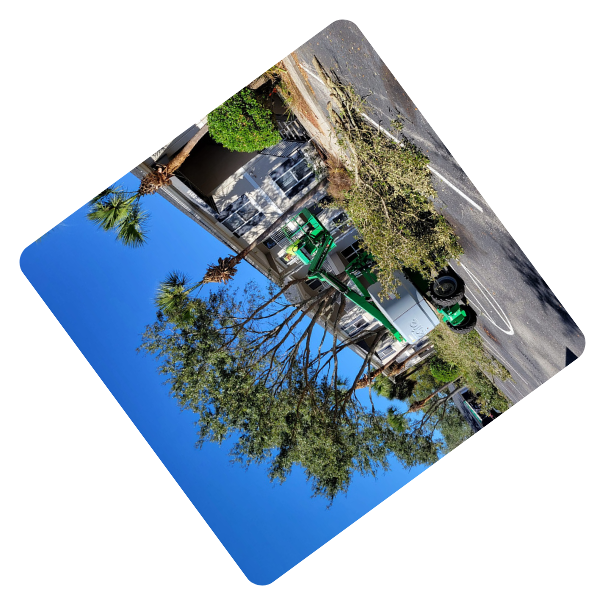
• Tree canopy clearance: Minimum clearance heights over sidewalks, roads, and sightlines at intersections, plus a schedule for canopy thinning and storm-risk pruning.
• Seasonal color and entry features: Plant variety, rotation schedule, and design consistency across every community entrance and monument sign — this is the first impression that shapes buyer perception and resident pride.
• Weed control thresholds: A defined tolerance (e.g., no visible weeds in beds or turf within 48 hours of a service visit) rather than a vague "weed-free" standard that's impossible to verify.
Central Florida-Specific Considerations: Horizon West, Davenport, and ChampionsGate
Standards written for a generic HOA template rarely account for what's actually happening in Central Florida's fastest-growing communities. Horizon West, Davenport, and ChampionsGate share a set of conditions that older, established HOAs elsewhere in the state don't deal with in the same way.
New-construction turnover is constant in these corridors. Builders hand off common areas and retention pond buffers to the HOA on a rolling basis, which means landscape standards need to specify how newly turned-over areas get absorbed into the existing maintenance schedule — not left in limbo between builder responsibility and HOA responsibility.
Master-planned communities in this corridor, including many in and around ChampionsGate and Horizon West, often carry architectural review committee (ARC) guidelines that go beyond standard HOA landscaping rules — specific approved plant lists, hardscape material restrictions, and entry monument design continuity across multiple phases. Standards documents should cross-reference the ARC guidelines directly rather than duplicating them, which reduces the chance of the two documents contradicting each other.
Water management districts covering this area (South Florida and St. Johns River) enforce watering restrictions that are stricter during dry-season months. Standards should explicitly tie irrigation scheduling to the applicable district's current restriction schedule rather than hardcoding days, since those rules shift seasonally.
Sandy, fast-draining soil across Polk and Lake counties also means turf and plant material stress faster during dry spells than in communities with heavier soil composition. Standards that don't account for this tend to trigger disputes when turf browns during a drought period even though the contractor is following the watering schedule correctly.
Writing Landscaping Standards Into HOA Contracts
Standards only work if they're written directly into the contract's scope of work — not referenced as a separate policy document the contractor may or may not read. Frequency specifications need to be explicit: weekly mowing during growing season, bi-weekly during dormancy, with height requirements tied to the specific turf type installed.
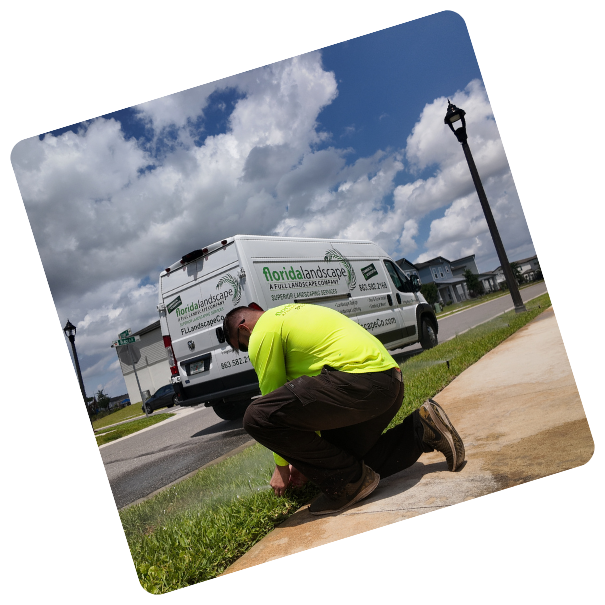
Irrigation system maintenance clauses should require monthly inspections, same-week leak repairs, and documented seasonal controller adjustments. A community relying on an outdated smart controller schedule during a wet-season downpour is a water bill and a compliance complaint waiting to happen — our irrigation repair and management services are built around exactly this kind of proactive adjustment.
Tip: Require photo documentation of completed common-area work with each invoice. It takes contractors minutes and gives the board an evidence trail if a homeowner disputes billing or service quality.
Quality control measures should specify a resident complaint response window (48–72 hours is standard) and a re-service guarantee if a scheduled visit is missed or performed below standard. Contracts without this language put the board in the position of negotiating remediation after the fact instead of enforcing a pre-agreed remedy.
• Mowing — Weak Language: "Regular mowing service" — Enforceable Standard: Weekly, April–October; bi-weekly, November–March; 3–3.5" cutting height for St. Augustine
• Mulch — Weak Language: "Mulch refreshed as needed" — Enforceable Standard: 2–3" depth, refreshed twice annually in April and October
• Irrigation — Weak Language: "System maintained" — Enforceable Standard: Monthly inspection, 72-hour leak repair window, seasonal controller reprogramming per water district schedule
• Complaint response — Weak Language: "Issues addressed promptly" — Enforceable Standard: Written acknowledgment within 48 hours, resolution or re-service within 5 business days
HOA Landscaping Compliance Checklist for Boards
Use this checklist during your next board meeting or contract renewal cycle to identify gaps in current standards.
1. Does the contract specify grass type and mowing height rather than general "mowing service"?
2. Is mulch depth (2–3") and refresh frequency written into the scope of work?
3. Are irrigation inspection frequency and repair response times documented with specific timeframes?
4. Does the contract reference current water management district restrictions rather than a fixed watering day?
5. Are tree canopy clearance heights and storm-prep pruning schedules specified for common areas?
6. Does the standards document cross-reference the community's ARC guidelines where applicable?
7. Is there a defined complaint response window and re-service remedy for missed or substandard visits?
8. Are photo-documentation requirements built into the invoicing process for common-area work?
Common Area Maintenance and Common Enforcement Mistakes
Even communities with detailed standards run into predictable problems. Watch for these when reviewing contractor performance or updating your standards document.
1. Enforcing standards inconsistently between homeowner lots and common areas: If turf height rules only get enforced against homeowners and not the HOA's own contractor, boards lose credibility fast.
2. No storm-prep language: Standards that don't address canopy thinning and debris response ahead of hurricane season leave the board scrambling after every named storm.
3. Ignoring new-construction turnover gaps: Common areas handed off from a builder without a clear absorption date into the maintenance schedule often go weeks without service.
4. Vague seasonal color language: "Seasonal flowers as appropriate" gives a contractor room to skip rotations entirely during slow months.
5. No documented irrigation audit requirement: Communities that skip annual system audits typically discover broken zones only after turf has already died back.
6. Treating the standards document as static: Standards written five years ago rarely account for current watering restrictions or updated plant material availability.
Choosing a Landscaping Contractor That Can Meet These Standards
Not every landscaping company is set up to service HOA-scale contracts with documentation, reporting, and board-level communication. When evaluating a contractor, ask for a sample service report format, confirm their irrigation team can handle both audits and repairs in-house, and check whether they've serviced comparable master-planned communities in growth corridors like Horizon West or ChampionsGate.
Florida Landscape Co. has built its HOA landscaping program around exactly this kind of accountability — documented visits, board-aligned scopes of work, and a single point of contact instead of a rotating crew. Communities in Horizon West and Davenport get the same standards enforcement whether it's a common-area mow cycle or a full irrigation audit ahead of dry season.
Commercial and mixed-use properties within HOA-managed developments often need the same specification rigor — see our commercial landscaping services for properties with retail or amenity-center frontage. For a deeper breakdown of contract structure specifically, our guide on HOA landscaping contracts in Central Florida covers scope-of-work language line by line.
The Community Associations Institute publishes broader governance guidance that pairs well with landscape-specific standards — see their resources on community association management. For the underlying legal framework Florida boards operate under, Chapter 720 of the Florida Statutes covers homeowners' association governance directly. The University of Florida's IFAS Extension also maintains research-backed guidance on Florida-friendly landscaping practices relevant to turf and irrigation standards in this climate.

Get your free quote and expert advice today.
Ready to transform your garden? Get in touch with our expert team today for a free consultation and personalized plan.




Frequently Asked Questions
What are HOA landscaping standards?

HOA landscaping standards are written specifications defining turf type and height, mowing and edging frequency, irrigation performance, mulch depth, tree canopy clearance, and seasonal color requirements for common areas and, in many communities, homeowner-facing landscaping.
Can an HOA enforce landscaping standards on individual homeowners?
Yes, if the standards are documented in the community's governing documents (declaration, bylaws, or a separately adopted rules resolution) and enforced consistently across all homeowners. Boards should confirm enforcement authority with legal counsel before issuing violations.
How often should HOA common areas be mowed in Central Florida?
Weekly during the growing season, roughly April through October, and bi-weekly during dormant winter months. St. Augustine, Bahia, and Zoysia turf each have slightly different height tolerances that should be specified in the contract.
What should be included in an HOA landscaping contract?
A strong contract specifies mowing frequency and height, edging tolerance, mulch depth and refresh schedule, irrigation inspection and repair response times, tree canopy clearance standards, complaint response windows, and photo documentation requirements for completed work.
How do water restrictions affect HOA landscaping standards in Central Florida?
South Florida and St. Johns River Water Management District restrictions dictate allowable watering days and times, which shift seasonally. Standards should reference the applicable district's current schedule rather than a fixed watering day to stay compliant year-round.

