

Winter Pruning in Central Florida: What to Cut in December and January (and What to Leave Alone)
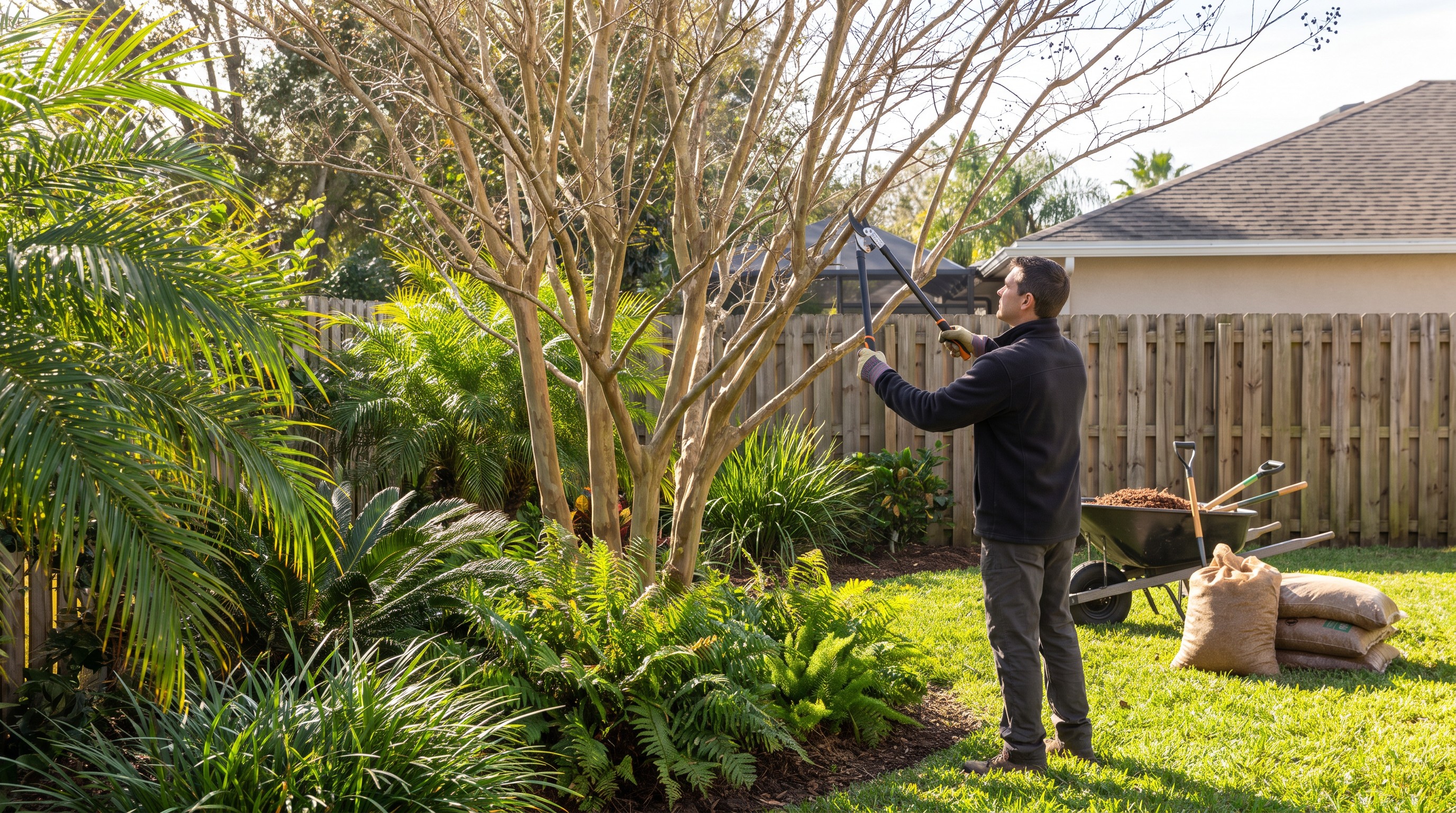
Winter pruning central florida — winter pruning in Central Florida is one of the most misunderstood jobs in the yard, and the mistakes made in December and January show up ugly and lopsided by April. Homeowners from Clermont to Davenport see crape myrtles topped into fist-sized stumps, palms shaved down to bare trunks, and hedges hacked into shapes that take a full growing season to recover. The good news: once you know which plants actually want a dormant-season cut and which ones should be left completely alone until spring, winter pruning becomes simple and low-risk instead of guesswork.
Central Florida's mild winters mean we don't get a true hard freeze most years, but growth does slow from late November through February. That slowdown is exactly why this window matters. Cuts made now heal before the spring flush, instead of forcing a plant to push new growth right before it gets hit with cold snaps or disease pressure in warmer months.
Why Winter Is the Right Time to Prune in Central Florida
Most woody ornamentals in Polk, Lake, and Orange County yards go semi-dormant between late fall and early spring. Sap flow slows, disease and insect activity drops, and the plant isn't actively pushing tender new growth that a pruning cut would damage. That combination makes late December through February the lowest-stress window of the year for structural cuts on deciduous and semi-deciduous species.
There's also a practical reason tied to Florida's growing season. Our subtropical climate means most plants grow almost year-round, so if you wait until summer to prune, you're cutting into active growth, which stresses the plant and can trigger a flush of weak, leggy regrowth. Winter cuts heal cleanly and set the plant up to leaf out with a cleaner structure in March and April.
The University of Florida IFAS Extension recommends dormant-season pruning for most ornamental landscape trees and shrubs in Central Florida precisely because it minimizes stress and disease entry points. That guidance holds true whether you're managing a single-family yard or a community common area with dozens of beds to maintain.
Crape Myrtles: Prune With Purpose, Not "Crape Murder"
Crape myrtles are the single most over-pruned tree in Central Florida landscapes, and the industry has a name for the worst offense: crape murder. That's the practice of cutting mature trunks down to stubs every winter, which weakens the tree, delays bloom, and produces a tangle of thin, whippy growth instead of a strong canopy.
Proper winter pruning on crape myrtles means removing suckers at the base, clearing out crossing or rubbing branches inside the canopy, and taking out any thin, twiggy growth smaller than a pencil. Selective thinning cuts improve airflow and light penetration, which reduces powdery mildew pressure later in the year. If a crape myrtle has outgrown its space, the better long-term fix is choosing a smaller variety for the next planting, not hacking the existing tree down every winter.
If your crape myrtles have been topped in previous years, winter is also the right time to start correcting that damage. Select two or three of the strongest new shoots coming off each cut point and remove the rest, which gradually rebuilds a natural branching structure over several seasons instead of perpetuating the stub-and-regrow cycle.
Palms: Less Is More During Winter Months
Palms are not trees in the botanical sense, and they don't respond to pruning the way crape myrtles or oaks do. A palm only has one growing point, and every green or yellowing frond is still feeding that bud. Removing too much canopy weakens the palm and makes it more vulnerable to cold damage during Central Florida's occasional winter cold snaps.
The only fronds that should come off in December and January are fully brown, dead fronds and old seed pods or flower stalks. Skip the "hurricane cut" look, where every frond above horizontal gets removed. That style strips green fronds the palm still needs, and research from the UF/IFAS Electronic Data Information Source has linked over-pruned palms to slower recovery from cold stress and higher susceptibility to certain nutrient deficiencies.
Winter is also a smart time to check palms for potassium deficiency, which shows up as yellow-orange discoloration on older fronds. If you spot it, a certified arborist can recommend a slow-release palm fertilizer program rather than cutting the affected fronds off, since removing them before new growth catches up can accelerate the decline.
Hedges and Shrubs: Shape Now for Spring Growth
Evergreen hedges like viburnum, ligustrum, and podocarpus handle winter shaping well because they're not actively pushing new growth that a hard cut would interrupt. This is the window to bring overgrown hedges back into a tight, formal shape without worrying about exposing bare wood right before a growth spurt.
For most hedge species common in HOA common areas and residential foundation beds, a winter cut should remove no more than a third of the total growth. Cutting the sides at a slight taper, narrower at the top than the bottom, lets sunlight reach the lower branches and prevents the bare-legged look that develops when hedges get boxed straight up and down year after year.
Flowering shrubs are the exception here, and timing matters more than most homeowners expect. Azaleas, for example, set next year's flower buds shortly after they finish blooming in spring, so a winter cut removes buds that would have opened in March. If a shrub blooms in spring, hold off until right after flowering. If it blooms in summer on new wood, like many hibiscus varieties, winter pruning is fine and often preferred.
What NOT to Prune in December and January
Just as important as knowing what to cut is knowing what to leave completely alone this time of year. Spring-flowering shrubs top that list, since cutting them now sacrifices the coming bloom cycle for no real benefit. Azaleas, camellias, and loropetalum should wait until after their flower show wraps up.
Citrus trees are another category to handle carefully. Light cleanup of dead or damaged wood is fine, but major structural pruning should wait until after the risk of frost has passed, since fresh cuts and the tender growth they trigger are more vulnerable to cold injury. Oaks also carry a specific warning: in parts of the Southeast, oak pruning during certain months is discouraged due to oak wilt disease transmission risk, and while Central Florida's oak wilt pressure is lower than other regions, the USDA Forest Service still recommends avoiding unnecessary oak wounds during peak beetle activity periods.
Newly planted trees and shrubs, anything installed within the last twelve months, generally don't need structural pruning yet. Let them establish a root system first. Removing canopy on a young, still-rooting plant slows its ability to recover and can set back the establishment period by a full season.
Common Mistakes That Damage Landscapes Every Winter
1. Topping crape myrtles: Cutting mature trunks down to stubs every year weakens the tree and produces weak, overcrowded regrowth instead of a stronger canopy.
2. Over-pruning palms: Removing green fronds above horizontal strips a palm of the energy it needs and increases cold-stress vulnerability.
3. Cutting spring bloomers too early: Pruning azaleas, camellias, or loropetalum in winter removes the flower buds already set for spring.
4. Using dull or dirty tools: Ragged cuts heal slower and create easier entry points for disease than a clean cut from a sharp, sanitized blade.
5. Pruning new plantings: Structural cuts on anything installed in the last year interrupt root establishment before the plant is ready.
6. Skipping a plan for HOA common areas: Inconsistent pruning across a community creates an uneven look at entrances and amenity centers right before peak visibility season.
Getting this right across an entire property, especially an HOA community with dozens of beds and common areas, is easier with a professional landscape design and maintenance plan built around what each plant species actually needs. A seasonal pruning schedule prevents the guesswork that leads to crape murder one year and overgrown hedges the next.
Schedule Your Winter Pruning in Central Florida Today
If your crape myrtles were topped last year, your palms look stripped, or your hedges have gotten away from you, you're not alone, and the fix is simpler than starting over. Florida Landscape Co. handles structural pruning, hedge shaping, palm cleanup, and HOA common-area pruning schedules across Clermont, Davenport, Haines City, and the Four Corners area.
Request your free quote or call (863) 582-2168 for fast, local service in Central Florida.

Get your free quote and expert advice today.
Ready to transform your garden? Get in touch with our expert team today for a free consultation and personalized plan.




Frequently Asked Questions
When should you prune crape myrtles in Florida?

Late December through February is the right window, while the tree is dormant. Focus on removing suckers, crossing branches, and thin twiggy growth rather than cutting back main trunks.
Can you trim palm trees in the winter in Florida?
Yes, but only remove fully brown, dead fronds and old seed pods. Cutting green or yellowing fronds weakens the palm and increases its vulnerability to cold damage.
Is it too cold to prune in Central Florida in January?
No. Central Florida rarely sees hard freezes, and most ornamental trees and shrubs handle winter pruning well since they're semi-dormant and not pushing tender new growth.
Why do crape myrtles get cut down to stubs every year?
That practice, known as crape murder, is a habit rather than a horticultural requirement. It produces weak regrowth and delayed blooming, and it's avoidable with selective thinning cuts instead of topping.
Should HOA common areas have a winter pruning schedule?
Yes. Consistent, professionally scheduled pruning across common areas, entry signage beds, and amenity centers keeps a community looking uniform and prevents the overgrown or over-cut look that hurts curb appeal and property values.

