.webp)
When and How to Replace Sod in Central Florida

Florida sod replacement becomes necessary when your lawn shows extensive damage that patching cannot fix. Central Florida's sandy soil, intense summer heat, and dramatic wet-dry seasonal cycles create unique challenges for maintaining healthy turf. When more than 40% of your lawn shows signs of severe stress, disease, or bare patches, complete sod replacement often proves more cost-effective than ongoing repair attempts.
Successful sod installation in Central Florida requires precise timing, proper soil preparation, and understanding how different grass varieties establish in our climate. The window between late winter and early summer offers the best opportunity for new sod to develop strong root systems before facing peak summer stress.
7 Clear Signs Your Lawn Needs Complete Sod Replacement
Recognizing when your lawn has passed the point of repair helps you make informed decisions about replacement timing and costs. These indicators suggest that patching individual problem areas will not restore your lawn's health and appearance.
Extensive bare patches covering 40% or more of your lawn. Sandy Florida soil loses grass coverage quickly when root systems fail. If bare areas dominate your landscape, replacement provides faster results than seeding or patching multiple zones.
Persistent fungal diseases that return despite treatment. Central Florida's humidity creates ideal conditions for brown patch, gray leaf spot, and other turf diseases. When fungal problems recur across large sections each season, the existing sod may lack disease resistance suitable for your microclimate.
Severe pest damage from chinch bugs or grubs. These insects can destroy entire lawn sections in weeks during peak activity periods. If pest damage covers significant square footage and has killed root systems, replacement often costs less than extensive pest control plus overseeding efforts.
Poor drainage causing chronic standing water. Florida's clay layers beneath sandy topsoil create drainage challenges. If your lawn holds water for 24+ hours after rain, the grading and soil composition need correction that sod replacement can address simultaneously.
Soil compaction that prevents grass growth. High-traffic areas in Central Florida develop concrete-hard soil that grass roots cannot penetrate. When core aeration fails to improve severely compacted zones, replacement allows complete soil preparation.
Wrong grass type for your conditions. Many older Florida lawns contain grass varieties poorly suited to specific light, water, or soil conditions. Replacement lets you select appropriate cultivars like disease-resistant St. Augustine or drought-tolerant Bahia for your site.
Age-related decline in grass quality and density. Even well-maintained lawns eventually lose vigor after 10-15 years. Thinning coverage, reduced color, and slower recovery from stress indicate that replacement will restore your lawn's health and appearance more effectively than ongoing maintenance.
Optimal Timing for Florida Sod Replacement
Central Florida's climate creates distinct windows when new sod establishes most successfully. Understanding seasonal weather patterns helps ensure your investment develops strong roots before facing environmental stress.
Late winter through early spring provides ideal establishment conditions. February through April offers moderate temperatures, increasing daylight, and reliable rainfall. New sod benefits from cooler weather that reduces water stress while roots develop in warming soil.
Spring installation allows 8-12 weeks of establishment before summer's peak heat arrives. This timing gives grass roots sufficient development to access deeper soil moisture when surface irrigation becomes critical during dry periods.
Early summer remains viable with increased maintenance. May and June installations can succeed with diligent watering schedules, but require more attention than spring plantings. Morning installation and immediate irrigation help new sod survive the transition to Florida's intense summer conditions.
Avoid midsummer installation from July through September unless absolutely necessary. Peak heat, afternoon thunderstorms, and high humidity stress new sod before root establishment occurs. Emergency replacements during this period need professional irrigation management and potential shade protection.
Grass TypeBest Install WindowEstablishment TimeSt. AugustineMarch - May4-6 weeksBahiaApril - June3-4 weeksZoysiaApril - May6-8 weeksBermudaMay - June2-3 weeks
Fall installation offers moderate success with spring benefits. October and November provide cooling temperatures and reduced water stress, but shorter daylight limits root development before winter dormancy. Fall sod may show slower spring green-up compared to spring installations.
Essential Soil Preparation for Central Florida Sod
Proper soil preparation determines sod establishment success more than any other factor. Central Florida's sandy soil requires specific amendments and grading techniques to support healthy root development and long-term grass health.
Remove existing vegetation completely. Dead grass, weeds, and root systems must be eliminated before new sod installation. Professional removal includes herbicide treatment 2-3 weeks prior, followed by mechanical removal of dead material and debris.
Sandy soil allows chemical penetration that kills root systems effectively, but organic matter from dead grass can create establishment problems if not removed. Complete clearing provides clean contact between new sod and prepared soil.
Test and amend soil pH and nutrients. University of Florida soil testing recommendations suggest pH levels between 6.0-7.0 for optimal nutrient availability. Sandy soils often test acidic and require lime application 4-6 weeks before sod installation.
Organic matter amendments improve water and nutrient retention in sandy soil. Compost, aged manure, or commercial soil conditioners mixed into the top 4-6 inches create better growing conditions for new grass roots.
Grade for proper drainage and smooth surface. Central Florida's flat terrain requires careful attention to drainage patterns and surface smoothness. Professional grading creates subtle slopes that move water away from structures while eliminating low spots that collect standing water.
Soil compaction from equipment use during preparation needs correction through tilling or cultivation. Loose, well-prepared soil allows rapid root penetration and establishment in Florida's challenging growing conditions.
Professional Sod Installation Process
Proper installation technique directly impacts establishment success and long-term lawn health. Professional sod installation follows specific steps that ensure optimal root-to-soil contact and minimize establishment stress in Central Florida conditions.
Timing and delivery coordination prevents sod deterioration. Fresh sod must be installed within 24 hours of harvest to maintain viability. Professional installers coordinate delivery timing with site preparation completion to minimize storage time in Florida's heat and humidity.
Morning installation provides the best conditions for new sod survival. Cooler temperatures and the opportunity for immediate afternoon watering help grass transition from harvest stress to establishment mode.
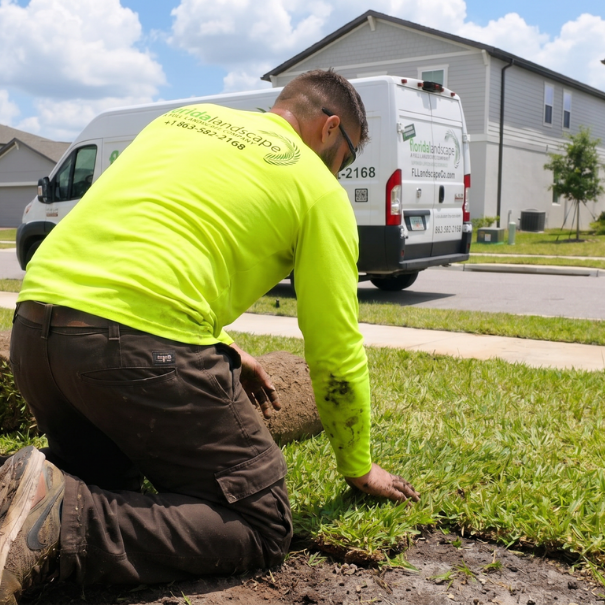
Installation pattern and technique ensure proper establishment. Sod pieces are laid in brick-like patterns with tight seams but no overlap. Proper installation eliminates gaps that allow weed establishment while ensuring each piece contacts prepared soil completely.
Rolling or light tamping after installation improves soil contact and eliminates air pockets that can dry out roots. Professional installers use appropriate pressure that secures sod without compacting the prepared soil base.
Immediate irrigation begins the establishment process. New sod requires thorough watering within 30 minutes of installation to prevent shock and root damage. Initial watering should penetrate through the sod into the prepared soil base, creating the moisture connection necessary for root development.
Tip: Professional sod installation includes establishment period guidance and follow-up care recommendations specific to your grass type and site conditions.
Establishment Timeline and Care Requirements
Understanding the establishment process helps Florida homeowners provide appropriate care during critical development periods. New sod progresses through distinct phases that require different maintenance approaches for successful establishment.
Week 1-2: Critical establishment phase requires daily attention. New sod needs consistent moisture without waterlogging during this crucial period. Light, frequent watering 2-3 times daily keeps sod moist while roots begin penetrating into prepared soil.
Avoid foot traffic during the first two weeks to prevent disruption of developing root systems. Even light pressure can damage the fragile connection between sod and soil that establishment depends upon.
Week 3-4: Root development allows reduced watering frequency. Successful establishment shows roots penetrating 1-2 inches into soil when gently lifted. Watering can shift to once daily, with deeper applications that encourage continued root development.
Light fertilization with starter fertilizer supports establishment without promoting excessive top growth that stresses developing roots. UF IFAS fertilization guidelines for new turf recommend low-nitrogen, high-phosphorus formulations during establishment.
Week 5-8: Transition to normal maintenance schedule. Established sod shows resistance when gently pulled and displays uniform color and growth. Watering frequency reduces to 2-3 times weekly with deeper applications that promote drought tolerance.
First mowing occurs when grass reaches 25% above recommended height for the variety. Sharp blades and dry conditions prevent damage to newly established turf during initial cutting.
Regular lawn maintenance programs can begin after full establishment, including appropriate fertilization, pest control, and seasonal care specific to Central Florida conditions.
Common Sod Replacement Mistakes to Avoid
Florida homeowners often make costly errors during sod replacement projects that compromise establishment success or long-term lawn health. Understanding these common mistakes helps ensure your investment provides lasting results.
1. Installing during peak summer heat: July and August installations face extreme establishment challenges that often require replacement. Spring timing provides much better establishment conditions with lower maintenance requirements.
2. Inadequate soil preparation: Rushing installation without proper grading, soil testing, or organic matter amendments creates long-term drainage and nutrient problems that expensive maintenance cannot solve.
3. Choosing inappropriate grass varieties: Selecting grass types based on appearance rather than site conditions leads to ongoing maintenance problems and eventual replacement needs.
4. Inconsistent establishment watering: Allowing new sod to dry out even once during the first two weeks can kill root development and require sections to be re-installed.
5. Neglecting irrigation system updates: Installing new sod without evaluating existing irrigation coverage often results in uneven establishment and long-term watering problems.
Professional sod replacement addresses these potential problems through proper planning, appropriate variety selection, and establishment period management. Expert installation includes irrigation system evaluation and updates when necessary to support new turf requirements.
Irrigation Considerations for New Sod Success
Successful sod establishment in Central Florida requires appropriate irrigation planning and system capacity. New sod has different water requirements than established turf, and existing irrigation systems may need updates to support establishment needs.
Establishment period requires increased watering frequency and duration. New sod needs 1-1.5 inches of water weekly during establishment, applied in frequent, shorter applications. Many existing irrigation systems lack the capacity or programming flexibility for optimal establishment watering.
Professional irrigation evaluation identifies coverage gaps, pressure problems, or programming limitations that could compromise sod establishment. Irrigation system updates often provide better long-term value than attempting establishment with inadequate watering infrastructure.
Smart irrigation controllers improve establishment success rates. Weather-based irrigation systems automatically adjust watering schedules based on rainfall, temperature, and humidity conditions. This technology prevents overwatering during Florida's unpredictable weather patterns while ensuring consistent moisture during dry periods.
Soil moisture sensors provide real-time feedback about root zone conditions that manual scheduling cannot match. Professional irrigation design incorporates these tools to optimize establishment while preventing water waste.
Zone-specific programming accommodates different establishment rates. New sod areas may need different watering schedules than established lawn zones during the establishment period. Advanced irrigation controllers allow customized programming that transitions new areas to normal schedules as establishment progresses.
Long-term Success Strategies for Florida Sod
Proper establishment sets the foundation for long-term lawn health, but ongoing maintenance practices determine how well your new sod investment performs over time. Central Florida's challenging climate requires specific care strategies for sustained success.
Seasonal maintenance timing maximizes sod health and longevity. Spring fertilization supports active growth during optimal growing conditions, while fall applications prepare grass for winter stress. Summer maintenance focuses on irrigation management and pest prevention during peak stress periods.
Understanding your grass variety's specific requirements helps optimize care practices. St. Augustine requires different fertilization timing than Bahia grass, and Zoysia has unique dormancy characteristics that affect maintenance schedules.
Proactive pest and disease management prevents major problems. Central Florida's humidity and temperature create ideal conditions for chinch bugs, brown patch, and other common turf problems. Regular monitoring and preventive treatments cost less than reactive management after damage occurs.
Professional maintenance programs provide consistent care that protects your sod replacement investment. Expert technicians recognize early signs of problems and adjust care practices based on seasonal conditions and grass performance.
Get Professional Sod Replacement for Your Central Florida Lawn
Replacing sod represents a significant investment in your property's appearance and value. Professional installation ensures proper timing, soil preparation, and establishment care that protects your investment and provides lasting results. Central Florida's unique climate challenges require local expertise for optimal sod replacement success.
Florida Landscape Co. provides complete sod replacement services throughout Central Florida, from soil preparation through establishment period support. Our experience with local growing conditions helps ensure your new lawn establishes successfully and thrives in our challenging climate.
Contact our team today for a comprehensive sod replacement consultation and detailed project estimate tailored to your specific lawn conditions and goals.

Get your free quote and expert advice today.
Ready to transform your garden? Get in touch with our expert team today for a free consultation and personalized plan.



Sod Replacement in Central Florida: Frequently Asked Questions
How much does sod replacement cost in Central Florida?

Sod replacement costs typically range from $0.40-$0.80 per square foot including installation, depending on grass variety, site preparation requirements, and project size. St. Augustine generally costs more than Bahia, while extensive soil preparation increases total project costs.
What type of sod works best in sandy Florida soil?
St. Augustine varieties like Floratam and Palmetto perform well in sandy soil with proper irrigation, while Bahia grass offers excellent drought tolerance for lower-maintenance applications. Soil amendments during installation improve performance for all grass types.
How long before I can walk on new sod in Florida?
Avoid foot traffic on new sod for 14-21 days to allow proper root establishment. Florida's heat and humidity can extend this timeline if establishment conditions are challenging. Light traffic areas may be usable after 3-4 weeks with full establishment.
Can I install sod myself or should I hire professionals?
DIY sod installation is possible for small areas, but professional installation ensures proper soil preparation, appropriate variety selection, and establishment period guidance. Large projects benefit significantly from professional equipment and expertise, especially in challenging Florida conditions.
When should I fertilize new sod in Central Florida?
Apply starter fertilizer at installation, followed by light applications every 4-6 weeks during establishment. Avoid heavy nitrogen applications during the first 8 weeks that can stress developing root systems. Regular fertilization begins after full establishment is achieved.

