
.webp)
Tree Trimming in Davenport, FL: What Local Homeowners Need to Know
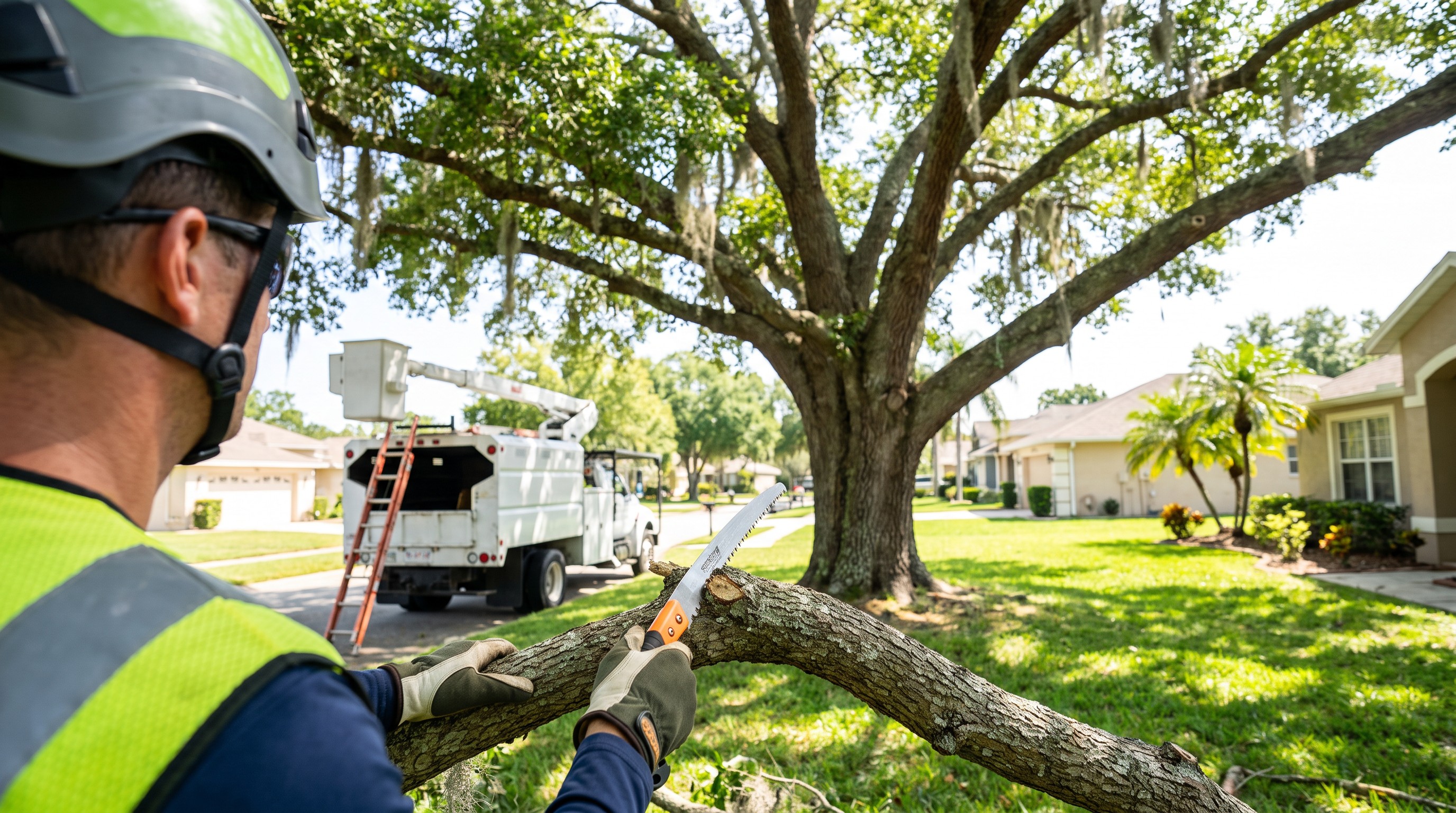
Tree trimming in Davenport FL is not a once-a-year chore you schedule around convenience — it follows the growth cycles, storm season, and species-specific habits of Central Florida's tree canopy. A live oak that gets pruned at the wrong time of year can push out weak, storm-vulnerable growth right before hurricane season. A crape myrtle hacked back the wrong way loses its shape for years. Getting the timing and technique right matters more here than in most parts of the country, and it is a big reason homeowners in Davenport, Four Corners, and the surrounding growth corridor call in a local crew instead of tackling it themselves.
This guide covers when to trim, which species need special attention, how HOA rules factor into the decision, and what it actually costs to get it done right.
When to Trim Trees in Davenport, Florida
Timing drives almost everything in Central Florida tree care. Prune too late in the season and you invite storm damage. Prune too early after a freeze and you cut into wood that still has life in it.
The two biggest windows homeowners should plan around are pre-hurricane season and post-freeze cleanup. Late winter through early spring — roughly February through April — is the ideal stretch for structural pruning ahead of Atlantic hurricane season, which the National Hurricane Center notes typically ramps up in activity from June through November. Thinning dense canopy and removing weak or crossing limbs before storm season reduces wind resistance and the odds of a limb coming down on a roof, fence, or car.
Post-freeze cleanup is the second major trigger. Central Florida gets occasional hard freezes, usually in December or January, that can kill back tender growth on certain species. Waiting until new growth appears in spring — rather than cutting immediately after a freeze — lets you see exactly what died back and avoid removing wood that would have recovered on its own.
Growth triggers matter too. Fast-growing species like laurel oak and crape myrtle can put on several feet of new growth in a single Florida growing season. If limbs are encroaching on rooflines, power lines, or walkways, that is a sign it is time for trimming regardless of the calendar.
Central Florida Tree Species and What They Need
Live Oak
Live oaks are the backbone of most established Davenport neighborhoods, and they demand careful, structural pruning rather than aggressive cutting. These trees can live for centuries when maintained properly, but improper pruning — especially "topping," where large sections of canopy are cut flat — creates weak regrowth points that fail in storms. Live oaks should be thinned selectively to improve airflow and reduce wind load, with major structural work handled by a professional tree service that understands mature oak canopy management.
Laurel Oak
Laurel oaks grow fast and often show up in newer Davenport subdivisions where builders wanted quick canopy coverage. The tradeoff is a shorter lifespan and softer wood that is more prone to limb failure than live oak. Regular trimming to remove deadwood and reduce weight on long horizontal limbs is especially important for laurel oaks, since they are more likely to drop large limbs without much warning during a storm.
Crape Myrtle
Crape myrtles are everywhere in Central Florida landscaping, prized for their summer color, and frequently mistreated. The industry has a name for the aggressive, stub-cutting practice so many homeowners default to: crape murder. Cutting crape myrtles back to thick stubs every winter weakens the tree over time and produces spindly, top-heavy regrowth that snaps in wind. Selective pruning of small branches, done at the right time in late winter, keeps the tree's natural vase shape and produces stronger blooms.
The International Society of Arboriculture publishes pruning standards that reinforce this point across species — selective thinning almost always outperforms heavy topping for long-term tree health and storm resilience.
HOA Compliance and Tree Trimming Rules in Davenport
Many Davenport communities, from established neighborhoods to newer developments near Four Corners, operate under HOA covenants that regulate tree height, canopy clearance over sidewalks and streets, and even which species can be removed without board approval. Some HOAs require documentation before a tree can be removed, especially for specimen trees or those visible from common areas.
Homeowners who trim or remove trees without checking their HOA's landscape guidelines sometimes end up facing fines or requests to replant. A local crew familiar with landscaping standards in Davenport and the surrounding HOA-heavy communities can flag these requirements before work starts, not after a violation notice arrives.
This matters just as much for board members and property managers overseeing common areas. Entry signage trees, canopy along shared walkways, and specimen trees near amenity centers all need documentation-friendly maintenance schedules that keep the community compliant and looking sharp for residents and prospective buyers alike.
Why a Local Davenport Crew Beats a Traveling Team
Storm season brings out traveling tree crews who show up after a major weather event, work a neighborhood hard for a few weeks, and then move on. They are rarely licensed or insured in Florida, and they have no stake in how the trees on your property look or perform next season.
A local crew that works Davenport, Clermont, Haines City, and Four Corners year-round has a different incentive structure entirely. They know which species dominate which subdivisions, which HOAs enforce strict canopy rules, and how the sandy soil and heavy summer rain in this corridor affect root stability and growth rate. That local knowledge shapes better pruning decisions than a generic, one-size-fits-all approach.
There is also the simple matter of accountability. A company that has served Central Florida for over a decade has a reputation to protect and a phone number you can call again if something needs a follow-up cut. A crew that drove in from three states away after a hurricane does not.
What Tree Trimming Costs in Davenport, FL
Pricing varies by tree size, species, and how much canopy needs to come down, but a few general patterns hold across Central Florida.
Small to mid-size trees — crape myrtles, young laurel oaks, ornamental trees under 30 feet — typically run less than larger structural work, since the job involves selective branch removal rather than heavy rigging. Mature live oaks and tall laurel oaks cost more because of the equipment, time, and skill required to safely reduce weight on large limbs without damaging the tree's long-term structure.
Storm-prep pruning across an entire property, including canopy thinning on multiple mature trees, generally costs more upfront than reactive trimming after damage occurs — but it is almost always cheaper than emergency removal and cleanup after a limb comes down on a roof or fence. The University of Florida IFAS Extension has published guidance on wind-resistant tree structure that reinforces this: proactive pruning reduces failure risk far more effectively than post-storm reaction.
A written estimate that breaks down which trees are being trimmed, what technique will be used, and why, is a good sign you are working with a crew that plans the job rather than eyeballing it on arrival.
Schedule Your Tree Trimming Inspection in Davenport Today
If your live oaks haven't been thinned in a few years, your crape myrtles look top-heavy, or your HOA has flagged canopy clearance issues, a professional inspection sorts out what actually needs attention versus what can wait. Florida Landscape Co. handles structural pruning, storm-prep trimming, HOA-compliant tree work, and removal for homeowners and communities across Davenport and the surrounding corridor.
Request your free tree inspection or call (863) 582-2168 for fast, local service in Davenport.

Get your free quote and expert advice today.
Ready to transform your garden? Get in touch with our expert team today for a free consultation and personalized plan.



Frequently Asked Questions
When is the best time for tree trimming in Davenport FL?

Late winter through early spring, roughly February to April, is ideal for structural pruning ahead of hurricane season. Post-freeze cleanup should wait until new growth appears so you can see what actually died back.
How often should live oaks be trimmed?
Mature live oaks generally benefit from selective thinning every two to three years, focused on removing deadwood and reducing weight on long limbs rather than aggressive cutting on a strict annual schedule.
Do I need HOA approval to trim or remove a tree in Davenport?
Many Davenport-area HOAs require approval or documentation before tree removal, and some regulate trimming near common areas or street-facing trees. Check your community's covenants or ask a local tree service familiar with the HOA before work begins.
Why shouldn't I top my crape myrtles every winter?
Heavy topping, sometimes called crape murder, weakens the tree over time and produces thin, top-heavy regrowth that breaks easily in wind. Selective pruning of smaller branches keeps the tree stronger and its natural shape intact.
How much does tree removal cost in Davenport FL?
Cost depends on the tree's size, species, location relative to structures, and whether stump grinding is included. Larger mature trees and those near power lines or buildings cost more due to the equipment and careful rigging required.

