

How to Protect Plants from Frost in Central Florida
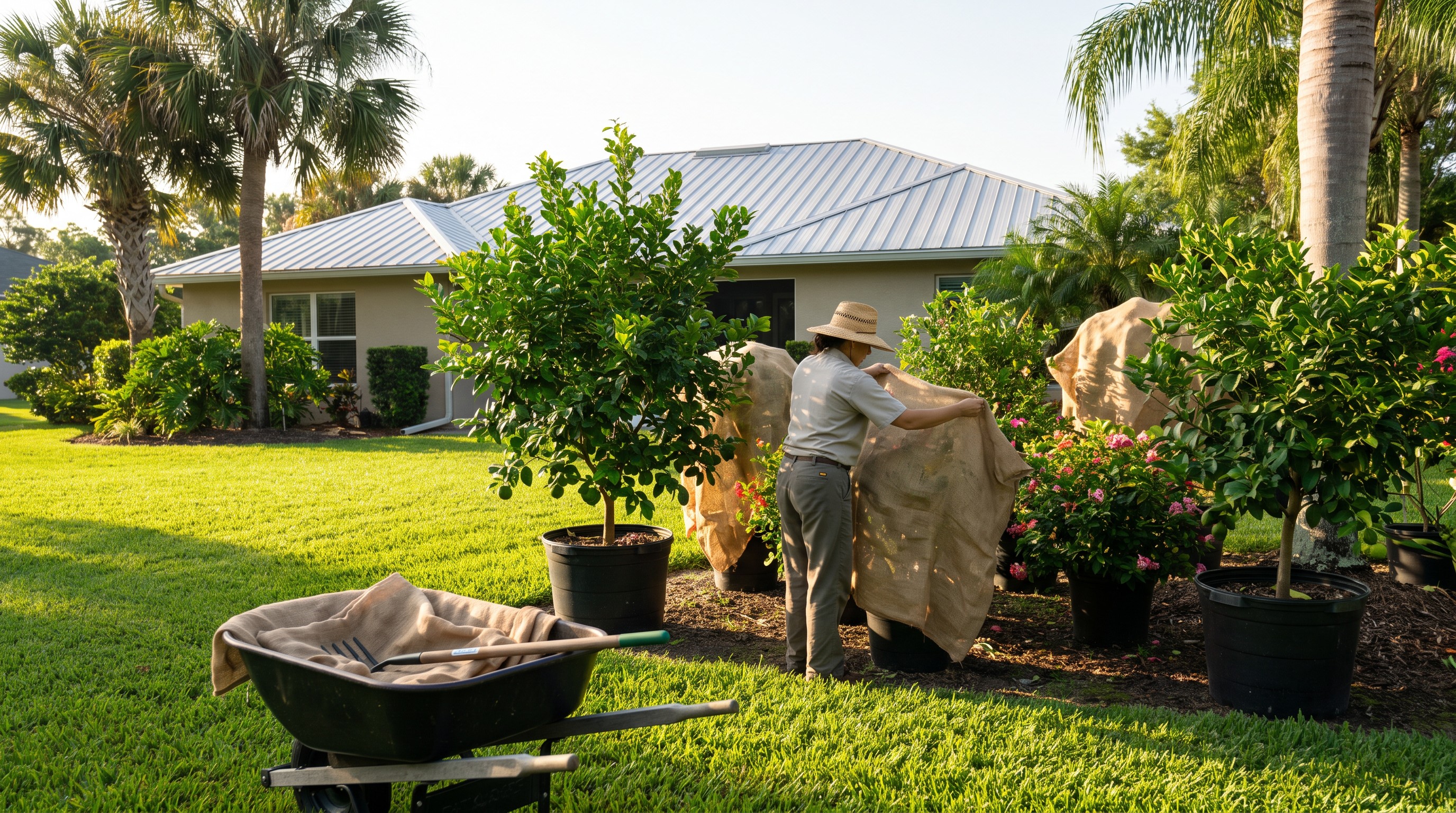
Knowing how to protect plants from frost central florida winters bring can be the difference between a landscape that bounces back by March and one that needs full replanting. Central Florida gets an average of two to five hard freeze nights a year, usually between late December and mid-February, and most of them arrive with less than 48 hours of warning. Homeowners in Clermont, Davenport, Haines City, and the Four Corners area lose tender plants every winter not because frost is rare here, but because they wait until the forecast says 32 degrees before doing anything about it.
The good news is that frost damage is largely preventable. A short checklist, done in the right order, protects the plants that matter most and tells you which ones can ride it out untouched. This guide walks through what to cover, what to leave alone, and what your yard actually needs the morning after a cold snap.
Why Frost Hits Central Florida Landscapes Hard
Most Central Florida yards are planted for heat, not cold. Tropical hibiscus, croton, bougainvillea, citrus, and young palms are standard choices because they thrive nine months of the year in our sandy soil and intense sun. The tradeoff is that these same plants have little to no cold tolerance, and a single night below 32 degrees can blacken leaves, split bark, or kill a plant outright.
Radiational frost — the kind that forms on clear, calm, dry nights — is the real threat here, more so than the freezing air masses that sweep through the Midwest. On these nights, heat radiates off plant surfaces into open sky faster than the surrounding air can replace it, so leaf and stem temperatures can drop several degrees below the official air temperature reported by weather services.
That is why a 36-degree forecast can still produce frost damage on exposed plants in open yards, while plants closer to structures or under tree canopy stay unharmed. Understanding this pattern is the first step in deciding what actually needs protection before a cold night hits.
The Cold-Snap Checklist: What to Cover
Not every plant in your yard needs a blanket. Focus your effort on the species that have real money and years of growth invested in them, and the ones most likely to suffer permanent damage below freezing.
Citrus trees top the list, especially young or newly planted trees with trunks less than two inches in diameter. Wrap the trunk with towels or pipe insulation and mound mulch around the base to protect the graft union, which is the most cold-sensitive part of the tree.
Tropical ornamentals — hibiscus, bougainvillea, croton, ixora, and ti plants — need a breathable cover like a bedsheet, frost cloth, or burlap draped all the way to the ground. Anchor the edges with rocks, bricks, or landscape staples so wind doesn't pull the cover loose overnight.
Young palms, particularly recently installed queen palms and areca palms, benefit from wrapping the crown and upper trunk with frost cloth or old blankets. The growing bud at the top is what you're protecting — damage there can kill the whole palm even if the lower fronds survive.
Container plants are the easiest win on this list. Move pots against the south or east side of your house, under eaves, or into a garage overnight. Pulling a container two feet closer to a heated structure can raise the surrounding temperature enough to prevent frost from forming.
What to Leave Alone
Covering everything in the yard wastes time and materials on plants that don't need it. Established azaleas, camellias, loropetalum, and most native Florida shrubs handle a light frost with no visible damage and don't require covering in a typical cold snap.
Mature live oaks, magnolias, and crepe myrtles are completely cold-hardy in Central Florida and should be left as-is regardless of forecast temperatures. St. Augustine and Bahia turf will go dormant and brown during a hard freeze, but covering grass does nothing useful and isn't practical at scale.
Established palms with a trunk diameter over six inches, including most sabal and mature queen palms already in the ground for several years, typically tolerate Central Florida's brief freezes without intervention. Save your frost cloth for the plants genuinely at risk rather than spreading it thin across the whole property.
If you're unsure which plants on your property fall into the "cover" versus "leave alone" category, a landscape design consultation is a good place to get a plant-by-plant cold hardiness assessment before the first freeze warning of the season.
Covering Techniques That Actually Work
The material you use matters as much as whether you cover at all. Old bedsheets, burlap, and purpose-made frost cloth all work because they trap radiating heat near the plant without crushing the foliage.
Plastic sheeting is the one material to avoid touching foliage directly — where plastic contacts a leaf, that spot often freezes faster than if it had no cover at all. If plastic is all you have, build a simple frame with stakes or tomato cages so the plastic doesn't rest on the plant.
Cover plants in late afternoon before sunset, while some daytime heat is still trapped in the soil and foliage. Covers draped over dry, cold plants after dark trap in less usable warmth.
Remove or vent covers the next morning once temperatures climb back above freezing, ideally by mid-morning. Leaving covers on through a sunny afternoon can cook tender foliage just as effectively as the frost would have damaged it.
The Morning After: What to Do
Resist the urge to prune blackened foliage the morning after a freeze. Damaged leaves and stems actually insulate the healthy wood underneath from any additional cold nights that follow in the same week, which is common during Central Florida's freeze pattern.
Water the soil around frost-damaged plants if it's dry, since well-hydrated roots recover faster and handle stress better than drought-stressed ones. Avoid fertilizing immediately after a freeze — pushing new tender growth right before another cold night only creates more tissue that's vulnerable to damage.
Wait two to three weeks before pruning anything back. This gives you time to see exactly where live tissue ends and dead tissue begins, which is usually obvious once new growth starts emerging from the base or along the stems.
If a freeze caused split bark, cracked limbs, or significant canopy dieback on trees, a professional assessment is worth scheduling. Our tree services team can evaluate structural damage that isn't always visible from the ground and recommend whether a tree needs corrective pruning or removal.
Common Mistakes Homeowners Make With Frost Protection
1. Waiting until the night of the freeze to act. Frost cloth, mulch, and watering all work best when done the afternoon before, not after the sun goes down.
2. Using plastic sheeting directly on foliage. Plastic that touches leaves conducts cold faster than it blocks it, often causing worse damage than no cover at all.
3. Forgetting to water before a freeze. Moist soil holds and releases more heat overnight than dry soil, giving root zones extra protection.
4. Pruning frost damage too early. Cutting back blackened growth right away removes natural insulation and often triggers tender new growth before the cold season ends.
5. Skipping irrigation adjustments. Sprinkler timers left on a summer schedule can run during a hard freeze and actually freeze onto foliage, making damage worse rather than better. A quick check of your controller settings through our irrigation services before winter prevents this.
6. Ignoring container plants. Potted plants have less insulated root systems than in-ground plants and freeze faster, yet they're often the easiest to move to safety.
Schedule Your Frost Protection Prep in Central Florida Today
Cold snaps in Clermont, Davenport, and Haines City move fast, and by the time frost is in the forecast, it's often too late to properly prep an entire landscape alone. Whether you need an irrigation timer adjusted before a freeze, storm-damaged tree limbs assessed, or a full landscape evaluated for cold-hardy plant replacements, our team handles it all under one call.
Request your free quote or call (863) 582-2168 for fast, local service in Central Florida.

Get your free quote and expert advice today.
Ready to transform your garden? Get in touch with our expert team today for a free consultation and personalized plan.




Frequently Asked Questions
What temperature kills plants in Central Florida?

Most tropical and tender ornamentals start showing damage once leaf-surface temperatures drop to 32 degrees or below for more than a few hours. Because radiational frost can make plant surfaces several degrees colder than the air temperature, damage often occurs even when forecasts show 34 to 36 degrees.
How long should I leave frost cloth on my plants?
Leave covers on overnight and remove them the next morning once air temperatures rise back above freezing, usually by mid-morning. Leaving frost cloth on through a sunny afternoon traps heat and can stress or cook foliage underneath.
Should I water my plants before a freeze?
Yes. Watering the soil the day before a freeze helps roots hold and release warmth overnight, which gives plants extra protection compared to dry soil.
Can I use Christmas lights to protect plants from frost?
Older incandescent string lights give off enough heat to help protect citrus trees and shrubs when wrapped through the branches under a cover. LED lights produce almost no heat, so they won't provide the same protection.
When does frost season end in Central Florida?
Central Florida's frost risk generally runs from late December through mid-February, with occasional late cold snaps into early March. Local gardeners typically treat mid-March as the safe point to resume planting cold-sensitive species outdoors.

