
.webp)
Landscaping Around a Pool Screen Enclosure in Florida: Ideas That Work
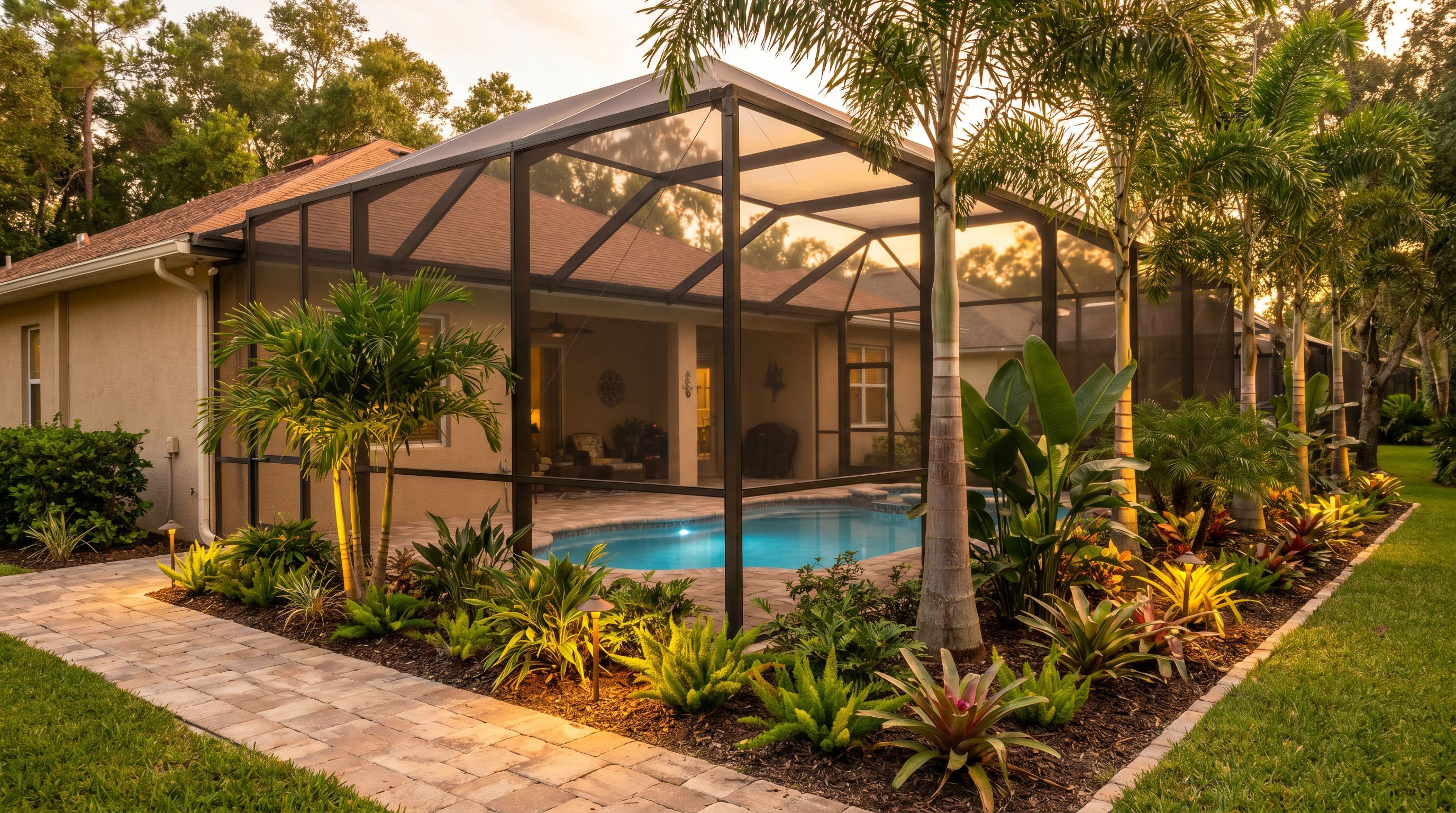
Florida pool cage landscaping ideas require careful plant selection to handle the unique challenges of Central Florida's climate, pool chemicals, and screen enclosure constraints. Pool screen enclosures, or "cages," are a standard feature throughout Central Florida homes and HOAs, creating a specific microclimate that demands thoughtful landscape planning.
The space around your pool cage presents distinct challenges: intense heat reflection from the aluminum framework, limited natural rainfall due to the overhead screen blocking some precipitation, potential splash from pool chemicals, and the need to avoid plants that drop excessive debris onto the screen or into the pool area.
Best Plants for Florida Pool Cage Landscaping
Successful pool cage landscaping starts with selecting plants that thrive in reflected heat, tolerate occasional chemical exposure, and produce minimal leaf litter. These plants create beauty without creating maintenance headaches.
Ornamental grasses work exceptionally well around pool cages. Fakahatchee grass provides dense, upright growth that won't spread aggressively, while dwarf fountain grass offers seasonal interest without heavy seed drop. Both handle the heat reflection from aluminum frames and require minimal water once established.
Crinum lilies deliver dramatic tropical impact with large, strap-like foliage and seasonal white or pink blooms. These bulbs tolerate poor drainage, intense heat, and occasional chemical splash while requiring little maintenance. Plant them 3-4 feet from the cage structure to allow full development.
Bird of paradise plants create instant tropical appeal with their paddle-shaped leaves and orange blooms. White bird of paradise grows larger and works well for privacy screening, while dwarf varieties fit smaller spaces between the cage and property lines.
Dwarf bougainvillea provides year-round color in purple, pink, or red bracts. Choose compact varieties like 'Helen Johnson' or 'Bambino' series to avoid overgrowth issues. Regular pruning keeps them contained and flowering.
Cast iron plant thrives in the shaded areas around pool cages where other plants struggle. This virtually indestructible perennial tolerates deep shade, drought, and neglect while maintaining dark green foliage year-round.
Bromeliads add exotic texture and color to shaded pool cage areas. Varieties like Aechmea, Neoregelia, and Vriesea produce colorful foliage and unique flower spikes while requiring minimal care once established.
Plants to Avoid Around Pool Screen Enclosures
Certain plants create problems around pool cages due to aggressive root systems, heavy leaf drop, or tendency to attract stinging insects. Avoiding these species prevents future headaches and costly repairs.
Ficus trees and similar aggressive rooters can damage pool cage footings and concrete decking. Even small ornamental ficus varieties develop extensive root systems that seek water and can crack hardscaping. Choose less aggressive options like podocarpus instead.
Heavy leaf-drop species create constant maintenance around pool cages. Live oak, Southern magnolia, and seasonal flowering trees drop leaves, flowers, and debris that clog screen mesh and create pool contamination. Save these beautiful trees for other landscape areas.
Plants that attract bees and wasps pose safety concerns around pool areas. Pentas, firebush, and heavily flowering shrubs draw stinging insects. While these plants work well elsewhere in the landscape, position them away from pool cage entrances and seating areas.
Aggressive spreading palms can overwhelm small spaces around pool cages. Phoenix roebelenii (pygmy date palm) and similar species develop dense root systems and multiple trunks that crowd hardscaping and utilities.
Privacy Screening Solutions for Pool Cage Areas
Creating privacy around pool cages requires balancing screening needs with airflow requirements. Central Florida's heat and humidity demand plants that provide coverage without blocking essential breezes.
Viburnum varieties offer excellent screening without overwhelming pool cage areas. Sweet viburnum (Viburnum odoratissimum) and sandankwa viburnum (Viburnum suspensum) create dense, evergreen screens that tolerate heat and maintain their shape with minimal pruning.
Clusia hedge has become increasingly popular for pool area privacy. This native Florida plant tolerates salt, wind, and heat while maintaining dense growth. Clusia requires regular trimming to maintain formal hedge appearance but responds well to pruning.
Green buttonwood provides natural screening with silvery-green foliage that moves beautifully in breezes. This native coastal plant handles pool chemical splash and reflected heat while growing into an attractive informal screen.
Position privacy plants 4-6 feet from the pool cage structure to allow air circulation and prevent crowding as plants mature. Consider sight lines from both pool level and elevated neighboring properties when planning screen height and placement.
Our landscape design services help homeowners create privacy solutions that work with Central Florida's climate while enhancing pool cage areas.
Pool Cage Landscaping by Exposure
PlantSun/ShadeWater NeedsMessy?Root RiskFakahatchee GrassFull SunLowNoLowCrinum LilyPart SunMediumNoLowBird of ParadiseFull SunMediumMinimalLowDwarf BougainvilleaFull SunLowMinimalLowCast Iron PlantShadeLowNoLowBromeliadShadeMediumNoNoneSweet ViburnumPart SunMediumMinimalMediumClusiaFull SunMediumNoMedium
South-facing pool cage areas receive intense direct sunlight and heat reflection from aluminum frames. These spaces demand heat-tolerant plants with minimal water requirements. Ornamental grasses, dwarf bougainvillea, and compact palms thrive in these conditions.
North-facing areas remain shaded most of the day, creating opportunities for tropical foliage plants. Cast iron plant, bromeliads, and certain fern varieties create lush, green backdrops without requiring full sun exposure.
East and west exposures receive partial sun and work well for most flowering shrubs and medium-sized tropical plants. Bird of paradise, crinum lilies, and viburnum varieties perform well in these transitional light conditions.
Landscape Lighting for Pool Cage Areas
Proper lighting extends pool cage enjoyment into evening hours while highlighting landscape features and improving safety. Low-voltage LED systems work best around pool areas due to safety requirements and energy efficiency.
Path lighting along walkways leading to pool cage entrances prevents accidents and creates welcoming ambiance. Position lights 6-8 feet apart along main pathways, using fixtures rated for wet locations due to Central Florida's frequent rain.
Uplighting for palms and large tropical plants creates dramatic nighttime focal points. Install fixtures at the base of specimen plants, angling light upward to illuminate trunk and canopy features. Use warm white LEDs (2700K-3000K) for natural appearance.
Accent lighting on architectural features like cage support posts or decorative hardscaping adds visual interest. Small bullet lights or wash lights can highlight textured walls, water features, or seasonal plant displays.
Professional installation ensures proper electrical safety around pool areas. According to the University of Florida IFAS Extension, landscape lighting should be installed by licensed electricians when located within 10 feet of pool areas to meet electrical code requirements.
Our landscape lighting services include design and installation of pool-safe lighting systems that enhance both beauty and functionality of pool cage areas.
Irrigation Considerations for Pool Cage Landscaping
Pool cage areas often receive reduced natural rainfall due to the overhead screen blocking some precipitation. Proper irrigation design compensates for this rain shadow effect while avoiding water waste.
Drip irrigation works exceptionally well for pool cage landscaping, delivering water directly to plant root zones while minimizing evaporation. Install pressure-compensating emitters to ensure consistent water delivery across varying elevations and distances.
Micro-spray systems provide broader coverage for groundcovers and massed plantings. Position heads to avoid spraying onto pool cage screens or aluminum framework, which can leave mineral deposits and create maintenance issues.
Smart irrigation controllers help manage pool cage area watering by adjusting schedules based on weather conditions, soil moisture, and seasonal plant needs. These systems prevent overwatering during Central Florida's rainy season while ensuring adequate moisture during dry periods.
Zone pool cage plantings separately from lawn areas, as their water requirements differ significantly. Most tropical shrubs and ornamental grasses need less frequent, deeper watering compared to turf grass.
The Florida Department of Environmental Protection recommends irrigation systems include rain sensors and soil moisture sensors to comply with water conservation ordinances common throughout Central Florida municipalities.
Maintenance Tips for Pool Cage Landscapes
Regular pruning keeps pool cage landscaping looking neat while preventing plants from growing into screen mesh or aluminum framework. Trim plants before they contact the cage structure to avoid damage to both plants and screening.
Mulch management around pool cages requires careful selection. Avoid fine mulches like cypress that can blow onto screens during windy conditions. Pine bark nuggets or decorative stone provide coverage without creating debris issues.
Fertilization timing should align with Central Florida's growing seasons. Apply slow-release fertilizers in early spring as temperatures warm, avoiding late-season feeding that promotes tender growth vulnerable to occasional cold snaps.
Pest monitoring becomes especially important in pool cage areas where air circulation may be reduced. Watch for scale insects, spider mites, and fungal issues that thrive in humid, still air conditions.
Professional Pool Cage Landscaping Design
Creating successful pool cage landscaping requires understanding Central Florida's unique climate challenges, plant performance, and maintenance requirements. Professional design ensures plant selections work long-term while minimizing ongoing care needs.
The right landscape design transforms your pool cage area into a private tropical retreat that enhances your outdoor living experience year-round. From plant selection through installation and ongoing maintenance, every detail matters for long-term success.
Ready to create the perfect landscape around your pool cage? Contact Florida Landscape Co. at (863) 582-2168 for a consultation, or visit our contact page to schedule your pool area landscape design.

Get your free quote and expert advice today.
Ready to transform your garden? Get in touch with our expert team today for a free consultation and personalized plan.




Pool Screen Enclosure Landscaping in Florida: Frequently Asked Questions
What plants grow well around pool screen enclosures in Florida?

Ornamental grasses, crinum lilies, bird of paradise, dwarf bougainvillea, cast iron plant, and bromeliads all thrive around pool cages. These plants handle heat reflection, minimal rain, and occasional chemical splash while producing little debris.
How close can I plant trees to my pool cage?
Plant large shrubs and small trees at least 3-4 feet from pool cage structures to allow for mature growth. Larger trees should be positioned 6-8 feet away to prevent root damage to cage footings and concrete decking.
Do pool cage areas need special irrigation?
Yes, pool cage areas receive reduced natural rainfall due to the overhead screen. Drip irrigation or micro-spray systems work best, providing consistent moisture while avoiding spray onto the cage structure that can leave mineral deposits.
What landscape lighting works best around pool cages?
Low-voltage LED path lights, palm uplighting, and accent lighting create beautiful evening ambiance while meeting electrical safety codes for pool areas. Professional installation ensures proper grounding and GFCI protection required near water features.
How do I create privacy around my pool cage without blocking airflow?
Viburnum, clusia hedge, and green buttonwood provide excellent screening while allowing air circulation. Position privacy plants 4-6 feet from the cage structure and choose varieties that maintain density without excessive width.

