

How Much Does Landscape Lighting Cost in Florida? (2026 Pricing Guide)
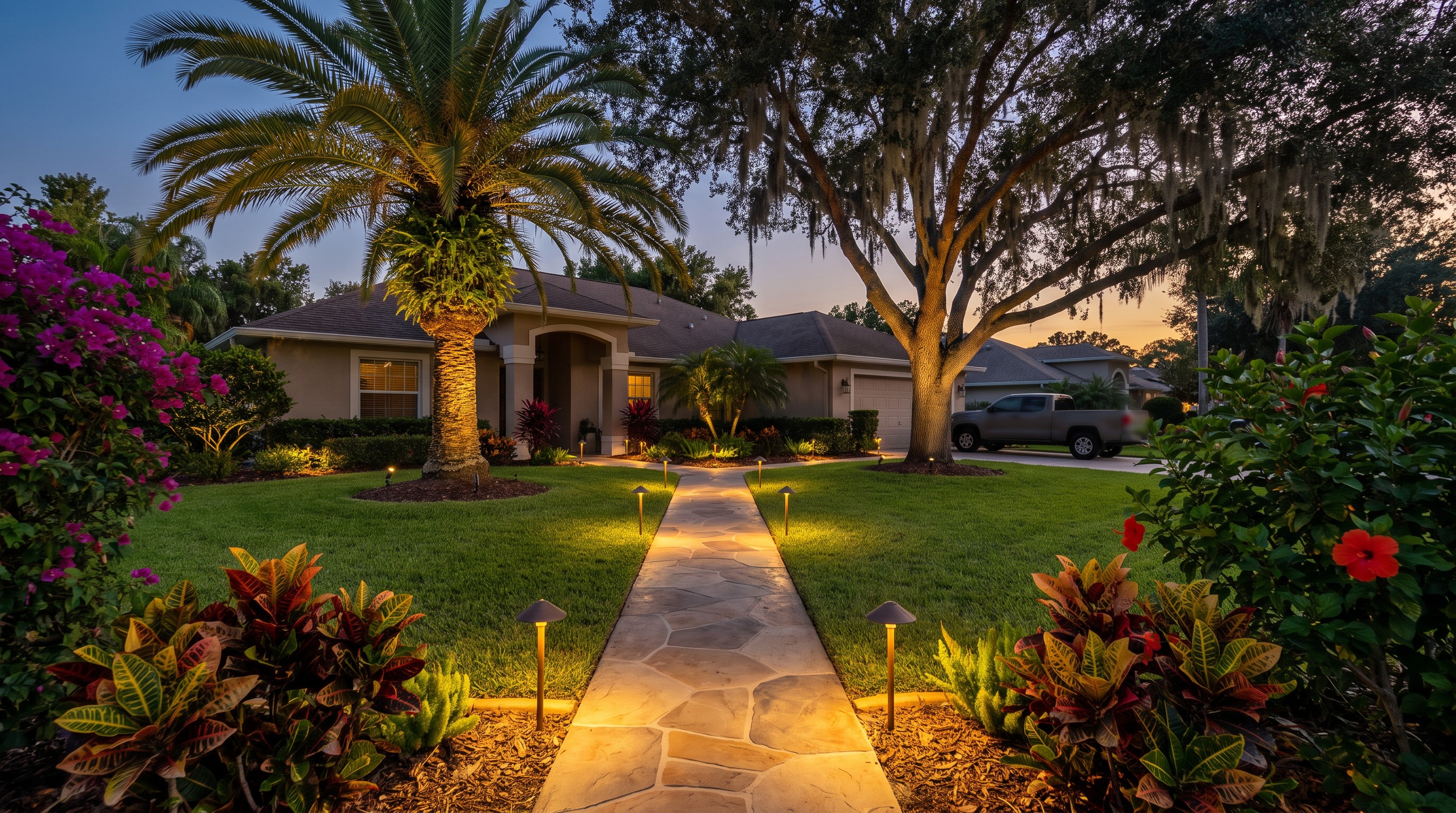
Landscape lighting cost Florida homeowners typically face in 2026 runs between $2,500 and $15,000 or more for a complete low-voltage LED system, with the final number shaped by property size, fixture quality, and how complicated the installation turns out to be. Central Florida homeowners invest in outdoor lighting for better curb appeal, added security, and more usable outdoor living space during the long evenings of a Florida summer. HOA boards in communities across Clermont, Davenport, and Winter Garden also budget for lighting upgrades to keep entry features and common areas looking sharp after dark.
Several factors unique to Florida's climate and soil conditions affect what you'll pay — things a generic national pricing guide won't account for. Understanding these variables ahead of time helps you set a realistic budget and avoid surprise costs mid-project. Whether you're a homeowner upgrading a single front yard or an HOA board planning a community-wide retrofit, the breakdown below reflects real 2026 pricing for landscape lighting services in the Central Florida market.
Florida Landscape Lighting Cost by System Size
Professional landscape lighting installation involves design, fixtures, transformers, wiring, and labor — each contributing to the total project cost. Equipment typically accounts for 40–60% of the total, with labor and design making up the rest.
• Basic — Fixture Count: 8–12 fixtures; Coverage Area: Front yard focal points; Total Cost Range: $2,500–$4,500
• Mid-Range — Fixture Count: 15–25 fixtures; Coverage Area: Front and back yard; Total Cost Range: $5,000–$8,500
• Premium — Fixture Count: 30+ fixtures; Coverage Area: Full property coverage; Total Cost Range: $10,000–$15,000+
Low-voltage LED systems dominate the Florida market because they tolerate heat well and keep electrical costs down. These systems run on 12-volt power, which reduces both energy use and safety risk compared to line-voltage alternatives. Professional installation includes a design consultation, transformer sizing, cable trenching, fixture placement, and system programming — plus proper wire burial depth and waterproof connections, which matter more here than almost anywhere else in the country given Florida's wet season.
Landscape Lighting Fixture Types and Pricing
Different fixture types serve different purposes, and understanding the per-fixture cost helps you prioritize your budget across the areas that matter most.
• Path lights — Price per Fixture: $75–$300; Common Use: Walkway and driveway safety lighting
• Uplights — Price per Fixture: $125–$400; Common Use: Highlighting trees and architectural features
• Spotlights/accent lights — Price per Fixture: $100–$350; Common Use: Entryways, signage, specimen plants
• Deck and step lights — Price per Fixture: $50–$200; Common Use: Patios, pool areas, outdoor living spaces
Most Central Florida front-yard installations use 15–20 path lights for complete coverage. Palm trees and mature live oaks respond especially well to uplighting, creating dramatic nighttime focal points that basic fixtures can't replicate. HOA communities frequently require entrance and signage lighting as part of their covenants, which makes spotlights a near-mandatory line item for HOA landscaping compliance.
Tip: Deck and step lights are inexpensive relative to other fixture types but deliver an outsized safety benefit around pools and patios, where year-round outdoor entertaining is the norm in Central Florida.
What Drives Landscape Lighting Installation Costs in Florida
Florida's soil and climate conditions push installation complexity — and cost — higher than in drier, more uniform climates. Sandy soil found throughout the Polk and Lake County corridor drains fast, which is good for plant roots but can complicate stable fixture placement and trenching depth around root systems.
Humidity and heavy summer rain mean every connection has to be properly sealed. Cutting corners on waterproof connectors or wire gauge might save a few hundred dollars upfront, but it almost always leads to corroded connections and failed fixtures within a season or two. According to the U.S. Department of Energy, LED fixtures rated for wet locations last significantly longer than standard-rated fixtures when exposed to sustained moisture, which is exactly the environment Florida yards create for most of the year.1
Trenching under driveways, hardscaping, or established root systems adds labor hours and sometimes requires directional boring instead of open trenching. Properties with mature landscaping — palms, oaks, and dense shrub beds — generally cost more to wire cleanly than a newly sodded lot with minimal existing plantings, which is one reason landscape design and installation projects and lighting projects are often priced and scheduled together on new properties.
Transformer sizing matters too. Undersized transformers overload as homeowners add fixtures over time, causing dimming or flickering at the far end of a run. A properly sized system built with 15–20% headroom for future expansion costs more at install but avoids a costly re-wire later.
Low-Voltage LED vs. Line-Voltage Systems
Low-voltage LED systems cost more upfront than basic line-voltage halogen setups but win on nearly every other metric in a Florida climate. LED fixtures use roughly 75–80% less energy than halogen equivalents and generate far less heat, which matters when fixtures sit against mulch beds or wood decking through a Florida summer.
Line-voltage systems require licensed electrical work for every circuit, driving up labor costs and permitting requirements. Low-voltage systems, by contrast, run on a single transformer circuit and can often be installed, expanded, or repaired without the same electrical permitting burden — though local code still applies, and the National Fire Protection Association publishes detailed guidance on safe low-voltage outdoor wiring practices worth reviewing before any DIY attempt.2
HOA and Commercial Landscape Lighting Costs
HOA and commercial lighting projects scale differently than single-family residential jobs. Entry signage, common-area walkways, clubhouse exteriors, and perimeter fencing all add up fast, and most communities in Horizon West, Celebration, and Four Corners are now budgeting $15,000–$40,000+ for full common-area lighting overhauls depending on community size.
Bulk fixture purchasing typically lowers the per-unit cost compared to a single residential job, but labor costs can run higher due to coordination with property management schedules, resident notifications, and phased installation to avoid disrupting common-area access. Boards managing multiple properties often find it more cost-effective to bundle lighting into a broader HOA landscaping contract that covers turf, irrigation, and lighting maintenance under one scope and one point of contact.
Communities in Clermont and Davenport frequently phase these projects over two or three budget cycles — entry features first, then common-area walkways, then perimeter accent lighting — to spread the cost without compromising the overall design.
Ways to Manage Your Landscape Lighting Budget
Phasing your installation is the single most effective way to control cost without sacrificing the finished look. Start with entry points and safety lighting (driveways, front walkways, steps), then add accent and uplighting in a second phase once the budget resets.
Smart controllers add $200–$600 to a project but reduce operating costs by automatically adjusting run times with seasonal daylight changes — a real advantage in Florida, where daylight hours shift more than people expect between June and December. Choosing brass or copper fixture housings over aluminum costs more upfront but resists Florida's humidity and salt air (a real factor for properties closer to the coast) far longer, cutting replacement costs over a 10-year horizon.
If you're planning a new installation alongside other yard work, ask about combined project pricing. A quote that bundles lighting with sod, mulch, or irrigation work often reduces per-project mobilization costs compared to scheduling each service separately.
Common Mistakes That Drive Up Landscape Lighting Costs
1. Choosing the cheapest fixtures available: Budget aluminum fixtures corrode fast in Florida humidity and typically need replacement within 2–3 years, costing more in the long run than quality brass or copper fixtures bought once.
2. Undersizing the transformer: A transformer sized only for day-one fixture count forces a costly system rebuild the first time you add lighting to a new bed or tree.
3. Skipping a soil and drainage assessment: Sandy Central Florida soil drains differently across a single property, and installing fixtures without accounting for drainage patterns leads to shifting and exposed wiring after heavy rain.
4. DIY wiring without proper waterproofing: Improperly sealed connections are the number one cause of system failure in Florida's wet season, and re-doing the work professionally costs more than hiring it out correctly the first time.
5. Ignoring future tree and shrub growth: Fixtures placed too close to fast-growing Florida landscaping often get overtaken within a year or two, requiring repositioning labor that could have been avoided with proper initial placement.
6. Not getting an itemized proposal: Vague, lump-sum quotes make it hard to tell what you're actually paying for fixtures versus labor versus design, and make comparison shopping nearly impossible.
For design guidance specific to Florida-friendly plant selection and how it interacts with outdoor lighting placement, the University of Florida's gardening extension resources are a useful reference point before finalizing any layout.3

Get your free quote and expert advice today.
Ready to transform your garden? Get in touch with our expert team today for a free consultation and personalized plan.



Frequently Asked Questions
How much does landscape lighting cost per fixture in Florida?

Individual fixtures generally run $50–$400 depending on type, with path lights and step lights on the lower end and uplights and premium spotlights on the higher end. Most residential projects combine fixture types, so total per-fixture averages land around $150–$250 once design and installation labor are factored in.
Is low-voltage landscape lighting cheaper than line-voltage in Florida?
Low-voltage LED systems typically cost less to operate and maintain over time, even though line-voltage halogen setups can sometimes look cheaper on a quote. Lower energy use, reduced heat output, and simpler long-term repairs make low-voltage the more cost-effective choice for most Florida properties.
Does landscape lighting increase property value in Florida?
Professionally installed landscape lighting is widely considered one of the higher-return exterior improvements homeowners can make, particularly in communities where curb appeal and nighttime safety factor into resale appeal. HOA common areas with well-lit entrances also tend to support stronger overall community property values.
How much does HOA common-area lighting cost in Central Florida?
Full common-area lighting projects for HOA communities typically range from $15,000 to $40,000 or more depending on community size, number of entry points, and whether the project includes clubhouse or amenity-center lighting. Many boards phase these projects across multiple budget years to manage cash flow.
How long does a landscape lighting system last in Florida's climate?
Quality LED fixtures with proper waterproofing and brass or copper housings typically last 10–15 years in Florida conditions. Lower-grade aluminum fixtures often need replacement within 2–3 years due to humidity and salt air corrosion.

