
Is Zoysia Grass Good in Florida? What Central Florida Homeowners Should Know

The answer to is zoysia grass good in Florida is a qualified yes: in full-sun, well-drained yards across Clermont, Davenport, and Haines City, zoysia produces one of the most drought-tolerant, low-maintenance lawns available in Central Florida, but it is not a universal fit. Shade, soil type, and how much traffic your lawn takes all determine whether zoysia outperforms St. Augustine on your specific property. Homeowners who skip that evaluation often end up with thin, patchy turf within two seasons.
Zoysia has grown in popularity across Polk and Lake County neighborhoods for good reason. Its deep root system and tight growth habit hold up to summer heat and dry spells in a way St. Augustine often can't without heavier irrigation. Before switching, though, it helps to understand which zoysia variety fits your yard, what the installation actually costs, and where this grass tends to disappoint homeowners who didn't plan around its limits.
What Makes Zoysia Grass a Good Fit for Florida Lawns
Zoysia is a warm-season grass built for exactly the conditions Central Florida throws at it: intense sun, sandy soil, and stretches of little rainfall. Its dense growth habit crowds out weeds better than thinner turf types, which matters in a climate where weeds grow year-round.
The root system goes deeper than St. Augustine, which is the main reason established zoysia lawns tolerate drought stress better once they're past the first growing season. That translates into lower water bills and fewer brown patches during the dry months between November and May.
Zoysia also grows 30-40% slower than St. Augustine during peak season, which means less frequent mowing from June through September. For homeowners already paying for weekly lawn maintenance, that slower growth rate can reduce visit frequency once the lawn matures.
Zoysia Grass Varieties for Central Florida
Not all zoysia performs the same way, and picking the wrong variety for your sun exposure is the single most common reason zoysia lawns fail in this region.
• Empire — Texture: Fine, dense; Sun Needs: Full sun (6+ hrs); Best For: Most Central Florida yards, HOA fronts
• Emerald — Texture: Finest available; Sun Needs: Morning sun, partial shade tolerant; Best For: High-visibility areas, formal landscapes
• Zeon — Texture: Fine; Sun Needs: Partial shade tolerant; Best For: Lots with moderate tree canopy
• Palisades — Texture: Coarser; Sun Needs: Full sun; Best For: Kids, pets, high foot traffic
Empire is the default recommendation for most Central Florida properties because it's widely available, establishes reliably, and handles full sun without complaint. Zeon is worth the higher upfront cost if your lot has partial canopy coverage, since Empire thins out fast once daily shade exceeds four to six hours.
Zoysia vs. St. Augustine vs. Bermuda for Florida Lawns
Most homeowners comparing grass types in Central Florida are really choosing between these three. Each handles heat, shade, and traffic differently.
• Shade tolerance — Zoysia: Low to moderate (variety-dependent); St. Augustine: Best of the three; Bermuda: Poor
• Drought tolerance — Zoysia: Strong once established; St. Augustine: Moderate; Bermuda: Strong
• Foot traffic durability — Zoysia: Good to excellent; St. Augustine: Fair; Bermuda: Excellent
• Mowing frequency — Zoysia: Lower; St. Augustine: Higher; Bermuda: Highest
• Establishment speed — Zoysia: Slower; St. Augustine: Fast; Bermuda: Fastest
Bermuda edges out zoysia for pure traffic tolerance and establishes faster, but it needs more sun than almost any yard in a tree-lined Central Florida neighborhood can offer. St. Augustine remains the better choice for shaded lots. For full-sun properties where water use and mowing time are the priority, zoysia usually wins the comparison.
Where Zoysia Grass Struggles in Florida
Zoysia's reputation for toughness leads some homeowners to assume it works everywhere. It doesn't, and the failures tend to follow predictable patterns.
Shade is the biggest limiter. Even shade-tolerant varieties like Zeon thin out under heavy oak canopy. If more than a third of your lot sits under tree cover, zoysia will likely need reseeding or replacement within a few years.
Dollar spot and large patch disease show up more often in zoysia than in St. Augustine, particularly during Florida's humid late-summer stretch. These fungal issues require targeted treatment, not generic lawn fertilizer.
Thatch buildup happens faster with zoysia's dense growth habit, which means periodic dethatching becomes part of the maintenance routine that many homeowners don't budget for when they switch grass types.
Sandy soil without proper amendment can also slow establishment. A soil test and grading pass before installation saves money compared to patching a struggling lawn a year later — something our landscape design and installation team builds into every sod project.
Zoysia Grass Maintenance Requirements
Zoysia isn't maintenance-free, but the maintenance profile is different from St. Augustine rather than simply lighter.
Mowing height matters more with zoysia. Most varieties need to stay between 1 and 2.5 inches, and letting it grow too tall between cuts stresses the grass and invites disease. A sharp mower blade matters more here too — dull blades tear zoysia's dense blades instead of cutting cleanly.
Watering needs drop once the lawn is established, typically after the first 60-90 days, but newly installed zoysia sod needs consistent moisture during that window. Smart irrigation adjustments through a properly tuned irrigation system prevent both under-watering during establishment and overwatering once roots are deep.
Fertilization should follow a slower schedule than St. Augustine, since zoysia's slower growth means it needs less nitrogen. Over-fertilizing is one of the fastest ways to invite fungal disease in zoysia lawns.
Cost to Install Zoysia Sod in Central Florida
Zoysia sod typically costs more per square foot than St. Augustine, reflecting slower production time at the sod farm. Installed cost depends on lot size, grading needs, and variety selected, with Empire generally the most affordable option and Zeon or Emerald running higher.
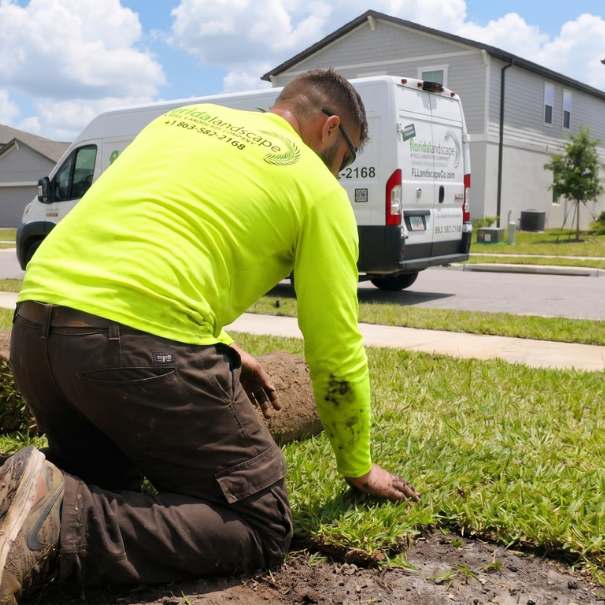
Homeowners switching an entire quarter-acre yard should budget for both material and labor, plus any soil prep the existing lawn needs before new sod goes down. Our sod installation team provides itemized quotes by variety and square footage so there are no surprises mid-project.
Is Zoysia Right for Your Property?
Zoysia makes the most sense for full-sun yards in Clermont, Davenport, Four Corners, and similar growth corridors where homeowners want lower water use and less frequent mowing. It's also a strong fit for HOA communities prioritizing uniform, dense-looking turf at entrances and common areas — something our HOA landscaping clients frequently request for high-visibility zones.
It's a weaker choice for heavily wooded lots, yards with mature tree canopy, or properties where St. Augustine is already performing well and the switch cost doesn't pencil out. A site evaluation before committing to a full-yard conversion avoids an expensive mistake.
Common Mistakes When Installing or Maintaining Zoysia in Florida
1. Installing it in partial shade: Even "shade-tolerant" varieties need several hours of direct sun daily to stay dense.
2. Mowing too high or too infrequently: Overgrown zoysia develops thatch faster and becomes more disease-prone.
3. Overwatering established lawns: Mature zoysia needs far less water than people assume, and overwatering invites fungal issues.
4. Skipping a soil test: Sandy, compacted soil slows establishment and weakens root depth.
5. Using St. Augustine fertilizer schedules: Zoysia's slower growth rate calls for a lighter nitrogen program.
6. Ignoring thatch buildup: Periodic dethatching keeps water and nutrients reaching the root zone.

Get your free quote and expert advice today.
Ready to transform your garden? Get in touch with our expert team today for a free consultation and personalized plan.



Frequently Asked Questions
Is zoysia grass better than St. Augustine in Florida?

For full-sun yards, zoysia generally uses less water and needs less frequent mowing than St. Augustine. St. Augustine still outperforms zoysia in shaded areas, so the better choice depends on how much direct sun your lot gets.
How long does it take zoysia sod to establish in Florida?
Most zoysia sod takes 60 to 90 days to fully root and stabilize in Central Florida's climate, with consistent watering required during that window before switching to a normal irrigation schedule.
Does zoysia grass turn brown in winter in Florida?
Zoysia goes semi-dormant and can lighten in color during cooler winter months, particularly after a frost, but it typically greens back up faster than Bermuda once temperatures warm.
Can zoysia grass handle Florida's rainy season?
Established zoysia tolerates Florida's wet summer months well, though poor drainage or compacted soil can lead to fungal problems during extended humid, rainy stretches.
What is the cheapest zoysia variety to install in Florida?
Empire zoysia is typically the most widely available and affordable variety for Central Florida installations, while Emerald and Zeon cost more due to finer texture and improved shade tolerance.

