.webp)
HOA Landscaping Requirements in Clermont, FL: What Boards Need to Know
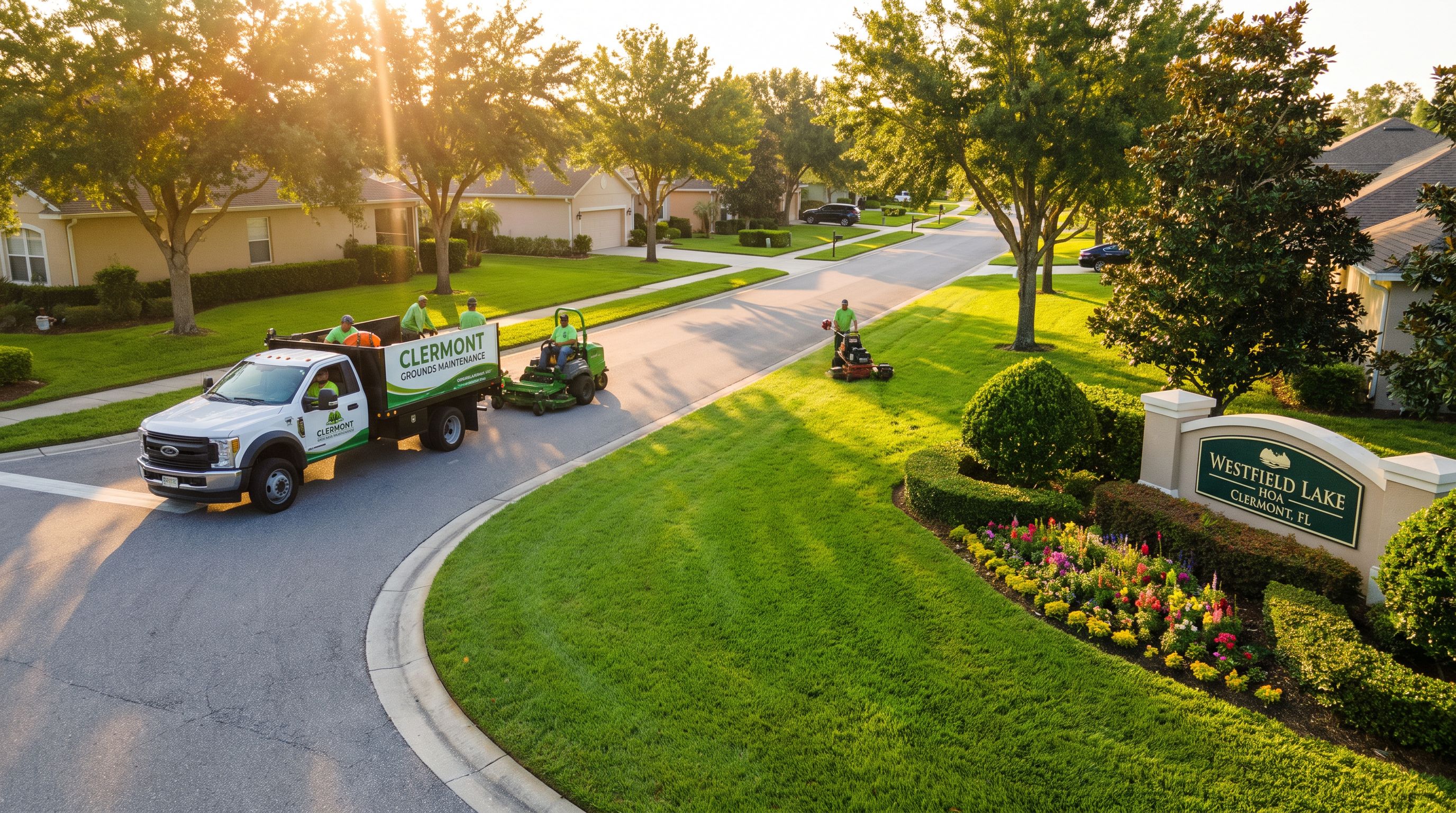
HOA landscaping requirements in Clermont typically cover turf height, plant bed maintenance, irrigation function, common area upkeep, and seasonal cleanup — and boards that fall behind on any of these can face resident complaints, code violations, or costly emergency repairs. Clermont's fast growth means more rooftops, more common areas, and more scrutiny on how communities look from the street. A board that treats landscaping as an afterthought usually ends up paying more later to fix what got ignored.
Most HOA governing documents in Lake County reference community appearance standards even when they don't spell out exact turf heights or plant spacing. That gap creates confusion for boards and property managers trying to figure out what "compliant" actually means. This guide breaks down the practical requirements that matter most for Clermont communities, from entry signage to irrigation audits.
What Clermont HOA Governing Documents Typically Require
Covenants, Conditions & Restrictions (CC&Rs) for most Clermont communities include language requiring lawns to be "maintained in a neat and attractive condition." That phrasing sounds simple, but it's subjective, and it's usually the standard code enforcement and neighboring residents will use to judge a property.
Common requirements found in Clermont HOA documents include:
• Regular mowing with defined maximum turf height, often 3 to 4 inches
• Prompt removal of dead plants, weeds, and invasive species from beds and common areas
• Functioning irrigation with no runoff onto sidewalks or roads
• Mulch or rock beds refreshed on a set schedule, typically annually or twice a year
• Tree canopy maintained clear of sightlines, signage, and roadways
Boards that don't have a documented maintenance schedule tied to these standards are the ones most likely to get flagged during city or county inspections, or challenged by residents demanding equal enforcement.
Turf, Mowing, and Common Area Standards
Lake County's climate pushes grass to grow fast for most of the year, which means missed mowing cycles show up within days, not weeks. St. Augustine sod, the dominant turf type in Clermont neighborhoods, needs mowing every 5 to 7 days during peak growing season from April through October.
Common area turf — entry medians, retention pond banks, amenity center lawns — usually falls under a different maintenance tier than individual lot turf, since HOAs are directly responsible for it rather than homeowners. Boards should confirm their contract explicitly separates:
• Entry and signage bed maintenance
• Common area turf mowing and edging
• Retention pond bank mowing (often has separate stormwater compliance rules)
• Amenity center landscaping (pools, clubhouses, playgrounds)
Vague contract language here is one of the most common reasons boards end up with unmet expectations. A community that hires HOA landscaping services in Clermont built around clear scopes avoids that confusion from the start.
Irrigation Compliance and Water Restrictions
Central Florida operates under water use restrictions set by regional water management districts, and Clermont falls under the South Florida Water Management District's watering schedule. Violating those schedules can bring fines directly to the HOA, not just individual homeowners, when the violation happens in common areas.
HOA boards should require their landscaping provider to:
• Confirm irrigation timers match the current district watering schedule
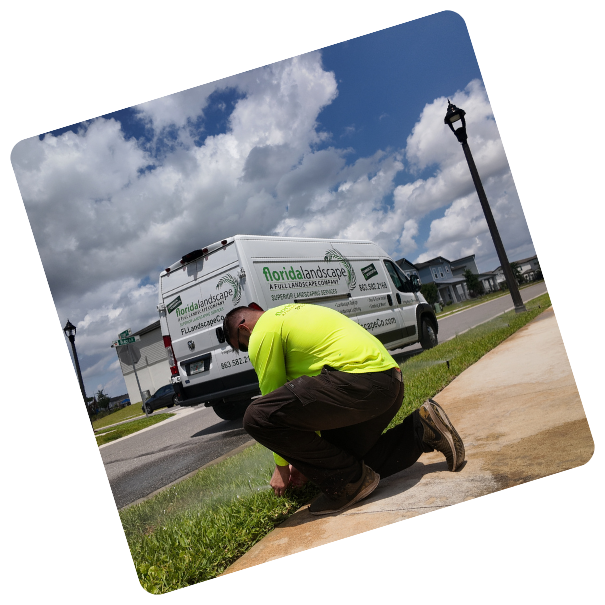
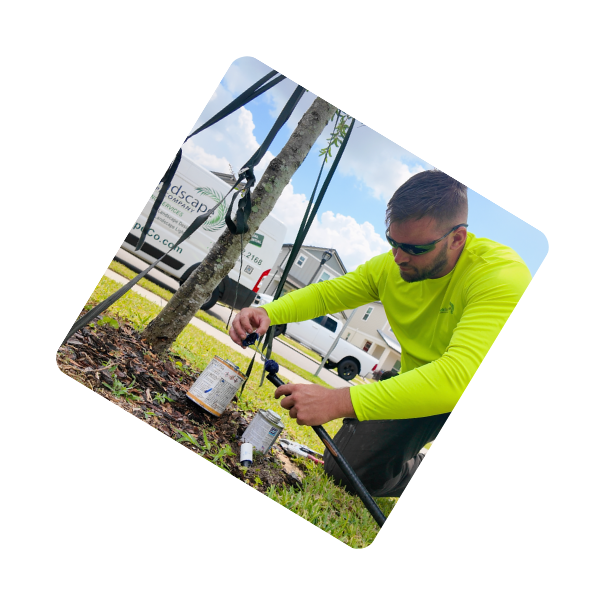
• Inspect zones seasonally for broken heads, leaks, and pressure issues
• Document irrigation audits so the board has records if questioned
• Adjust run times for seasonal rainfall rather than running fixed schedules year-round
Tip: Ask your landscaping provider for a written irrigation audit report at least twice a year — once before the wet season and once before the dry season. Boards without this documentation have a harder time defending water bills or explaining dry patches to residents.
The South Florida Water Management District publishes current watering restrictions by county, and boards should confirm their contract includes compliance with whatever schedule applies to their specific zip code.
Tree Maintenance and Storm Prep Obligations
Florida's storm season puts tree maintenance at the center of HOA liability conversations. A dead or overgrown tree that falls on a resident's car or fence during a storm becomes a legal and financial problem fast, especially if the HOA had prior knowledge of the hazard.
Requirements boards should build into their landscaping contracts:
1. Annual canopy inspection: Identify dead limbs, disease, or structural weakness before hurricane season.
2. Clearance maintenance: Keep canopies trimmed away from rooflines, power lines, and sightlines at intersections.
3. Storm debris response plan: Confirm response time commitments for post-storm cleanup, not just routine trimming.
4. Stump and hazard removal: Address any tree flagged as a hazard promptly rather than deferring to the next budget cycle.
The U.S. Forest Service publishes general guidance on tree risk assessment that many municipal arborists reference when evaluating hazard trees in residential communities.
Documentation and Reporting Boards Should Demand
Board turnover is constant, and undocumented landscaping decisions get lost when new members take over. Requiring written reporting from your landscaping provider protects the board from disputes with residents and creates continuity between board terms.
At minimum, boards should request:
• A written service schedule showing mowing, trimming, and bed maintenance frequency
• Photo documentation of common area conditions before and after major work
• Irrigation audit reports twice yearly
• A point of contact who responds to board inquiries within a set window, not "when available"
This kind of documentation-first approach is exactly what boards should look for when comparing providers. Our guide on how to choose a landscaping company for your HOA covers the specific questions to ask before signing a contract.
Common Mistakes Clermont HOA Boards Make
1. Vague contract scopes: Contracts that say "landscaping maintenance" without listing specific tasks, frequencies, and areas covered leave too much room for disputes.
2. No irrigation audit schedule: Skipping seasonal irrigation checks leads to water waste, dry patches, and unnecessary fines.
3. Ignoring tree hazards until storm season: Waiting until a storm warning to inspect canopy health is too late for meaningful preventive trimming.
4. Inconsistent enforcement: Enforcing turf standards on some homeowners but not others creates legal exposure and resident frustration.
5. No documentation trail: Without photos and written reports, boards can't prove compliance or defend decisions to residents.
6. Choosing price over reliability: The cheapest bid rarely includes the reporting, irrigation management, and storm response boards actually need.
Schedule Your HOA Landscaping Review in Clermont Today
Managing turf standards, irrigation compliance, tree hazards, and common area upkeep across an entire community is a lot to track without a dedicated partner. Florida Landscape Co. works directly with boards and property managers on entry signage beds, common area turf, irrigation audits, and storm-prep tree care built around clear scopes and regular reporting.
Request your HOA landscaping review or call (863) 582-2168 for fast, local service in Clermont.

Get your free quote and expert advice today.
Ready to transform your garden? Get in touch with our expert team today for a free consultation and personalized plan.




Frequently Asked Questions
What are the mowing height requirements for HOAs in Clermont?

Most Clermont HOA governing documents reference a maximum turf height between 3 and 4 inches, though boards should confirm the exact standard in their specific CC&Rs since requirements vary by community.
Can an HOA be fined for irrigation violations in Clermont?
Yes. If common area irrigation runs outside the South Florida Water Management District's approved schedule, the HOA can be cited directly, separate from any violations tied to individual homeowner lots.
Who is responsible for tree removal in HOA common areas?
The HOA is typically responsible for tree maintenance and removal in common areas, entry points, and amenity centers, while individual homeowners are responsible for trees on their own lots unless the governing documents state otherwise.
How often should HOA landscaping contracts include irrigation audits?
Twice yearly is standard — once before the wet season and once before the dry season — to catch broken heads, pressure issues, and timer settings that no longer match seasonal watering needs.
What should be included in an HOA landscaping contract in Clermont?
A strong contract lists specific service frequencies for mowing, edging, and bed maintenance, defines which areas are covered (entry, common areas, retention ponds, amenities), includes irrigation audit reporting, and outlines a storm response commitment.

