.webp)
How to Plan an HOA Landscaping Budget in Central Florida
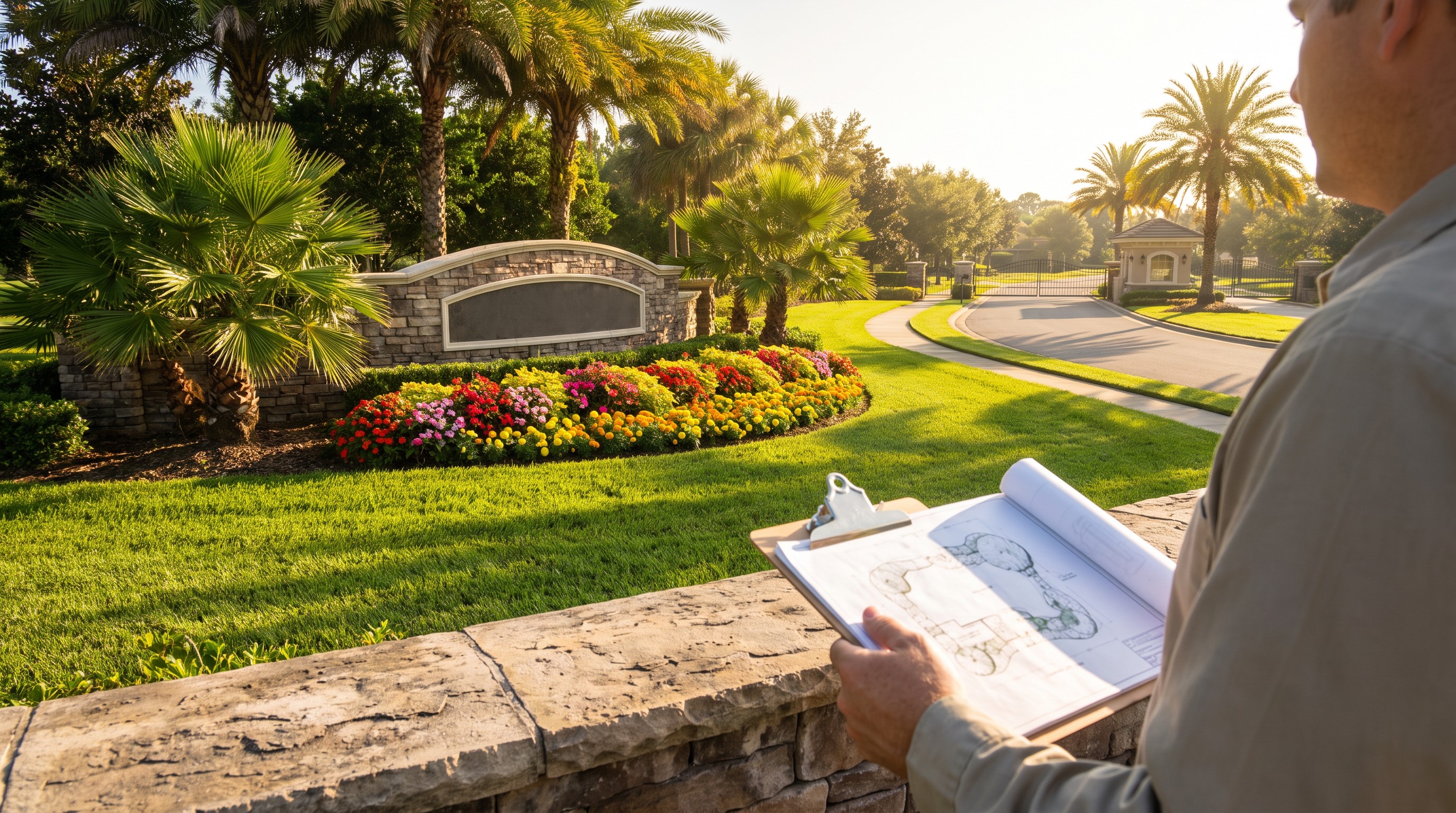
An HOA landscaping budget in Central Florida typically runs between $1,800 and $4,500 per home per year, depending on community size, amenity load, and how many vendors are splitting the work. Boards heading into Q3 and Q4 contract renewals often discover their existing number was never built on real cost drivers — it was copied from last year's line item and adjusted for inflation. That approach leaves communities either overpaying for basic turf care or underfunding the tree work and irrigation repairs that show up as emergency expenses six months later.
Central Florida's growing season doesn't pause. Sandy soil, near-constant rain from June through September, and rapid turf growth mean landscape budgets here behave differently than in slower-growth climates. A board that budgets like a Georgia or Carolina HOA will consistently run short by late summer.
What Drives HOA Landscape Costs in Central Florida
Four factors explain almost all the variance between communities of similar size. Understanding them lets a board build a budget instead of guessing at one.
• Service frequency: Weekly mowing during growing season (roughly March through October) versus biweekly cuts the rest of the year changes total mowing hours by 30-40% annually.
• Amenity load: Entry signage beds, clubhouse grounds, pool perimeters, and common-area islands all add labor hours that per-home averages don't capture well. A 200-home community with a clubhouse and three entry features will always cost more per home than a 200-home community with none.
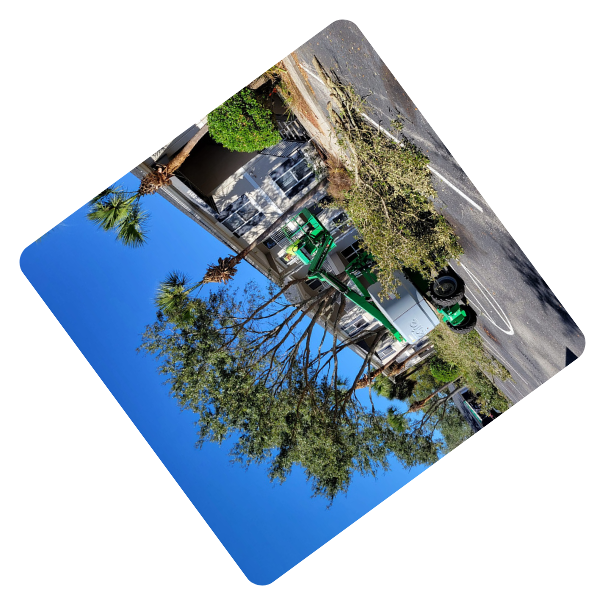
• Tree work and canopy management: Storm-prep pruning, canopy thinning, and removal of hazard trees are the single biggest source of budget overruns. Central Florida's storm season (June-November) makes this a near-annual line item, not an occasional one.
• Mulch refresh cycles: Communities that refresh mulch twice a year hold weed pressure and moisture retention better than once-a-year cycles, but the second application adds real cost. Boards frequently cut this first and pay for it in irrigation waste and dead plantings.
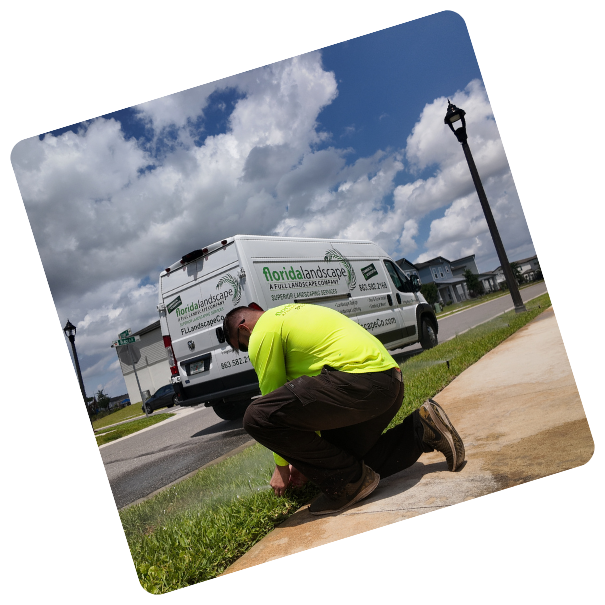
Irrigation is worth calling out separately. Systems that aren't audited seasonally waste water on dry patches in one zone while flooding another, and Florida's sandy soil makes uneven coverage worse than in denser soil types. A seasonal irrigation audit and repair plan usually pays for itself within a year through reduced water bills and fewer emergency service calls.
HOA Landscaping Cost Per Home: What's Realistic
Boards asking about HOA landscaping cost per home need a range tied to community type, not a single flat number. These figures reflect typical Central Florida HOA contracts covering turf maintenance, basic shrub and bed care, and standard irrigation monitoring — not major renovation or design work.
Small Communities (Under 100 Homes)
Expect $2,500-$4,500 per home annually. Fixed costs like equipment mobilization and site visits get spread across fewer units, which pushes the per-home number higher even though total service hours are lower.
Mid-Size Communities (100-350 Homes)
Expect $1,800-$3,200 per home annually. This is the sweet spot for cost efficiency — enough scale to justify dedicated crew days without the added complexity of multiple entry points and amenity centers that larger communities carry.
Large Communities (350+ Homes) or Amenity-Heavy Sites
Expect $1,600-$2,800 per home annually, but with far more variance. Communities with clubhouses, multiple pools, and extensive common-area turf can see this climb past $3,500 per home once amenity-specific care is factored in.
These ranges assume a single vendor handling most or all services. Multi-vendor setups change the math significantly, and not always in the board's favor.
Single-Vendor vs. Multi-Vendor: The Real Cost Comparison
Boards often assume that hiring separate specialists for mowing, irrigation, and tree work saves money because each contract looks smaller. The line-item totals frequently tell a different story once management overhead is added in.
Multi-Vendor Costs Boards Miss
Every additional vendor means another contract to negotiate, another insurance certificate to track, another invoice to reconcile, and another schedule to coordinate around resident complaints. Property managers spend real hours — often 3-5 hours per month per additional vendor — just on coordination. At typical management billing rates, that's $150-$400 per month in administrative cost that never shows up in the landscaping line item but comes straight out of the operating budget.
Single-Vendor Advantages
A single provider handling recurring lawn and landscape maintenance alongside irrigation and tree work consolidates scheduling, reduces the number of site visits residents see (and complain about), and gives the board one point of contact for issues. It also closes the gaps that happen at handoff points — the mowing crew that clips an irrigation head and the irrigation company that doesn't get told until the next scheduled visit three weeks later.
This doesn't mean every community should collapse every service into one contract immediately. But boards comparing quotes should add estimated management overhead to each multi-vendor bid before declaring it the cheaper option.
"The boards that struggle most with budget overruns are usually the ones juggling four vendors and no single point of accountability. Consolidation isn't about loyalty to one company — it's about closing the gaps where cost and confusion live." — Field observation from Central Florida HOA landscape planning
Reserve Study Framing for Landscape Budgets
Most Florida reserve studies focus heavily on roofs, paving, and paint cycles, and treat landscaping as an operating expense rather than a capital item. That's usually correct for routine mowing and maintenance, but it creates a blind spot for larger landscape investments — tree removal and replacement, irrigation system overhauls, and major bed renovations that happen on 5-10 year cycles rather than annually.
Boards conducting a landscaping reserve study for a Central Florida property should separate three buckets:
1. Operating budget: Routine mowing, trimming, fertilization, and standard irrigation monitoring — the predictable annual number.
2. Semi-capital reserve: Mulch refresh cycles, seasonal color rotations, and minor irrigation repairs that fluctuate year to year but should be smoothed with a small reserve line.
3. Capital reserve: Tree removal/replacement, major irrigation system replacement, and landscape renovation projects tied to aging infrastructure — these belong in the formal reserve study alongside roofs and pavement.
Communities that skip the capital bucket entirely tend to hit special assessments when a mature oak needs removal or an original irrigation main finally fails. The Community Associations Institute publishes reserve planning guidance that boards can reference when building this out with their management company or reserve specialist.
Ways to Reduce HOA Landscape Costs Without Cutting Corners
Cost control and quality control aren't opposites if a board targets the right line items. These approaches tend to produce real savings without triggering resident complaints about declining curb appeal.
• Right-size mowing frequency by season. Weekly cuts during peak growth (roughly April-September) and biweekly the rest of the year matches service to actual growth rate instead of paying peak-season rates year-round.
• Audit irrigation zones annually. Dry patches and overwatering both waste money — one on plant replacement, the other on water bills. A single seasonal audit often identifies $500-$1,500 in annual water savings for mid-size communities.
• Convert high-maintenance beds to lower-input plantings. Beds requiring constant pruning and replacement cost more over five years than a one-time renovation to hardier, better-suited plant selections.
• Consolidate vendors where it makes sense. Reducing management overhead by combining mowing, irrigation, and tree work under one provider often saves more than negotiating each contract down individually.
• Time tree work proactively, not reactively. Storm-prep pruning before hurricane season costs less than emergency removal after a storm, and it's usually covered under standard maintenance contracts rather than emergency call-out rates.
The EPA WaterSense program also publishes irrigation efficiency benchmarks that Central Florida boards can use to sanity-check water usage against similar-sized properties nationally.
Building the Annual Landscape Maintenance Budget Line by Line
A defensible annual landscape maintenance budget breaks into five components rather than one lump figure. Boards presenting to residents at annual meetings get far less pushback when the number is itemized.
1. Base maintenance contract: Mowing, edging, trimming, and fertilization — typically 55-65% of total budget.
2. Irrigation management: Monitoring, seasonal adjustments, and routine repairs — typically 10-15%.
3. Tree and canopy care: Pruning, storm prep, and planned removals — typically 10-20%, higher in communities with mature tree canopies.
4. Mulch and seasonal color: Refresh cycles and rotating plantings at entries — typically 5-10%.
5. Contingency reserve: A 5-8% buffer for unplanned storm cleanup or irrigation emergencies that don't fit neatly into the annual contract.
Boards that skip the contingency line are the ones asking for special assessments after the next tropical storm rolls through Polk or Lake County.
Get a Transparent HOA Landscaping Budget Quote in Central Florida
Boards heading into contract renewal season deserve a clear breakdown of what drives cost, not a vague annual number and a renewal date. Whether the issue is amenity-heavy common areas eating the budget, tree work that keeps landing as an emergency expense, or a multi-vendor setup that's quietly costing more in management overhead than it saves, Florida Landscape Co. will walk through the numbers with your board before you sign anything.
Request a detailed HOA landscaping cost breakdown or call (863) 582-2168 for fast, local service across Polk and Lake County communities.

Get your free quote and expert advice today.
Ready to transform your garden? Get in touch with our expert team today for a free consultation and personalized plan.



Frequently Asked Questions
How much should an HOA budget for landscaping per home in Central Florida?

Most Central Florida HOAs budget between $1,800 and $4,500 per home annually, with smaller communities typically at the higher end due to fixed costs spread across fewer units. Amenity-heavy communities with clubhouses and multiple entry features often exceed this range.
What's included in a typical HOA landscaping contract?
Standard contracts cover mowing, edging, trimming, shrub and bed maintenance, and basic irrigation monitoring. Tree work, mulch refreshes, and major irrigation repairs are frequently itemized separately since they don't occur at a fixed monthly rate.
Should our HOA use one landscaping vendor or several specialists?
A single vendor handling maintenance, irrigation, and tree work usually reduces total cost once management overhead is factored in, since coordinating multiple contracts and insurance certificates takes real staff time. Specialized multi-vendor setups can make sense for large communities with distinct amenity centers, but the coordination cost should be weighed against any per-service savings.
Does landscaping belong in our reserve study?
Routine maintenance is an operating expense, but major items like tree removal/replacement and full irrigation system overhauls belong in the capital reserve alongside roofs and paving. Communities that treat all landscaping as pure operating expense often get hit with special assessments when a mature tree fails or an aging irrigation main breaks.
How can our HOA reduce landscaping costs without hurting curb appeal?
Seasonal mowing frequency adjustments, annual irrigation audits, and proactive storm-prep tree pruning typically produce the biggest savings without any visible drop in property appearance. Cutting mulch cycles or reducing service frequency during peak growth tends to backfire and cost more in plant replacement later.

