
Dollar Weed in Florida: Identification, Causes & How to Get Rid of It
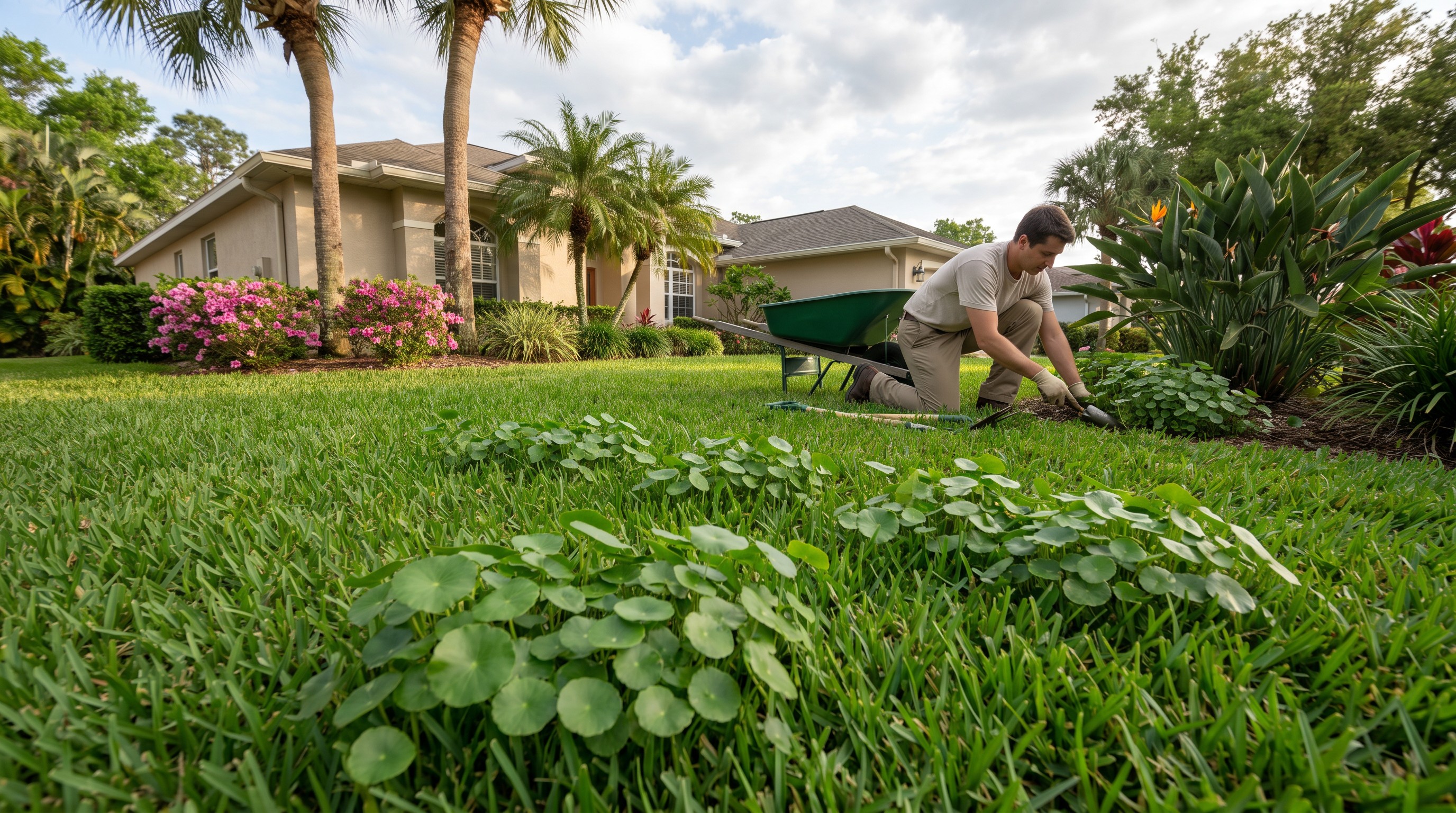
Dollar weed florida lawns fight every year usually traces back to one habit: too much water. This low-growing, round-leafed weed can take over a St. Augustine or Bahia lawn in a matter of weeks once late-summer rains and irrigation schedules overlap. By September, most Central Florida homeowners are staring at patches of shiny, coin-shaped leaves crowding out their turf, and wondering whether a store-bought spray will actually fix it.
It usually won't — not on its own. Dollar weed (Hydrocotyle spp.) is one of the most persistent broadleaf weeds in Central Florida because it spreads through underground rhizomes as well as seed, and it thrives in exactly the conditions most Florida lawns provide: compacted, moist, sandy soil with inconsistent mowing and irrigation. This guide covers how to identify it correctly, why it keeps coming back, and what combination of timing, product, and lawn management actually gets rid of it for good.
What Dollar Weed Looks Like (And What It's Often Confused With)
Dollar weed gets its name from its leaves — round, glossy, and roughly the size of a silver dollar, attached to the stem at the center like a tiny umbrella. Leaves range from bright green to a darker, waxy green depending on sun exposure. New growth often shows small white or greenish flower clusters on thin stalks rising above the leaf canopy in summer and early fall.
Homeowners frequently confuse dollar weed with dichondra, which has similar rounded leaves but a matte, fan-shaped texture and no central stem attachment. The University of Florida's IFAS Extension is the most reliable identification resource for Florida-specific weeds, and its guidance is worth bookmarking if you're unsure what you're dealing with.1
Tip: Pull a single stem gently from the soil. If a thin, fleshy rhizome comes up with it and the plant seemed rooted in a damp spot, you're almost certainly looking at dollar weed rather than a lookalike.
Why Dollar Weed Thrives in Central Florida Lawns
Dollar weed is a wetland-adapted plant by nature. It grows naturally along ditches, pond edges, and drainage swales throughout Polk and Lake Counties, which tells you everything about the conditions it prefers in a residential lawn: standing moisture, poor drainage, and shaded or compacted soil.
Central Florida's climate hands dollar weed nearly everything it needs. Summer's daily rain combines with irrigation systems still running on a spring schedule, and the result is soil that rarely dries out between waterings. Add sandy soil that compacts under foot traffic and mower wheels, and you get low spots that hold water exactly where dollar weed wants to root.
Overwatering is the single biggest driver we see across lawns in Clermont, Davenport, and Four Corners. Most irrigation controllers are still set for four or five days a week going into fall, when established St. Augustine and Bahia lawns need far less. If your system hasn't been adjusted since summer, that's the first place to look — our irrigation repair and audit service can identify overwatering zones and reset run times to match actual turf needs.
Dollar Weed in St. Augustine Grass: What Makes It Different
St. Augustine is the dominant lawn type across most Central Florida neighborhoods, and it happens to be one of the more sensitive turf types when it comes to herbicide selection. Many broadleaf weed killers that work fine on Bahia or Zoysia will damage or discolor St. Augustine if applied at the wrong rate or temperature.
Dollar weed in St. Augustine grass also tends to hide more effectively, since the weed's low, flat growth habit blends into St. Augustine's wider blade structure. By the time patches are visible from a standing height, the rhizome network below the surface is often already extensive. This is why spot-treating visible patches rarely solves the problem — the untreated rhizomes nearby simply refill the gap within a few weeks.
Organic vs. Chemical Dollar Weed Control
Organic and Cultural Control
Correcting the underlying moisture problem is the most effective non-chemical control available, and it's the step most homeowners skip. Reducing irrigation frequency, improving drainage in low spots, and raising the mowing height to encourage denser turf all reduce the open, moist soil dollar weed needs to establish.
Hand-pulling can work on small, isolated patches, but only if you remove the entire rhizome. Breaking the stem and leaving root fragments in the soil typically causes the patch to regrow within two to three weeks. For larger infestations, hand-pulling alone isn't a realistic long-term strategy.
Chemical Control
Selective, post-emergent broadleaf herbicides containing active ingredients like metsulfuron-methyl, atrazine, or a three-way combination (2,4-D, mecoprop, dicamba) are the most commonly used options for what kills dollar weed in Florida lawns. The right choice depends heavily on your turf type — atrazine is generally safer on St. Augustine and centipede, while three-way combinations require more caution near St. Augustine in hot weather.
Application timing matters as much as product selection. Herbicides applied during peak midday heat (above 90°F) increase the risk of turf injury, particularly on St. Augustine. Early morning application on a day without rain in the forecast for 24 hours gives the product time to absorb into the weed before it's diluted or washed away.
Important: Always read the label rate for your specific turf species before applying any dollar weed killer in Florida conditions. Under-dosing trains the weed population toward resistance over repeated seasons, while over-dosing risks turf damage that takes months to recover.
Timing Pre-Emergent Applications for Fall and Spring
Pre-emergent herbicides don't kill existing dollar weed — they prevent germinating seed from establishing. Because dollar weed spreads primarily through rhizomes rather than seed, pre-emergents play a smaller role here than they do for weeds like crabgrass, but they still matter for reducing new infestation points along lawn edges and beds.
The most effective pre-emergent windows in Central Florida fall in late February to early March and again in late September to early October, timed to soil temperature rather than the calendar. UF/IFAS research on Florida lawn weed management consistently ties pre-emergent effectiveness to soil temperature thresholds rather than fixed dates.2 Applying too early or too late significantly reduces the barrier's effectiveness.
For most homeowners, pairing a fall pre-emergent application with a post-emergent treatment on existing patches gives the best combined result heading into the cooler months, when dollar weed growth slows but doesn't stop entirely in Central Florida's mild winters.
Common Mistakes That Make Dollar Weed Worse
1. Watering on a fixed daily schedule: Set-it-and-forget-it irrigation timers are the number one cause of chronic dollar weed pressure. Watering should adjust seasonally and respond to actual rainfall, not run on autopilot.
2. Mowing too short: Scalped St. Augustine and Bahia lawns let more sunlight reach the soil surface, which favors low-growing weeds like dollar weed over the turf itself.
3. Spot-spraying only visible leaves: Because the rhizome network extends beyond visible growth, treating only what you can see leaves the root system intact to regrow.
4. Ignoring drainage issues: Low spots that collect standing water after rain will keep producing dollar weed no matter how much herbicide gets applied.
5. Applying herbicide in extreme heat: Midday applications above 90°F increase turf stress and reduce herbicide uptake into the weed.
6. Skipping follow-up treatment: A single application rarely eliminates an established rhizome network; most infestations need a second treatment 3–4 weeks later.
Long-Term Prevention Tips
Preventing dollar weed from returning comes down to removing the conditions it depends on. A properly calibrated irrigation system that waters deeply but infrequently encourages deeper turf root systems and drier surface soil between cycles — the opposite of what dollar weed needs.
Improving soil drainage in chronically wet areas, whether through grading, French drains, or aeration, addresses the root cause rather than the symptom. Dense, healthy turf is also one of the best natural defenses; a well-fertilized lawn with proper mowing height crowds out weed seedlings before they can establish. Our lawn maintenance program builds fertilization and mowing schedules around Central Florida's growing season specifically to keep turf dense enough to resist weed pressure.
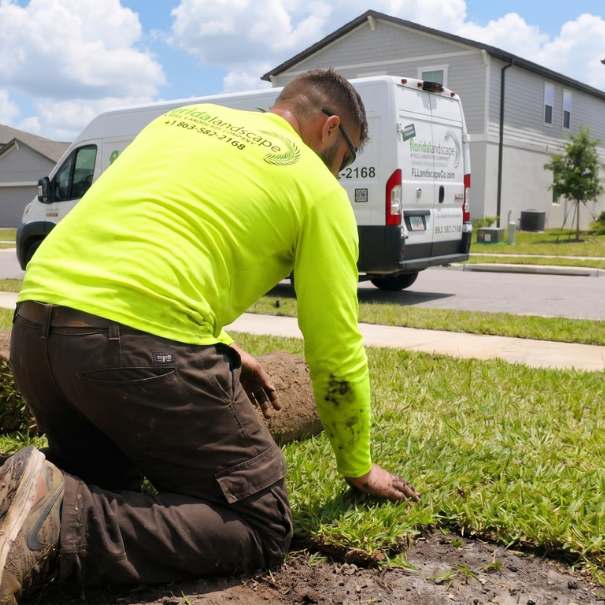
If dollar weed has already thinned out sections of your lawn, replacing damaged turf with fresh, properly installed sod gives you a clean start rather than fighting weeds through existing bare patches. Our sod installation service handles soil prep and grading as part of the install, which also helps correct the drainage problems that invited dollar weed in the first place.
Schedule Dollar Weed Treatment in Central Florida Today
If patches of shiny, round-leafed weed are spreading through your St. Augustine or Bahia lawn, you're likely dealing with overwatering, poor drainage, or both — and store-bought spot sprays won't fix either. Florida Landscape Co. handles irrigation audits, targeted herbicide treatment, and turf renovation as one coordinated plan, so the weed doesn't just come back in three weeks.
Request your free lawn assessment or call (863) 582-2168 for fast, local service across Clermont, Davenport, Haines City, and the greater Four Corners area.

Get your free quote and expert advice today.
Ready to transform your garden? Get in touch with our expert team today for a free consultation and personalized plan.



Frequently Asked Questions
What kills dollar weed in Florida lawns?

Selective post-emergent herbicides containing metsulfuron-methyl or atrazine are among the most effective options for St. Augustine and Bahia lawns, applied on a cool morning with no rain expected for 24 hours. A second application 3–4 weeks later is usually needed to catch regrowth from surviving rhizomes.
How do you get rid of dollar weed in Florida without chemicals?
Reduce irrigation frequency, improve drainage in low spots, and hand-pull small patches while removing the entire rhizome. These steps address the moisture conditions dollar weed needs but work best combined with targeted herbicide treatment on established infestations.
Why does dollar weed keep coming back after I treat it?
Dollar weed spreads through underground rhizomes that often extend well beyond the visible patch. If the herbicide only reaches surface leaves, or if the underlying overwatering or drainage issue isn't corrected, the rhizomes regrow within a few weeks.
Is dollar weed harmful to St. Augustine grass?
Dollar weed doesn't damage turf directly, but it competes aggressively for light, water, and nutrients. Dense infestations can thin out St. Augustine over time by crowding out the grass in the areas it colonizes.
When is the best time to treat dollar weed in Central Florida?
Late September through October is an effective window, since dollar weed growth is still active but temperatures are cooling enough to reduce herbicide-related turf stress. A follow-up round in early spring catches any regrowth before summer rains accelerate its spread again.

