
.webp)
Commercial Landscaping for Retail Shopping Centers in Central Florida
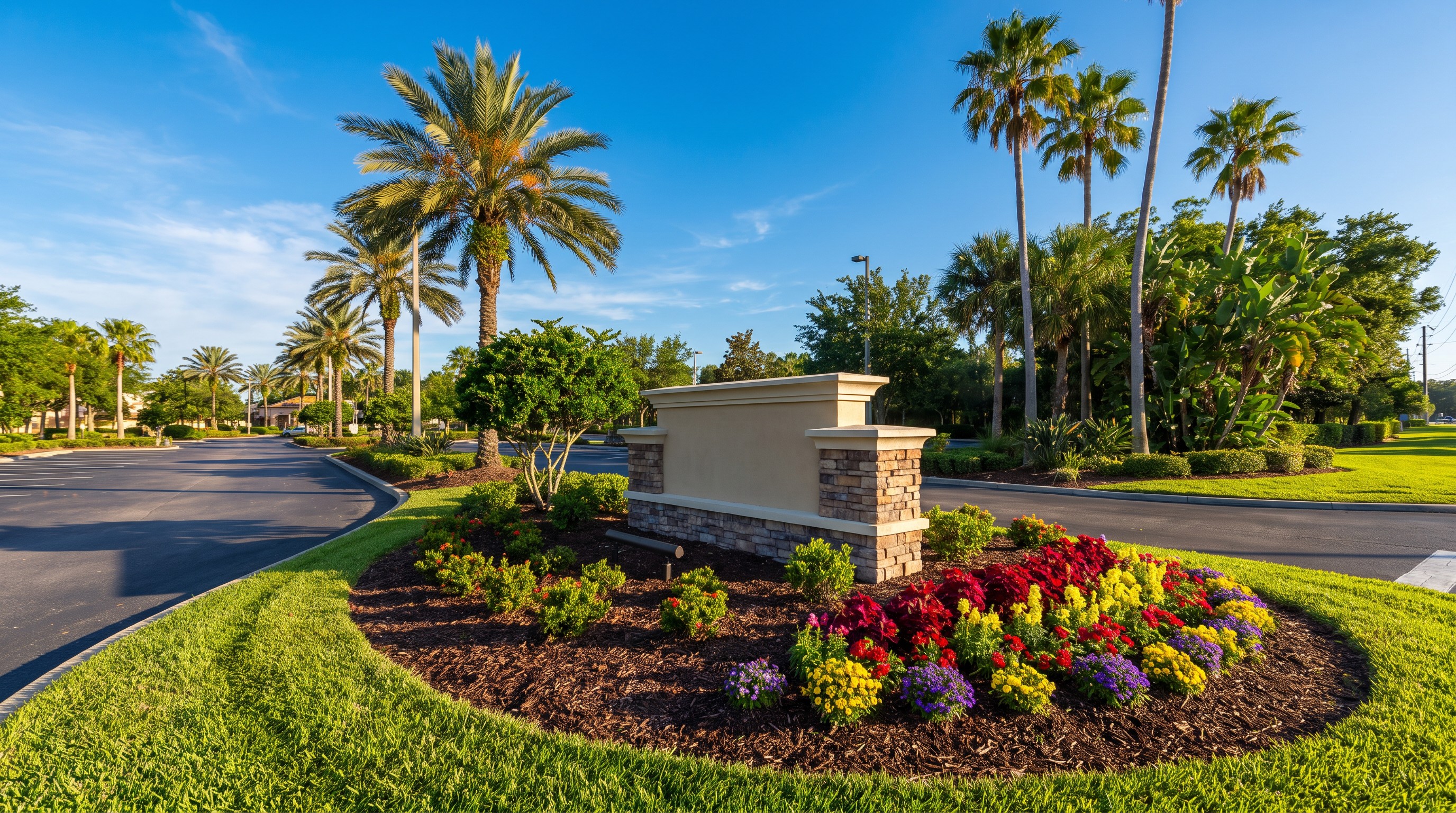
Commercial landscaping for retail shopping centers in Central Florida is not the same job as mowing a homeowner's front yard, and treating it that way is why so many plazas along US-27 and SR-50 look tired by month three of a contract. Retail properties get judged in seconds. A shopper decides whether a plaza looks "open and thriving" or "struggling" before they've even parked, and that first impression is directly tied to how the landscaping looks at the entrance, along the parking lot edges, and around the signage bed.
If you're a facilities director or property owner managing a strip center, mixed-use property, or retail plaza in the Clermont, Davenport, Winter Garden, or Four Corners corridor, you already know the basics of what landscaping is supposed to look like. What you need is a clear standard to hold your current vendor to — and a way to spot the gaps before a tenant or your ownership group spots them first.
Why Retail Landscaping Standards Are Different from Residential or Light Commercial
Retail centers deal with volume. Hundreds or thousands of cars and pedestrians move through a plaza every week, which means turf compacts faster, mulch beds get kicked around, and trash accumulates in planting beds near entrances and dumpster corrals. A maintenance plan built for a quiet office park will fall apart under that kind of traffic.
Retail also has a tenant mix problem that residential properties don't. A nail salon, a fast-casual restaurant, and a fitness studio in the same plaza all have different foot-traffic patterns, different signage sightlines, and different opinions about what "clean" looks like near their storefront. A vendor managing commercial landscaping for a shopping center needs a scope that accounts for all of it, not a generic weekly mow-and-go.
Lease renewal decisions and tenant satisfaction surveys increasingly reference property appearance. Retail leasing data from firms tracking Central Florida markets has consistently shown that well-maintained common areas correlate with lower vacancy and stronger renewal rates in strip and neighborhood centers — the kind of asset class that dominates the US-27 and SR-50 corridors.
The Maintenance Checklist Retail Tenants Actually Notice
Tenants and their customers notice specific things, not a vague sense of "landscaping." If your current provider isn't hitting these points weekly, it's showing up in tenant complaints even if nobody's called you about it yet.
• Entrance and signage bed presentation: The bed around your monument sign is the first thing a driver sees from the road. Weeds, faded mulch, or leggy shrubs here undercut every dollar spent on the sign itself.
• Parking lot edge work: Grass creeping over curbs, sidewalks, and parking bumpers reads as neglect fast. Edge lines need to stay crisp along every row, not just the front row visible from the highway.
• High-traffic turf areas: Grass near entrances, crosswalks, and cart corrals wears out faster and needs closer attention than turf in low-traffic side yards.
• Debris and litter in beds: Retail beds collect fast food bags, cigarette butts, and cart-corral trash. This has to be part of the scope, not treated as a separate cleanup line item.
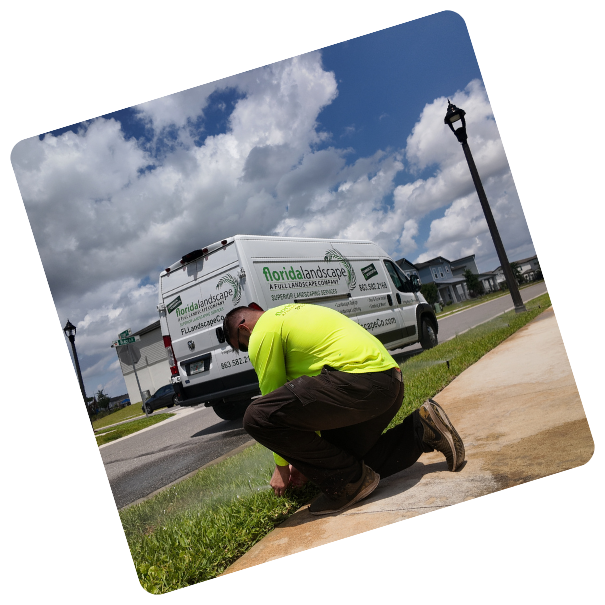
• Irrigation coverage on islands and medians: Small planting islands in parking lots dry out fast in Central Florida heat and are often the first thing to look scorched by June.
• Seasonal color consistency: Retail centers with rotating seasonal color at entrances read as active and well-managed. Bare or spent beds read as the opposite.
A property running consistent lawn and landscape maintenance against a checklist like this avoids the slow drift into visible decline that happens when a crew just shows up, mows, and leaves.
ADA Compliance: The Landscaping Checkpoints Facilities Directors Can't Skip
ADA compliance isn't just a building-code issue — landscaping plays a direct role in accessible path-of-travel requirements, and it's one of the more common areas where retail properties get flagged. The U.S. Access Board and Department of Justice ADA standards require clear, unobstructed accessible routes from parking to entrances, and overgrown landscaping is a frequent violation.
Specific checkpoints worth reviewing with your vendor:
1. Path width and clearance: Shrubs and ornamental grasses can't encroach on the required clear width of accessible routes — overgrowth needs to be caught before it becomes a citation risk.
2. Curb ramp and detectable warning visibility: Mulch, sod, or ground cover can't bury or obscure truncated dome warnings at curb ramps.
3. Signage sightlines: Landscaping around accessible parking signage and van-accessible spaces needs to stay low enough not to block visibility.
4. Surface stability: Loose mulch or gravel migrating onto accessible paths creates a tripping and mobility hazard that inspectors and tenants both notice.
These aren't one-time fixes — they need to be checked on every visit, because Central Florida's growing season pushes shrubs and ground cover back into these zones fast.
Curb Appeal and the Real ROI Case for Property Owners
Landscaping spend on a retail property isn't a cosmetic line item — it's a leasing and retention tool. Commercial real estate research has repeatedly shown that exterior condition affects both tenant renewal decisions and customer foot traffic at retail centers, and property managers increasingly cite grounds maintenance quality as a factor in vacancy trends.
"Tenants don't complain about landscaping until it's bad enough to affect their own foot traffic — by then you've already lost some of that traffic." — Common feedback from Central Florida retail property managers
The ROI math is straightforward. A vacant retail bay on a plaza along US-27 or SR-50 costs far more per month than the incremental cost of tightening a landscaping contract. Losing even one anchor or mid-size tenant over "the plaza looks run down" complaints costs more than a full year of upgraded maintenance would have.
Property owners evaluating vendors should ask for documentation, not promises — photo reporting after each visit, a defined response time for tenant complaints, and a named point of contact who understands retail-specific priorities like signage bed condition and parking lot edges.
Storm Response Protocols Retail Centers Need in Writing
Central Florida's storm season isn't optional planning — it's a recurring operational reality, and retail centers face unique exposure because downed limbs, debris, and standing water directly block customer access and create liability. The National Hurricane Center tracks a season that regularly threatens the I-4 corridor, and plazas without a written storm response plan are the ones that stay closed longest after a storm passes.
A retail-grade storm protocol should specify:
• Pre-storm prep: Tree canopy thinning and dead limb removal ahead of named storms, especially near parking areas and building overhangs.
• Response time commitment: A defined window (24–48 hours is standard for serious properties) for debris clearing after a storm passes, prioritizing accessible paths and drive lanes first.
• Drainage checks: Standing water in parking lot islands and landscape beds needs to be flagged and addressed, not left to evaporate over days.
• Communication protocol: A single point of contact who reports damage assessment and cleanup timeline to the property manager, not radio silence until the crew shows up.
If your current vendor doesn't have this in writing, you're finding out how they handle storms during the storm — the worst possible time to discover a gap.
Schedule a Commercial Landscaping Evaluation for Your Retail Property
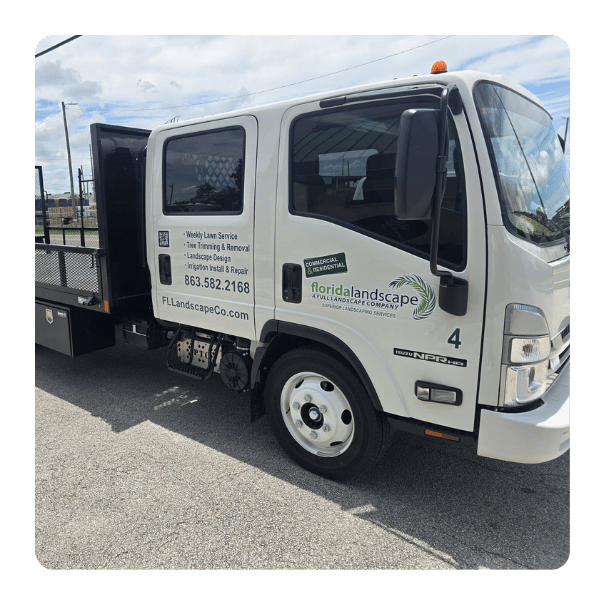
If your plaza's entrance beds, parking lot edges, or ADA path clearance haven't been reviewed against a retail-grade standard recently, it's worth a second look before a tenant or ownership group brings it up first. Florida Landscape Co. works with facilities directors managing retail centers along US-27, SR-50, and the surrounding Polk and Lake County corridors, and understands the difference between a maintenance crew and a property partner who reports, documents, and shows up before and after storms.
Request your commercial landscaping evaluation or call (863) 582-2168 for fast, local service across Central Florida's retail corridors.

Get your free quote and expert advice today.
Ready to transform your garden? Get in touch with our expert team today for a free consultation and personalized plan.




Frequently Asked Questions
What does commercial landscaping for a shopping center typically include?

A retail-grade scope typically covers turf mowing and edging, shrub and hedge trimming, mulch refreshes, irrigation management, seasonal color rotation, litter and debris removal from beds, and specific attention to signage beds, parking lot islands, and ADA path clearance — areas a standard residential-style contract usually overlooks.
How often should landscaping be serviced at a retail plaza in Central Florida?
Most retail centers in this climate need weekly service during the growing season (spring through early fall) and bi-weekly during cooler months, with irrigation checks and bed cleanup happening on every visit regardless of season due to Central Florida's fast turf and weed growth.
Can poor landscaping actually affect lease renewals at a shopping center?
Yes. Tenants factor exterior condition and customer-facing presentation into renewal decisions, and property managers report that visible landscaping neglect correlates with increased complaint volume and, in some cases, tenants citing appearance when they choose not to renew.
What ADA landscaping issues do retail centers get flagged for most often?
The most common issues are overgrown shrubs encroaching on accessible path width, mulch or ground cover obscuring curb ramp detectable warnings, and landscaping blocking sightlines to accessible parking signage.
Who handles storm cleanup for commercial landscaping contracts?
This should be defined in your contract with a specific response-time commitment, typically 24-48 hours after a storm passes, prioritizing drive lanes and accessible paths first, followed by full debris removal and drainage checks.

