
.webp)
Chinch Bugs and Central Florida Lawn HOA Damage: A Month-by-Month Scouting Guide
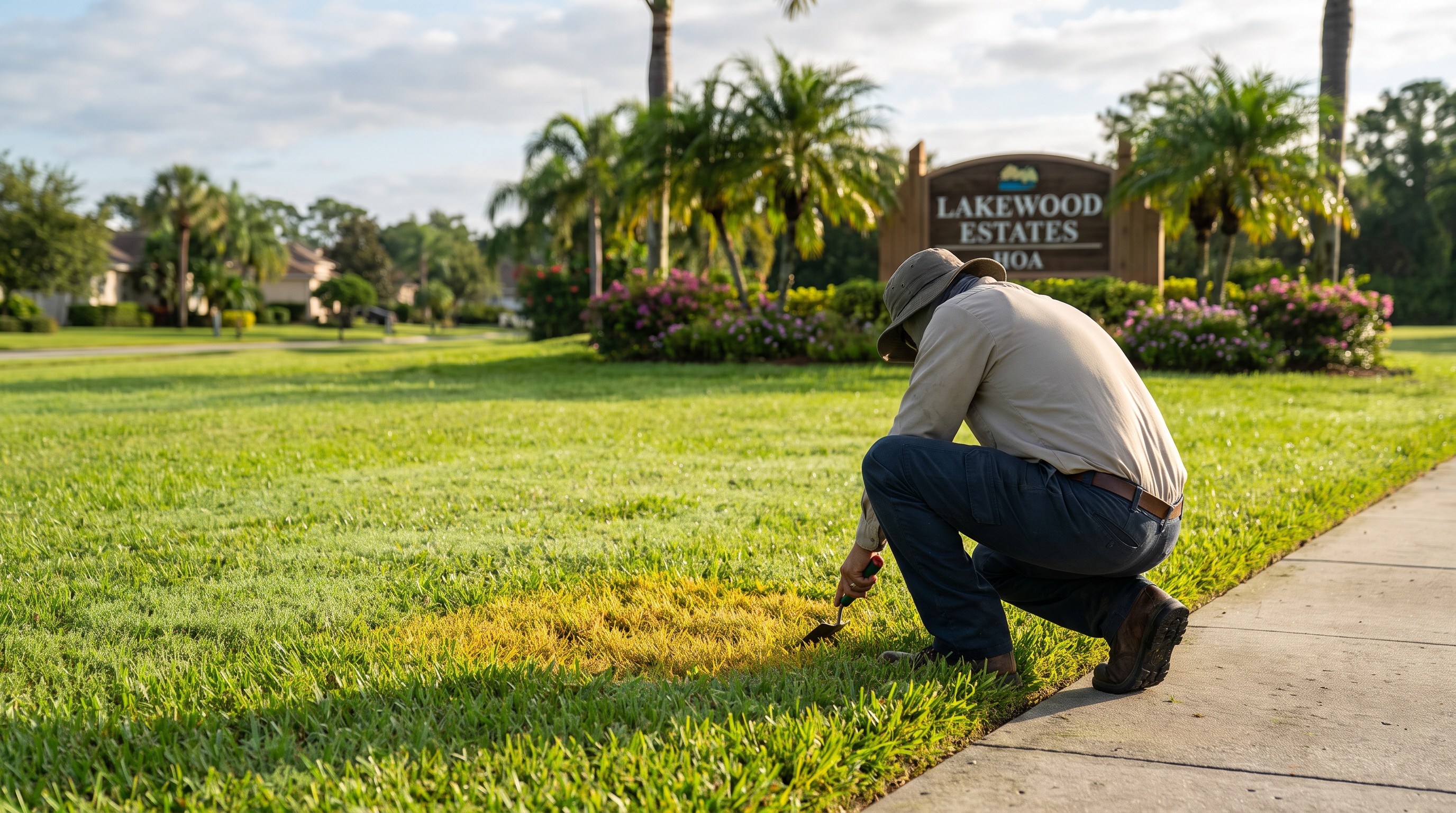
Chinch bugs in a Central Florida lawn can turn a healthy HOA common area into a dead, straw-colored patch in as little as two to three weeks during peak dry season. Boards that catch the damage after it spreads are already looking at a renovation bill instead of a treatment invoice. The difference between the two almost always comes down to one thing: whether someone was actually scouting the turf before the damage showed up.
Most HOA landscape contracts in Polk, Lake, and Orange Counties include pest control language, but "included" and "actively monitored" are not the same thing. A lot of vendors spray on a calendar schedule and call it done. That approach misses the early warning window when chinch bugs and brown patch fungus are still cheap and easy to stop.
Why HOA Turf Is a Bigger Target Than a Single-Family Yard
Common areas, entry monuments, and amenity-center lawns in Central Florida are almost always St. Augustinegrass, the single most chinch-bug-susceptible turf variety grown in the state. Large, uninterrupted stretches of turf with consistent irrigation create ideal breeding conditions, and one infested zone can spread across an entire community faster than it would in a fenced backyard.
Boards also carry more exposure than individual homeowners. A dead entry bed or a brown swath along the clubhouse fairway hits property values and resident complaints at the same time. According to the University of Florida IFAS Extension, chinch bug damage is frequently misdiagnosed as drought stress until it is too advanced to reverse with a simple treatment, which is exactly the scenario proactive scouting is built to prevent.
March Through May: Dry Season Chinch Bug Pressure Builds
Spring is the first major chinch bug window in Central Florida. As temperatures climb and rainfall drops off, adult chinch bugs become active and start feeding on St. Augustinegrass at the thatch layer, right where irrigation heads and sunny, dry areas of turf create stress the insects prefer.
Watch for these early signs during board walk-throughs or vendor scouting visits:
• Yellowing patches near sidewalks, driveways, or irrigation heads that look drought-stressed even after watering
• Patches that keep expanding outward in irregular shapes rather than staying contained
• A sticky, cotton-like residue near the thatch line where insects have been feeding
• No improvement in yellowed turf after 48 hours of adequate irrigation
A quick field test settles the question: cut both ends off an empty coffee can, push it two inches into the turf at the edge of a suspect patch, fill it with water, and check for small black-and-white insects floating to the surface within five to ten minutes. Vendors performing real scouting should be doing this test routinely, not guessing from a truck window.
October and November: The Second Chinch Bug Window
Central Florida's second dry stretch in fall creates another chinch bug surge, often overlooked because boards are mentally shifting into "off-season" mode. Populations that survived summer rains rebound quickly once humidity drops and turf stress returns.
This window matters because turf entering winter with active chinch bug damage does not recover the way it would during peak growing season. Damage that starts in October can still be visible in February if it is not caught early. Fall scouting visits should follow the same coffee-can test and visual walk-through used in spring, concentrated on south-facing beds, entry signage areas, and anywhere irrigation coverage is inconsistent.
August and September: Brown Patch Fungus Takes Over
Once the summer rain pattern locks in, the pest conversation shifts almost entirely from insects to fungus. Brown patch, caused by the fungus Rhizoctonia solani, thrives in the exact conditions Central Florida delivers every August and September: high humidity, warm nights, and turf that stays wet for extended periods overnight.
Brown patch shows up differently than chinch bug damage, and HOA boards benefit from knowing the distinction before a vendor conversation happens:
• Roughly circular patches of brown or yellow turf, often with a slightly darker "smoke ring" border in early morning
• Grass blades that pull away from the runner with minimal resistance, unlike chinch bug damage where blades stay attached but discolored
• Patches that appear after several consecutive days of rain or heavy overnight irrigation
• Damage concentrated in shaded, poorly drained, or overwatered zones rather than sunny, dry areas
The UF/IFAS Plant Pathology Department notes that brown patch pressure peaks specifically in late summer and early fall in Florida, which makes August the right month for boards to schedule a fungal-focused walk-through rather than waiting for residents to file the first complaint.
What Proactive Scouting Actually Looks Like
Reactive-only pest control means a vendor treats visible damage after residents complain. Proactive scouting means a vendor is systematically checking turf on a schedule aligned to the seasonal risk calendar above, before damage is visible to the untrained eye.
Boards evaluating a vendor's actual scouting practice should ask for specifics, not general assurances:
1. Documented inspection routes: Does the vendor walk the same problem zones (entry beds, irrigation-heavy turf, shaded common areas) on a set schedule, or only respond to complaints?
2. Written reporting: Are inspection notes, photos, and treatment recommendations provided to the board, or is pest control a black box?
3. Threshold-based treatment: Does the vendor treat based on actual insect counts and visible early symptoms, or apply blanket chemical treatments on a fixed calendar regardless of conditions?
4. Season-specific adjustments: Does the scouting plan shift focus from chinch bugs to fungal disease as the calendar moves from dry season into summer rains?
This kind of detail belongs in the service scope itself, not left to informal conversation. A well-structured HOA landscaping agreement should spell out scouting frequency, reporting format, and how treatment decisions get made and communicated to the board.
Prevention Beats Treatment: Irrigation, Aeration, and Grass Selection
Cost avoidance starts well before an insect or fungus ever shows up. Three structural decisions do more to prevent turf damage than any reactive spray program.
Irrigation scheduling matters more than most boards realize. Overnight watering that leaves turf wet for six or more hours creates ideal brown patch conditions, while underwatered turf stresses and becomes more attractive to chinch bugs. Early morning irrigation, timed so grass dries within a few hours after sunrise, reduces fungal pressure without sacrificing turf health during dry months. Routine adjustments should be part of standard lawn and landscape maintenance, not a separate line item boards have to request.
Aeration timing also plays a role in disease resistance. Compacted soil holds water at the surface longer, extending the window fungus has to establish. Aerating common-area turf in late spring, before the heaviest summer rains arrive, improves drainage and reduces the humidity buildup that feeds brown patch.
Grass variety selection is the longer-term lever. Floratam remains the standard for Central Florida HOAs because of its heat tolerance, but newer cultivars bred for improved chinch bug resistance are worth discussing during any turf renovation or new-construction planning conversation. Boards handling storm damage or major dead zones should also loop in tree services planning, since canopy thinning over chronically shaded, fungus-prone turf areas can meaningfully reduce moisture retention at the ground level.
The Cost Math: Scouting vs. Renovation
A targeted chinch bug or brown patch treatment applied early typically costs a fraction of what it takes to regrade, resod, and re-establish irrigation on a dead common-area zone. Boards facing a full turf renovation after damage spreads are also absorbing weeks of an unsightly dead patch at the community entrance while new sod establishes, on top of the direct expense.
The scouting calendar is not complicated: watch for chinch bugs in March through May and again in October and November, and shift attention to brown patch fungus risk through August and September as humidity peaks. Boards that build this rhythm into their landscape oversight, and hold vendors to it in writing, consistently spend less over a full year than boards operating on a complaint-driven, reactive model.
Schedule Your HOA Lawn Pest Inspection in Central Florida Today
Board members juggling reserve budgets, resident complaints, and vendor performance don't need another surprise turf bill this fall. Whether the concern is chinch bug damage creeping in before the fall dry spell or brown patch showing up after weeks of summer rain, a documented scouting visit answers the question before it becomes a renovation project.
Request your HOA lawn inspection or call (863) 582-2168 for fast, local service across Polk and Lake County communities.

Get your free quote and expert advice today.
Ready to transform your garden? Get in touch with our expert team today for a free consultation and personalized plan.



Frequently Asked Questions
How do I know if my HOA's lawn damage is chinch bugs or drought stress?

Water the affected area thoroughly and check back in 48 hours. Drought-stressed turf typically greens back up, while chinch bug damage continues spreading regardless of irrigation. The coffee-can flotation test is the fastest way to confirm chinch bug presence directly.
What time of year are chinch bugs worst in Central Florida?
Chinch bugs peak during the two dry seasons: March through May and again October through November. Populations decline during the wettest summer months but rebound quickly once humidity drops in fall.
Why does brown patch fungus show up every August in Florida lawns?
Brown patch thrives on warm, humid nights and turf that stays wet for extended periods, conditions that arrive reliably with Central Florida's summer rain pattern. August and September consistently see the heaviest fungal pressure of the year.
Can chinch bugs and brown patch damage the same lawn at the same time?
Yes, though they typically peak in different seasons. A lawn weakened by chinch bug damage in spring can be more vulnerable to fungal issues once summer rains arrive, which is why year-round monitoring matters more than single-season treatment.
What should an HOA pest control contract actually include?
Look for documented inspection routes, written reporting with photos, threshold-based treatment decisions instead of blanket calendar spraying, and seasonal adjustments that shift focus between insects and fungal disease as conditions change throughout the year.

