
Central Florida Landscaping: What Actually Works Here
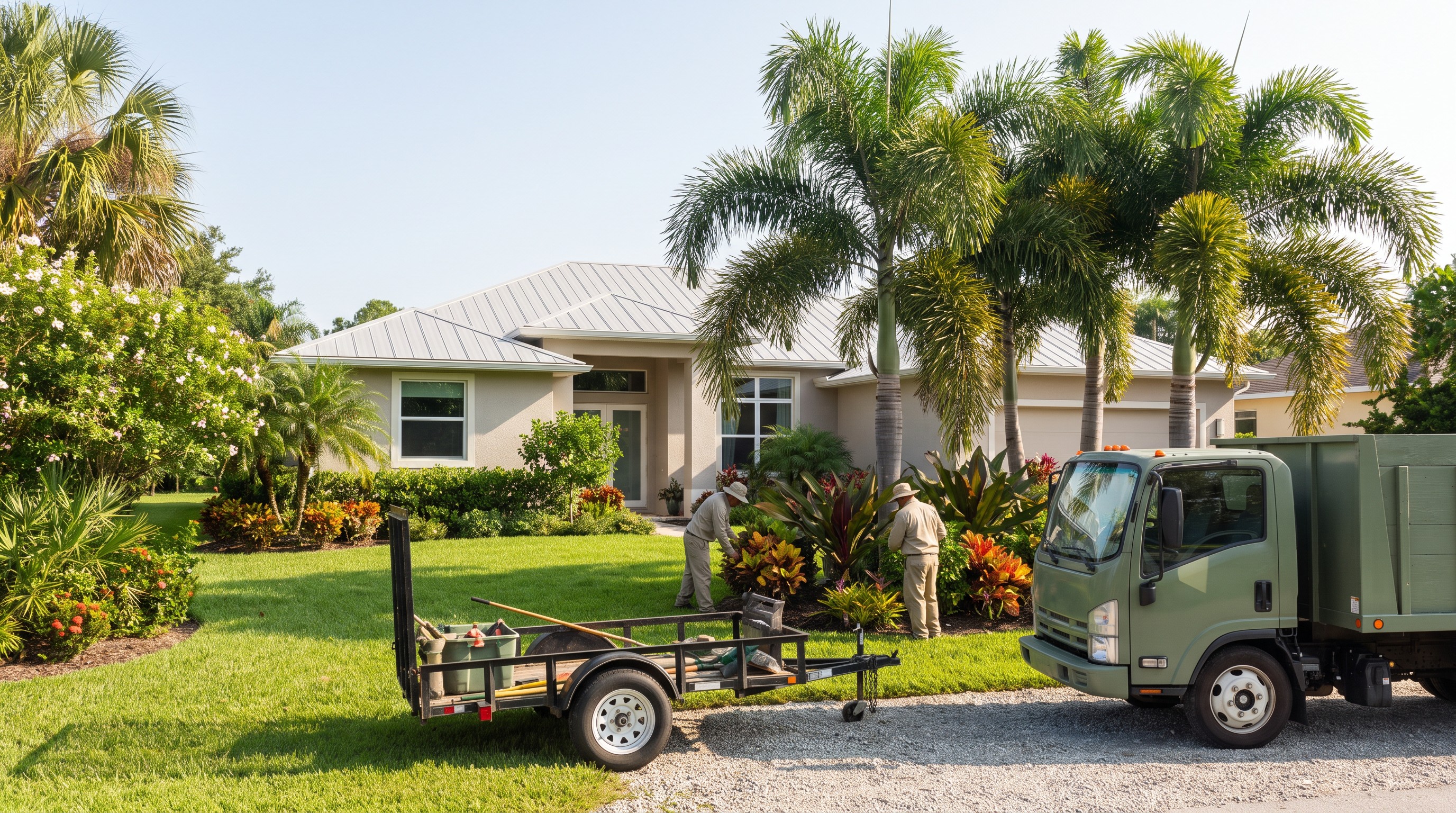
Central Florida landscaping fails more often from the wrong plan than from bad luck — sandy soil, 50+ inches of annual rain, and five-month stretches of 90-degree heat punish any yard designed for a different climate. Property owners in Polk, Lake, and Orange counties spend thousands replacing St. Augustine sod that was never suited for their sun exposure, or watching irrigation systems waste water on schedules built for a cooler region. The fix isn't more spending. It's matching the landscape to the conditions it actually lives in.
Florida Landscape Co. has worked Central Florida properties since 2011 — residential yards, HOA common areas, commercial storefronts, and new-construction lots across Clermont, Davenport, Haines City, and the Four Corners corridor. The patterns repeat. Growth corridors like Horizon West and Winter Garden bring new sod that struggles in year one. Older Haines City neighborhoods fight compacted sandy soil. HOA boards across Polk and Lake counties battle inconsistent vendor performance. This guide covers what's different about landscaping here, and what a property owner should expect from a crew that actually understands it.
Why Central Florida Soil and Climate Change the Playbook
Most of Central Florida sits on sandy, fast-draining soil with minimal organic content. Water and nutrients pass through it quickly, which means standard fertilization and watering schedules from national lawn care chains often underperform here. A program built for clay-heavy soil in the Midwest doesn't translate to Polk County.
Rainfall intensity is the second factor. Summer storms can drop two inches of rain in under an hour, then disappear for a week. Irrigation systems need to account for that volatility — not run on a fixed daily timer that either drowns turf after a storm or starves it during a dry stretch. The National Weather Service tracks this pattern across Central Florida, and it's the single biggest reason smart controllers outperform old-style timers in this region.
Heat is constant from May through September, with soil temperatures staying high even after sundown. Turf varieties, mulch depth, and mowing height all need adjustment for that reality. St. Augustine grass, the regional default, needs taller mowing heights in peak summer to protect root zones — a detail that's easy to miss if a crew isn't calibrating for local conditions.
What Central Florida Landscaping Services Should Include
A full-service landscaping provider in this region needs to cover more ground than mowing and edging. Properties here deal with turf stress, irrigation inefficiency, storm-damaged trees, and curb appeal demands all at once, often on the same job site.
Core services worth expecting from a regional provider:
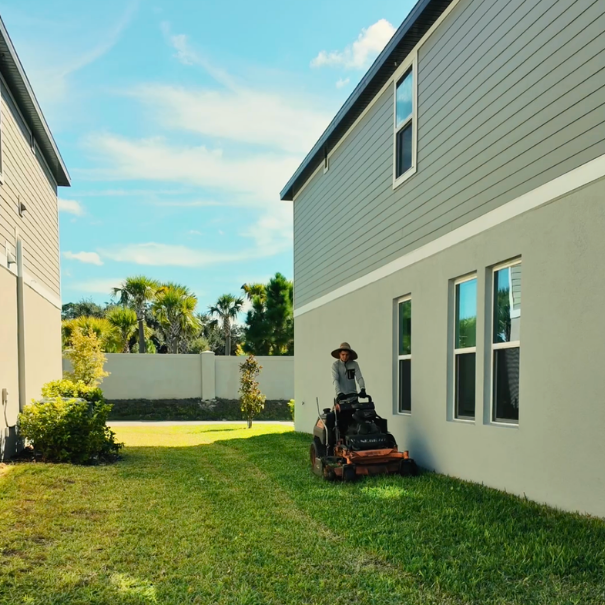
• Recurring maintenance — mowing, edging, trimming, fertilization calibrated to sandy soil, and seasonal cleanups timed to growth cycles rather than a generic calendar.
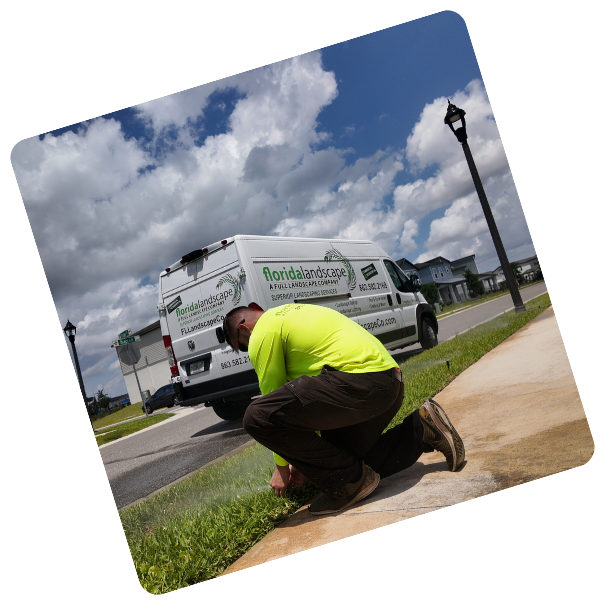
• Irrigation management — system audits, smart controller installs, leak detection, and seasonal adjustments that respond to actual rainfall rather than a fixed schedule.
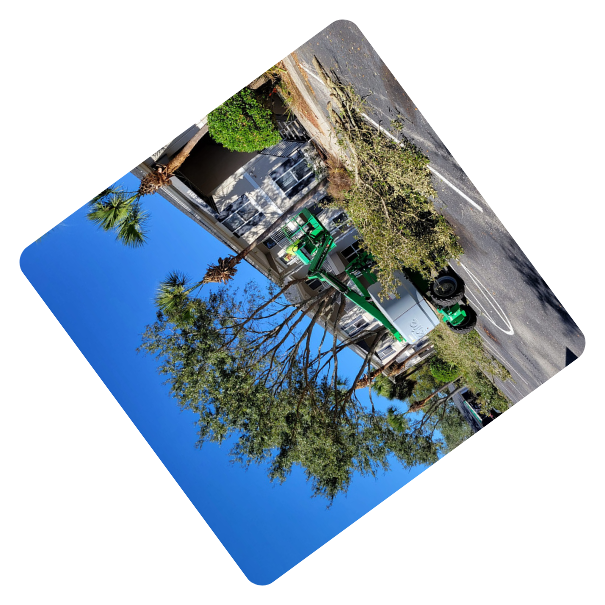
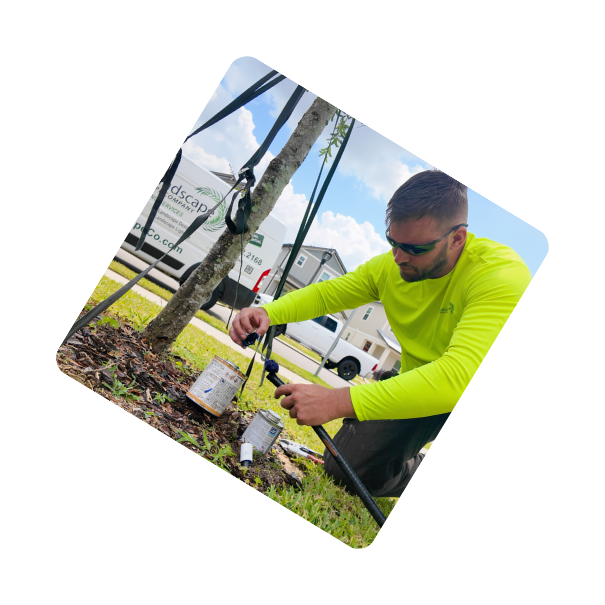
• Tree services — trimming, canopy thinning, and storm-prep pruning ahead of hurricane season, plus removal and stump grinding when storm damage happens anyway.
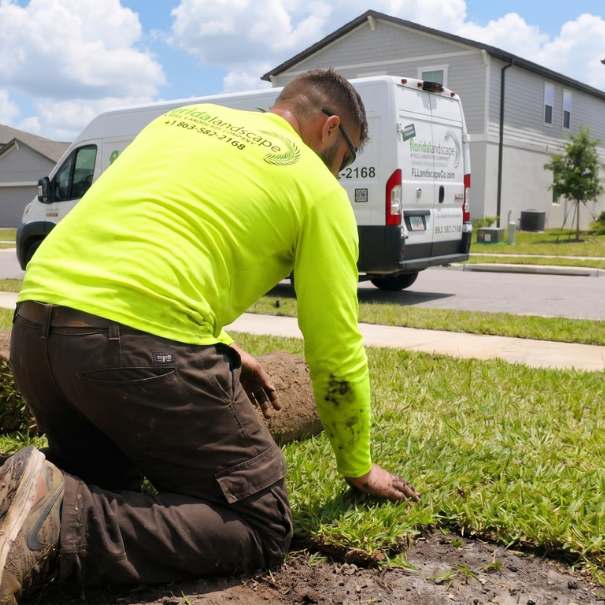
• Sod installation — faster and more reliable than seeding in Florida's climate, with grass type selection matched to sun exposure and soil drainage.
• Landscape lighting — low-voltage LED systems for walkways, entry features, and safety visibility, which matter more in communities with limited street lighting.
Our landscape design and installation services page breaks down what a full redesign looks like, from soil prep through plant selection, for anyone starting from scratch rather than maintaining an existing yard.
Central Florida HOA Landscaping: A Different Set of Problems
HOA boards across Polk and Lake counties manage a landscaping problem that homeowners don't: consistency across dozens or hundreds of lots, plus a compliance requirement that most residential-focused crews aren't built to handle. Entry signage beds, common areas, and community-wide turf all need to look uniform, on a documented schedule, with reporting the board can actually use.
The complaints we hear most from incoming HOA clients are the same three every time. Crews show up on inconsistent days. Communication about weather delays or service changes doesn't happen. Reporting to the board is vague or nonexistent, which makes budget conversations harder than they need to be.
"The boards that switch to us aren't chasing a cheaper quote — they're chasing a vendor who shows up when they say they will and tells them what's happening before a resident complains." — Florida Landscape Co. operations team
A functioning HOA landscaping program needs a locked-in service calendar, itemized scopes the board can reference, and some form of regular reporting — even a simple monthly summary beats silence. Communities in fast-growth areas like Horizon West and Celebration add a second layer of complexity: new amenity centers, young landscaping still establishing root systems, and a resident base with high expectations for curb appeal. That combination needs a crew that plans for growth, not just mowing on a four-week rotation. Community association standards from the Community Associations Institute are a useful reference point for boards building out a vendor scope of work.
Commercial Landscaping Across Central Florida's Growth Corridors
Commercial properties — retail centers, office parks, apartment communities, mixed-use developments — carry a different risk than residential yards. A dead entry bed or overgrown median isn't just unattractive; it affects tenant retention, leasing conversations, and how a property reads to anyone driving past on their way to a competitor.
Davenport and Clermont have both seen heavy commercial and multifamily development in the past few years, and a lot of that landscaping was installed fast during construction without a long-term maintenance plan behind it. That shows up later as patchy turf, irrigation heads misaligned from construction traffic, and plant beds that were never matched to the site's actual sun exposure.
A commercial contract should include scheduled turf maintenance, irrigation monitoring, seasonal color rotations, and tree/shrub upkeep — plus the same reporting discipline HOAs need, since property managers answer to owners the same way boards answer to residents. For new developments specifically, our new construction landscaping packages are built around turnover-ready presentation so a property looks finished the day it opens, not six months later.
Common Mistakes Property Owners Make With Central Florida Landscapes
1. Using a one-size irrigation schedule: Running sprinklers on a fixed daily timer ignores rainfall entirely, wasting water and stressing turf during Florida's unpredictable wet season.
2. Choosing sod without checking sun exposure: St. Augustine needs shade tolerance consideration; planting it in full, reflected heat near pavement sets it up to fail within a season.
3. Skipping storm-prep tree work: Overgrown canopies and weak limb structure turn a routine summer storm into a liability. Pre-season trimming is far cheaper than emergency removal.
4. Mowing too short in summer heat: Cutting turf below its recommended height during peak heat exposes soil and root zones, accelerating drought stress.
5. Treating HOA landscaping like a residential contract: Community-wide consistency and board reporting require a different scope of work than a single front yard.
6. Delaying irrigation repairs: A small leak or misaligned head wastes water for months and often goes unnoticed until the water bill or a dead patch forces the issue.
Most of these mistakes come from applying generic advice to a climate that doesn't match it. If your current program feels like it's always catching up — chasing dead patches, reacting to storm damage, or fielding resident complaints — it's usually a sign the underlying plan isn't built for Central Florida conditions in the first place. Our irrigation repair and installation services page covers the most common system failures we see across Polk and Lake county properties.
Schedule Your Central Florida Landscaping Service Today
If your lawn is thinning in the heat, your irrigation system is running on guesswork, or your HOA board is tired of inconsistent crews and vague reporting, you're dealing with exactly the problems this region creates for property owners every year. Florida Landscape Co. has handled these issues across Clermont, Davenport, Haines City, and the Four Corners area for over a decade, with the HOA and commercial experience to back it up.
Request your free quote or call (863) 582-2168 for fast, local landscaping service anywhere in Central Florida.

Get your free quote and expert advice today.
Ready to transform your garden? Get in touch with our expert team today for a free consultation and personalized plan.



Frequently Asked Questions
What makes Central Florida landscaping different from other regions?

Sandy, fast-draining soil, intense summer heat, and heavy but unpredictable rainfall all require irrigation schedules, turf choices, and mowing practices calibrated specifically for this climate rather than generic national programs.
How much does landscaping cost in Central Florida?
Recurring maintenance typically runs based on property size and service frequency, while sod installation, irrigation upgrades, and design/install projects are quoted per project after a site evaluation. Request a quote for an exact number on your property.
What grass types work best in Central Florida?
St. Augustine is the regional default for most lawns due to heat and humidity tolerance, though sun exposure, soil drainage, and foot traffic all affect which variety performs best on a given site.
Do HOAs need a different landscaping contract than homeowners?
Yes. HOA contracts need community-wide consistency, documented service schedules, and board-level reporting — elements a standard residential contract typically doesn't include.
How often should irrigation systems be checked in Florida?
A seasonal audit — at minimum each spring and fall — catches leaks, misaligned heads, and outdated watering schedules before they waste water or stress turf through a full season.

