
Best Mulch for Central Florida: Cypress, Pine, Rubber & Rock Compared
The best mulch for Central Florida depends less on what looks good at the garden center and more on how it handles 95-degree afternoons, summer downpours, and the termites and fungus gnats that thrive in both. Homeowners in Clermont, Davenport, and Winter Garden often grab whatever bag is on sale, then wonder why their beds look faded and weedy by August. The right mulch choice changes based on sun exposure, plant type, and whether the bed sits next to a foundation or along a walking path.
This guide breaks down the four mulch types most commonly used in Central Florida landscapes — cypress, pine bark, rubber, and rock or decomposed granite — and compares them on cost, heat retention, color retention, and pest resistance. It ends with a straightforward recommendation matrix so you can match the right mulch to the right bed the first time.
What Central Florida's Climate Demands From Mulch
Central Florida sits in USDA zones 9b and 10a, which means sandy, fast-draining soil, a six-month rainy season, and ground temperatures that can hit 140°F on exposed surfaces during peak summer. Mulch here has to do three jobs at once: hold moisture in sandy soil that drains almost as fast as you water it, keep root zones cool enough that plants don't go into heat stress, and resist the fungal growth that shows up anywhere organic material stays damp for long stretches.
Pest pressure is also a bigger factor here than in most of the country. Subterranean termites are active year-round in Polk and Lake counties, and mulch piled directly against siding or foundations gives them a moisture highway straight into a house. That single issue rules out certain mulch choices for foundation beds even when they'd be fine everywhere else in the yard.
Cypress Mulch vs. Pine Mulch: The Two Most Common Choices
Cypress and pine dominate Central Florida mulch sales, but they behave very differently once they're down.
Cypress Mulch
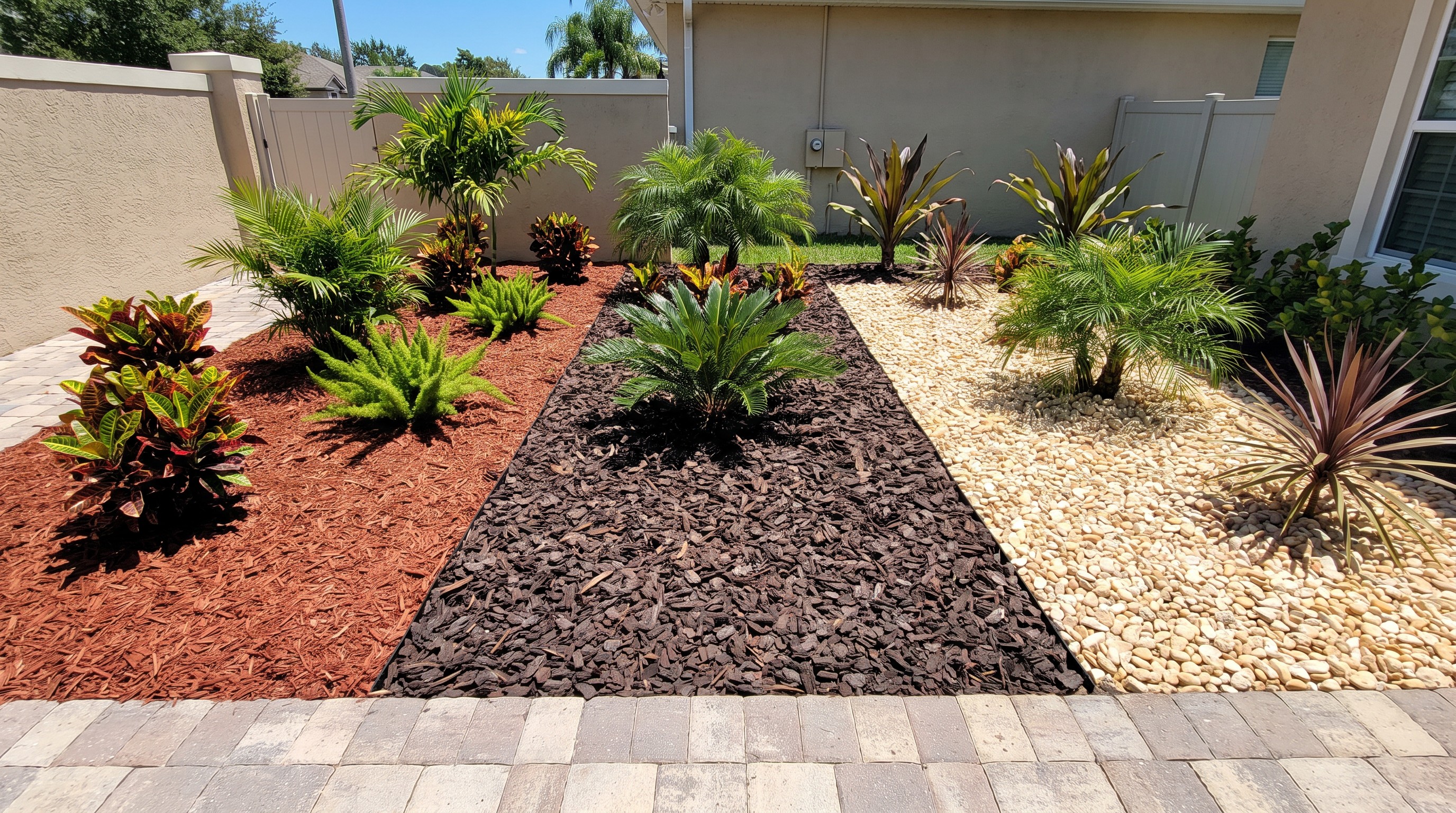
Cypress mulch is dense, interlocks as it settles, and resists washing away in heavy rain better than lighter mulches — a real advantage during Central Florida's summer storm pattern. It also holds its reddish-brown color for roughly 6 to 9 months before fading to gray. The tradeoff is cost and sourcing: much of the cypress sold commercially comes from harvested wetland forests, which has drawn scrutiny from conservation groups, and prices run $38–$48 per cubic yard, higher than pine.
Pine Bark and Pine Straw
Pine bark nuggets break down slower than shredded mulch and run $28–$38 per cubic yard, making them the better value for large beds. Pine straw, popular in Haines City and Four Corners for its natural look under oaks and pines, costs less per bale but needs refreshing two to three times a year since it compacts quickly. Neither holds color as long as cypress — expect noticeable fading by month four in full sun.
Which Wins for Heat and Pests
Pine bark edges out cypress for pest resistance because its looser structure dries faster after rain, giving fungus and termite pressure less of a foothold. Cypress wins on wind and water resistance during storm season. For homeowners weighing both, this is often the deciding factor between the two most common choices on the shelf.
Rubber Mulch in Florida: Where It Helps and Where It Hurts
Rubber mulch gets marketed as a "never need to replace it" solution, and for certain applications in Central Florida that's accurate. It doesn't absorb water, doesn't feed fungal growth, and holds its color for years rather than months — a real advantage in a climate this humid. Cost runs $65–$90 per cubic yard, significantly more upfront than organic options, but the lack of annual replacement can even out the math over three to four years.
The problem is heat. Rubber mulch absorbs and radiates far more heat than organic mulch, and surface temperatures on black rubber mulch in full Florida sun have been measured well above what root zones can tolerate. It also does nothing to feed the soil — no organic matter breaks down to improve sandy soil structure over time, which matters in a region where most native soil is nutrient-poor to begin with.
Rubber mulch works best around playground equipment, dog runs, and non-planted decorative areas where heat transfer to roots isn't a concern. It is a poor choice for foundation beds, tree rings, or anywhere plant health depends on soil moisture and temperature regulation.
Rock and Decomposed Granite: When Hardscape Beats Organic Mulch
Rock mulch and decomposed granite solve a different problem entirely. Neither breaks down, neither attracts termites, and neither needs refreshing — which makes them the lowest-maintenance option for high-traffic paths and drought-tolerant beds planted with succulents or native grasses. Cost runs $45–$75 per cubic yard depending on stone type, with river rock and lava rock on the higher end.
The drawback mirrors rubber mulch: rock absorbs and holds heat aggressively, often running 20–30 degrees hotter at the surface than organic mulch in the same sun exposure. It's also a poor fit for beds with moisture-loving plants like hydrangeas or ferns, since rock does nothing to retain soil moisture during dry stretches. Rock earns its place in pathways, around mailbox posts, and in xeriscape beds planted with species suited to heat — several of which are covered in this guide to drought tolerant plants for Central Florida landscapes.
Cost, Heat Retention, and Color Durability Side by Side
Here's how the four options stack up on the factors that matter most for Central Florida conditions.
• Cypress: $38–$48/cu yd — moderate heat retention, color holds 6–9 months, moderate pest resistance
• Pine bark: $28–$38/cu yd — low-moderate heat retention, color holds 4–6 months, better pest resistance than cypress
• Rubber: $65–$90/cu yd — high heat retention, color holds 3+ years, no organic pest attraction
• Rock/decomposed granite: $45–$75/cu yd — very high heat retention, color is permanent (mineral, not dye), zero organic pest attraction
Tip: If a bed sits in full western sun — common along Florida home exteriors facing late-day heat — avoid rubber and dark rock entirely. Surface heat in those beds can stress root systems even in heat-tolerant plants.
Mulch Recommendation Matrix by Use Case
Matching mulch to the specific bed type solves most of the problems homeowners run into after a generic mulch purchase.
Foundation Beds
Pine bark is the safer choice against siding and stucco. Keep any mulch, regardless of type, pulled back 6 to 12 inches from the foundation to cut off the moisture bridge termites use to enter structures.
Tree Rings
Cypress or pine bark both work well here, applied 2 to 3 inches deep and kept away from direct contact with the trunk. A mulch volcano piled against bark traps moisture and invites rot — a mistake we see constantly on new new construction landscaping sites where crews rush the install.
High-Traffic Paths
Rock or decomposed granite holds up best under foot traffic and doesn't need annual replacement, making it the practical choice for walkways and side-yard paths.
HOA Common Areas and Entry Signage Beds
Cypress or pine bark deliver the cleanest, most uniform look for community entrances where color consistency across a large area matters for curb appeal and board sign-off. Boards planning seasonal refresh cycles can see full cost breakdowns in this HOA landscaping budget guide.
Beds With Florida Native Plants
Native species adapted to lean, well-drained soil generally do better with a lighter mulch layer of pine straw or pine bark rather than heavy rock, which can trap excess heat around root systems bred for native ground conditions. See this breakdown of native Florida plants for landscaping for species-specific pairing.
How to Install Mulch Correctly in Central Florida Heat
Depth matters more here than in cooler climates. A 2 to 3 inch layer retains moisture without suffocating roots; anything deeper than 4 inches can actually block water from reaching soil during Florida's intense but short summer storms. Refresh organic mulch once color fades noticeably, typically every 4 to 9 months depending on type and sun exposure.
Always water the bed before and after a mulch refresh — dry mulch applied over dry soil creates a water-repellent crust that sheds rainfall instead of absorbing it. According to the University of Florida IFAS Extension, properly applied organic mulch can reduce landscape water needs significantly by limiting evaporation from exposed soil — a meaningful savings given Florida's irrigation restrictions during dry months, a topic also covered by the EPA WaterSense program. Homeowners sourcing cypress mulch should also know that some conservation organizations, including the National Wildlife Federation, have raised concerns about wetland cypress harvesting, which is worth factoring into a sustainability-conscious purchase.
Planning a full bed redesign rather than just a mulch swap? Our guide to Florida landscaping ideas that actually work in this climate covers plant and hardscape pairings that reduce long-term maintenance.
Get a Free Mulch and Landscape Bed Quote in Central Florida
Choosing between cypress, pine, rubber, and rock gets a lot easier with someone who installs all four across Polk and Lake counties every week. Whether you're dealing with fading mulch along a foundation, a termite scare near the house, or an HOA common area that needs a consistent, board-approved look, we can match the right material to each bed on your property.
Request your free quote or call (863) 582-2168 for fast, local service in Clermont, Davenport, Haines City, and the surrounding Central Florida communities.

Get your free quote and expert advice today.
Ready to transform your garden? Get in touch with our expert team today for a free consultation and personalized plan.



Frequently Asked Questions
What is the best mulch for Central Florida heat?

Pine bark and cypress both hold up well in Central Florida heat, but pine bark dries faster after rain, which gives it a slight edge against the fungal issues that heat and humidity together tend to cause.
Is rubber mulch good for Florida landscapes?
Rubber mulch works well around play areas and non-planted decorative zones but is a poor fit for planted beds, since it absorbs and radiates far more heat than organic mulch and can stress root systems in full sun.
How often should I replace mulch in Central Florida?
Most organic mulch needs refreshing every 4 to 9 months depending on sun exposure and mulch type, since Florida's heat and rainfall break down organic material faster than in cooler, drier climates.
Does mulch attract termites in Florida?
Any organic mulch piled directly against a foundation can create a moisture bridge that termites use to reach a structure, so keep mulch pulled back 6 to 12 inches from siding and stucco regardless of mulch type.
Is cypress mulch or pine mulch better for Florida gardens?
Cypress holds color longer and resists washing away in heavy rain better, while pine bark costs less and dries faster, giving it better pest resistance — the right choice depends on whether color retention or pest resistance matters more for a specific bed.

