
Best Grass Seed for Florida: What Actually Grows Here
The best grass seed for Florida depends less on the brand on the bag and more on where you live, how much sun your yard gets, and whether the grass you want is even sold as viable seed in the first place. That last part trips up more homeowners than anything else. Central Florida's sandy soil, year-round heat, and long summer rainy season create a very different growing environment than the seed mixes sold at big-box stores up north.
This guide breaks down the grass types that genuinely work from seed in Central Florida, when to plant, how long germination actually takes, and what you'll spend per square foot compared to sod. It also clears up one of the most common — and costly — misunderstandings in Florida lawn care.
Why Florida Grass Seed Shopping Works Differently
Most national grass seed guides are written for cool-season lawns in the Midwest or Northeast, where fescue and bluegrass dominate. None of that applies here. Florida sits almost entirely in warm-season turf territory, and the University of Florida's IFAS Extension program has spent decades researching which species hold up to our sandy soil, humidity, and pest pressure — UF/IFAS Extension's turfgrass research is the closest thing Florida has to a seed rulebook.
Sandy soil drains fast and holds almost no nutrients, which means germinating seed dries out quickly without frequent watering. Add in Florida's intense summer sun and the fungal pressure that comes with 80% humidity, and you have an environment where the wrong seed choice fails within weeks, not months.
Florida Grass Seed Types: What Actually Grows From Seed
Bahiagrass is the workhorse of Florida grass seed. Argentine and Pensacola varieties germinate reliably, tolerate drought and poor soil, and cost less per pound than almost any other option. It's the go-to for large residential lots, pastures, and low-maintenance areas that get full sun.
Bermudagrass also seeds well and handles heavy foot traffic better than Bahia, making it a strong pick for yards with kids, pets, or sports use. It needs full sun and more frequent mowing to stay dense.
Centipedegrass grows from seed and is popular precisely because it needs very little fertilizer — it actually performs worse when overfed. It tolerates Central Florida's acidic sandy soil well and handles light shade better than Bahia or Bermuda.
Zoysiagrass has a handful of seeded varieties, like Zenith and Compadre, but germination is notoriously slow and inconsistent compared to plugs or sod. Homeowners who choose Zoysia seed need patience and realistic expectations.
St. Augustinegrass — the grass most people picture when they think "Florida lawn" — is not sold as reliable seed. Its seed production is commercially unviable, so it's propagated exclusively through sod or plugs. Any product marketed as "St. Augustine grass seed" is either mislabeled or won't germinate into a usable lawn. If St. Augustine is the look you want, sod installation is the only real path.
Best Grass Seed for Central Florida by Sun and Shade
Full-sun yards across Polk and Lake County have the most flexibility. Bahia, Bermuda, and seeded Zoysia all handle six or more hours of direct sun without issue, and Bahia in particular shrugs off Central Florida's dry spring stretches.
Partial shade is where seed choices narrow fast. Centipede tolerates dappled shade better than Bahia or Bermuda, but none of the true seed-grown species thrive under a dense oak canopy. Neighborhoods with mature tree cover — common in older sections of Kissimmee and Winter Haven — often need a shade-tolerant sod grass like St. Augustine instead, which is one reason homeowners requesting lawn care in Kissimmee frequently end up discussing sod alongside standard maintenance.
Deep shade under heavy tree canopy isn't realistic for any warm-season turfgrass, seeded or sodded. In those spots, ground cover or mulch beds outperform grass every time.
Germination Timelines: What to Actually Expect
Bahiagrass seed germinates in roughly 14 to 28 days, with full lawn establishment taking 60 to 90 days under consistent watering. Bermudagrass is faster, often sprouting in 7 to 14 days thanks to its aggressive growth habit.
Centipedegrass falls in the 14 to 21 day range for germination, but full establishment is slower — often a full growing season before the lawn fills in completely. Seeded Zoysia germinates around 14 to 21 days as well, but density can take one to two full growing seasons to look like a finished lawn.
Tip: Newly seeded areas need light, frequent watering — often twice daily — for the first two to three weeks. Skipping a single hot afternoon watering during peak summer heat can kill germinating seed before it ever takes root.
Cost Per Square Foot: Seed vs. Sod
Bahiagrass seed typically runs $0.05 to $0.10 per square foot in material cost alone, making it the cheapest option for large properties. Bermudagrass seed lands around $0.08 to $0.15 per square foot, and Centipedegrass seed runs $0.10 to $0.20.
Seeded Zoysia is the outlier — often $0.25 to $0.40 per square foot for seed alone, and that's before accounting for the extended establishment time and higher failure risk on slopes or high-traffic areas.
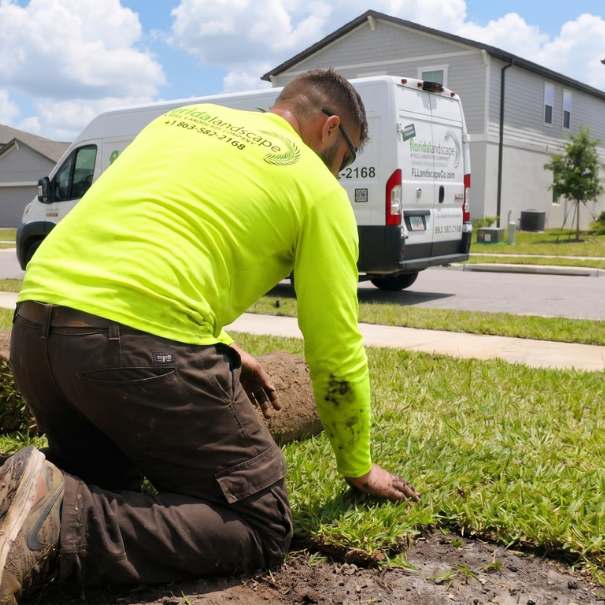
Sod tells a different cost story. Installed St. Augustine or Zoysia sod generally runs $0.60 to $1.50 per square foot depending on species and site prep, but you get a finished, erosion-resistant lawn the same day instead of waiting months and hoping the seed survives Florida's summer downpours. For homeowners near lawn care in Winter Haven weighing seed against sod, the math often comes down to patience versus upfront cost — seed is cheaper per square foot, sod is cheaper per hour of your time.
When to Plant Grass Seed in Florida
Warm-season grass seed needs consistent soil temperatures above 65 to 70°F to germinate reliably, which puts the ideal planting window from mid-April through July across Central Florida. Planting earlier risks a late cold snap stalling germination; planting later runs into shortening daylight that slows root development before fall dormancy.
Florida's rainy season, typically June through September, actually helps seed germination by keeping soil consistently moist — but heavy downpours can also wash seed off sloped or bare areas before it roots. Covering fresh seed with a light layer of straw mulch reduces washout risk significantly.
Fall and winter seeding almost always underperforms in Florida. Cooler nights slow warm-season grass growth just as the seed needs energy to establish, leaving thin, patchy coverage that struggles into spring.
Common Mistakes When Buying and Planting Florida Grass Seed
1. Buying "St. Augustine seed." It isn't commercially viable — any bag claiming otherwise won't produce a usable lawn.
2. Seeding in fall or winter. Cooler soil temperatures stall germination and leave seed vulnerable to rot before it roots.
3. Skipping a soil test. Central Florida's sandy soil is often acidic and nutrient-poor, and the wrong pH can prevent germination entirely regardless of seed quality.
4. Mismatching seed to sun exposure. Planting full-sun grasses like Bahia or Bermuda under partial shade produces thin, weak turf within one season.
5. Underwatering during the germination window. Florida heat dries out topsoil fast, and seed that dries out even once during the first two weeks often fails to sprout.
Schedule Your Sod or Grass Seed Consultation in Central Florida
Choosing between grass seed and sod is easier with someone who knows how Central Florida's sandy soil, sun exposure, and rainfall patterns actually affect germination. Whether you're dealing with bare patches, a full lawn renovation, or a yard that needs St. Augustine sod instead of seed, we can walk your property and recommend what will actually take root.
Request your free quote or call (863) 582-2168 for fast, local lawn and sod service across Central Florida.

Get your free quote and expert advice today.
Ready to transform your garden? Get in touch with our expert team today for a free consultation and personalized plan.



Frequently Asked Questions
What is the best grass seed for Central Florida?

Bahiagrass is generally the best grass seed for Central Florida lawns because it germinates reliably, tolerates sandy soil and drought, and costs less than other seeded species. Bermudagrass is a strong second choice for high-traffic, full-sun yards.
Can you grow St. Augustine grass from seed?
No. St. Augustine grass does not produce commercially viable seed and must be established using sod or plugs. Products labeled as St. Augustine seed will not produce a usable lawn.
When is the best time to plant grass seed in Florida?
Mid-April through July is the ideal window, once soil temperatures consistently stay above 65 to 70°F. Planting in fall or winter usually leads to poor germination and thin coverage.
How long does grass seed take to germinate in Florida?
Bermudagrass germinates fastest, in about 7 to 14 days. Bahiagrass and Centipedegrass typically take 14 to 28 days, and seeded Zoysia can take 14 to 21 days to sprout with a much longer establishment period.
Is sod better than seed for Florida lawns?
Sod costs more upfront but delivers an immediate, erosion-resistant lawn and is the only option for St. Augustine grass. Seed costs less per square foot but takes months to establish and carries higher risk of failure from Florida's heat and heavy rain.

